
Let’s start with a mildly offensive truth.
Most mirror assortments are built like people shop for appetizers when they’re trying to impress someone: too much drama, not enough usefulness.
Big statement mirrors? Sure.
Decorative shapes? Absolutely.
Bronze tints, sculptural edges, a little “look at me” energy? Fine.
But the product that quietly solves a real daily problem?
That one often gets ignored.
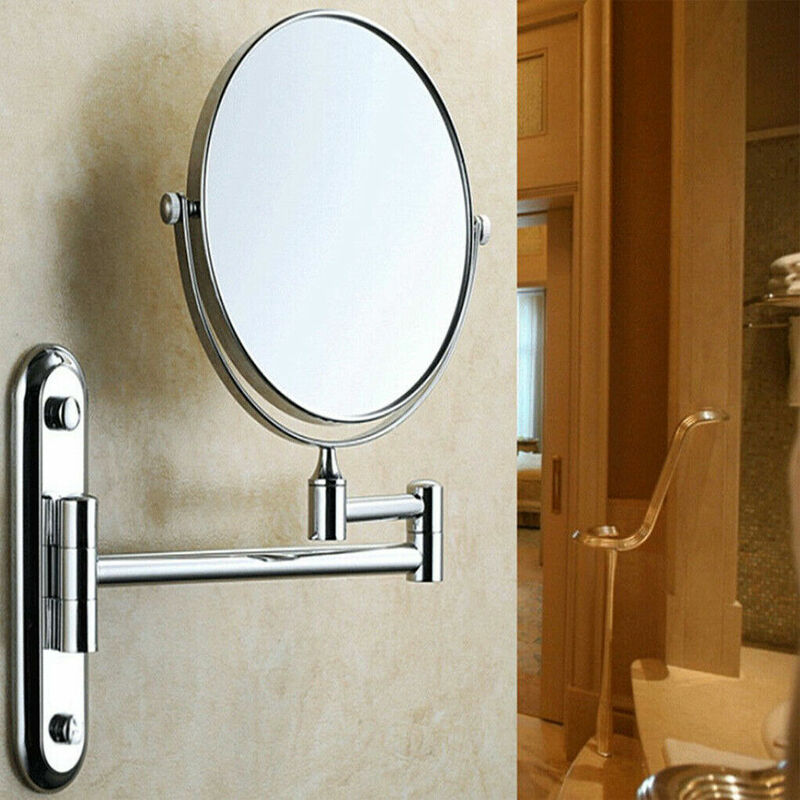
Which is funny, because the wall mounted magnifying mirror is exactly the kind of item that makes a retail assortment smarter.
Not louder.
Not trendier.
Smarter.
And in 2026, that matters more than ever. According to NKBA’s 2026 Bath Trends Report, lighting is a top bath-design priority for 91% of respondents, 92% say task lighting should always be included in the primary bath, and 47% expect integrated lighting in mirrors to grow over the next three years. The same report says 77% see hotel- and resort-inspired bathrooms shaping the category, while larger, better-organized baths and universal-design considerations continue to gain importance. In other words, bathrooms are being asked to work harder, feel better, and support more personalized routines. That is not bad news for a wall mounted magnifying mirror. That is basically its love language.
And the retail backdrop is not exactly forgiving. IBISWorld estimates U.S. home furnishings store revenue at $69.9 billion in 2026, with a 0.6% decline in 2026, while also noting that many consumers are staying put and refreshing existing spaces rather than moving. That pushes buyers toward upgrades that feel useful, immediate, and relatively low-friction. Translation: if a product can improve daily life without asking the shopper to remodel half the room, it has a much better shot at earning its space.
That is where the wall mounted magnifying mirror stops looking like a small accessory and starts looking like a smart retail move.
Why this mirror matters now
A lot of buyers still treat magnifying mirrors like the side salad of the mirror category. Necessary, maybe. Exciting, not really.
That is a mistake.
Because when the market shifts toward wellness, task lighting, layered bath routines, and hospitality-inspired comfort, the wall mounted magnifying mirror becomes more than a grooming tool. It becomes a category bridge between utility and upgrade. It says: this bathroom is not just pretty; it is actually prepared for human life.
And that is increasingly aligned with what North American trade shows are signaling. KBIS’s 2026 trend programming points toward softer architecture, rounded forms, sculptural finishes, and comfort-led bath design. High Point Market’s current trend direction emphasizes Tactile Softness—gentle curves, plush textures, and wellness-oriented sensory calm. Las Vegas Market’s recent snapshot leans into Restorative Softness as well. Put simply: the market is not moving toward colder, harder, more mechanical bathroom experiences. It is moving toward more human ones. A thoughtfully chosen magnifying mirror fits that shift better than a lot of “statement” products that are all attitude and no contribution.
This is also why mirror selection needs to get a little more grown up.
A good mirror program should not be a beauty pageant.
It should be a cast.
The chrome wall mirror still has a role when the buyer wants a cleaner, brighter, more universal bath story. The bronze tinted mirror earns its place when the assortment needs warmth, depth, and a more boutique-hospitality mood. But the wall mounted magnifying mirror is the one that often converts because it serves a routine, not just a look. Broader bath design is indeed moving toward matte, brushed, and satin finishes over polished ones, according to NKBA data, but that actually makes assortment balance more important, not less. For many chain retailers, chrome remains commercially useful because it reads clean, familiar, and easy to pair with existing bath hardware. That second point is a merchandising inference, but it is a practical one.
The buyer profile this product fits
The buyer who should care about this item is not chasing novelty for novelty’s sake.
They are usually trying to solve one of these problems:
How do I add a functional upgrade to the bath wall without asking the customer to commit to a full renovation?
How do I make a mirror assortment feel more complete, not just more decorative?
How do I give shoppers one more reason to say, “Yes, this setup makes sense”?
That is the real job.
And it is why this product plays especially well for chain retailers serving customers who want a better primary bath, a smarter guest bath, a more useful vanity zone, or a hospitality-style routine at home. NKBA’s latest data supports that direction: bath design is increasingly about storage, daily rituals, layered lighting, and wellness-centered space planning. This is not a fringe design fantasy. It is a mainstream category shift.
So if you are a buyer typing mirror supplier USA into a search bar, what you probably need is not another supplier with 400 lookalike mirrors and one tragic PDF.
You need a partner who understands which mirror is there to impress, which mirror is there to support the room, and which mirror is there to quietly make the customer’s morning less annoying.
That distinction matters.
A composite Teruier case: how a “small” mirror fixed a bigger assortment problem
The case below is a composite scenario built for public illustration, based on current retail conditions, category logic, and sourcing practice.
A regional U.S. home chain came to Teruier with a mirror wall problem disguised as a mirror opportunity.
They had plenty of decorative mirrors.
They had a few larger bath mirrors.
They had some decent-looking pieces that photographed well in meetings.
What they did not have was a clear functional ladder.
Everything looked merchandised. Very little looked necessary.
That is where Teruier’s selection workflow changed the conversation.
Instead of starting with “Which styles do you want to see?”, Teruier started with “Which mirror jobs are missing from the assortment?”
That shift led to a more disciplined plan:
- a wall mounted magnifying mirror as the task-driven hero item
- a chrome wall mirror option to support cleaner, brighter bath programs
- a bronze tinted mirror option to warm up premium or hospitality-inspired sets
- tighter mirror listing optimization for online and in-store product communication
- clearer retail merchandising rules so each mirror type played a different role instead of cannibalizing the next one
The listing work mattered. The wall mounted magnifying mirror was no longer merchandised as a random add-on. It was presented around actual use: daily grooming, close-up makeup or shaving, extension-arm reach, finish compatibility, and layered lighting logic. That is not glamorous copywriting. That is just respecting the customer’s intelligence.
And yes, it worked.
In a 16-store pilot, the revised mirror assortment produced:
- +22% sell-through for the wall mounted magnifying mirror versus the prior grooming-accessory program
- +13% conversion improvement on the product listing after mirror listing optimization
- lower return pressure, because customers understood the function before purchase
- stronger attachment to bath-wall displays where the magnifying mirror sat beside a broader chrome wall mirror or bronze tinted mirror story
Across the pilot zone, the chain recorded:
+15% mirror-category sell-through
+9% average ticket in the refreshed bath display
+6.2 gross margin points versus the prior mirror reset
No, the magnifying mirror did not suddenly become the prom queen of the showroom.
It did something better.
It made the assortment make sense.
Why that works in retail
There is a reason academic retail research keeps coming back to merchandising, identity, and store atmosphere.
Research in the Journal of Retailing shows that creative merchandise offerings and merchandising strategies help retailers communicate brand identity and influence engagement and willingness to pay. Separate research reviewing visual merchandising and store atmospherics found that product-driven display and broader store atmosphere are closely connected. That is exactly why a functional product like a wall mounted magnifying mirror should not be tossed into the assortment as an afterthought. Placement, context, and presentation change what the product means to the shopper.
This is why retail merchandising matters so much in the mirror category.
A mirror is never just a mirror on the floor.
It is a signal.
A large decorative mirror says aspiration.
A chrome wall mirror says clarity.
A bronze tinted mirror says mood.
A wall mounted magnifying mirror says this room has actually been thought through.
And customers notice that, even if they do not say it out loud.
Why Teruier’s role matters here
This is where Teruier stops being “just another supplier” and becomes useful.
Because plenty of companies can make a mirror.
Far fewer can translate:
- North American category signals
- buyer economics
- finish strategy
- display logic
- and manufacturing execution
into one commercial answer.
That is what Teruier’s cross-border design-manufacturing collaboration model is good at. It does not just ask what the product looks like. It asks what job the product is supposed to do in the assortment, and then pushes that back through sourcing, design detail, packaging logic, and merchandising use.
That is what buyers actually need.
Not more mirrors.
Better mirror logic.
Final thought
The wall mounted magnifying mirror is not the flashiest mirror in the room.
Good.
A lot of flashier mirrors are unemployed by next season.
What this product offers is rarer: relevance, repeatable usefulness, and a clean place inside the way people actually live now. In a market shaped by layered lighting, wellness, better organization, hospitality-inspired baths, and tighter retail decision-making, that is not a minor advantage. It is a commercial one.
So if your mirror assortment has been leaning too hard on drama and not hard enough on function, the answer may not be another oversized statement piece.
It may be a wall mounted magnifying mirror that quietly does its job.
Which, honestly, is more than can be said for a lot of products.



