
Let’s be honest: for a few years, home retail got a little too comfortable with pale oak, safe beige, and furniture that looked like it was terrified of having a personality.
Now the pendulum is swinging back.
Design editors and designers tracking 2026 interiors are already pointing to darker-toned woods as a returning force after years of lighter finishes dominating the room. At the same time, High Point Market’s Spring 2026 trend program is spotlighting Tactile Softness and Untamed Botanicals, while Las Vegas Market’s Winter 2026 Market Snapshot is pushing Restorative Softness. Put that together and the message is pretty clear: warmth is back, texture still matters, and buyers are no longer rewarded for choosing furniture that looks like a tax write-off in wood veneer form.
That is exactly why the dark wood bench is getting interesting again.
Not because it is nostalgic. Not because it is “traditional.” And definitely not because somebody in a showroom discovered walnut and acted like they found religion.
It is getting interesting because it solves a real retail problem. A good dark wood bench adds weight, contrast, and character to a floor set without making the assortment feel heavy. It gives the customer something visually grounding in a market that has spent a little too long floating around in pale woods and soft-focus minimalism. When done right, it feels more collected than trendy, which is exactly where a lot of North American buying is heading.
And if you are a chain-store buyer, that matters.
Because your job is not to buy “nice furniture.” Your job is to buy products that survive freight, hold margin, make sense on the floor, and still look smart after the tenth customer sits on them with a winter coat and a coffee they should not have brought inside.
That is the difference between decoration and retail.
Why a dark wood bench makes sense now
The North American market is not exactly in a carefree “buy anything, it’ll move” moment. IBISWorld estimates the U.S. home furnishings store market at $69.9 billion in 2026, with a 0.6% decline in 2026, while also noting that many consumers are refreshing existing homes instead of moving. That detail matters more than people think. When customers stay put, they do not always buy bigger. They buy smarter, more functional, and more atmosphere-driven.
That is where a dark wood bench becomes commercially useful.
It works in an entryway.
It works at the end of the bed.
It works in a hallway vignette.
It works as a “this room finally has a pulse” piece in a soft-neutral setting.
And because the latest market direction is still leaning toward plushness, curves, and touchable comfort, the smartest version of this product is not a severe antique reproduction. It is a warmer, more edited form: maybe an arched leg bench, maybe a dark frame paired with performance boucle, maybe an upholstered storage bench that gives the customer softness and function in one shot. High Point’s 2026 signals explicitly connect wellness-oriented interiors with gentle curves, plush textures, fluid forms, carved surfaces, and organic depth. That is practically a briefing document for how to modernize the dark wood bench without making it feel stuffy.
And yes, material feel matters more than many suppliers admit.
Research on wood surfaces has shown that tactile and emotional responses to wood are closely connected, with texture and touch playing a meaningful role in how users perceive wooden products. Separate research on soft sofa fabrics found that color, texture, and material significantly affect perceptual imagery and users’ emotional experience, offering practical guidance for furniture design and marketing. In plain English: customers are not just seeing a bench. They are reading warmth, softness, quality, and mood with their eyes and hands. Which is why a dark wood bench paired with the right upholstery can sell as a feeling, not just a SKU.
The buyer profile this product actually fits
Let’s kill one lazy idea right now: not every bench belongs in every assortment.
The buyer who should care about this piece is usually not looking for “statement furniture” in the loudest possible sense. They are trying to solve a more practical equation:
How do I make the assortment feel richer without making it feel risky?
How do I give customers texture and warmth without overwhelming the floor?
How do I add function without slipping into boring utility furniture?
That is the sweet spot.
A dark wood bench works especially well for chain retailers that sit between mainstream comfort and slightly elevated style. It fits the buyer who wants approachable sophistication, better texture contrast, and products that can bridge modern organic, updated traditional, and soft transitional settings. That lines up neatly with what North American markets are showing. High Point’s Spring 2026 program is framing the season around tactile softness and botanical imperfection; Las Vegas Market’s Winter 2026 program continues the push toward restorative, comfort-led forms; and Las Vegas itself positions the market as a cross-category sourcing environment with over 3,500 brands, while High Point’s show footprint spans 11.5 million square feet of showrooms. These are not fringe signals. They are broad commercial signals.
So when a buyer chooses a dark wood bench today, they are not buying “brown furniture.”
They are buying contrast.
They are buying permanence.
They are buying relief from over-bleached sameness.
And frankly, a lot of assortments need that.
A composite Teruier case: how a dark wood bench became a retail win
The case below is a composite scenario built for public illustration, based on current market logic, category behavior, and retail sourcing practice.
A regional U.S. home chain came to Teruier with a familiar problem: the seating accents were not failing dramatically, but they were not doing much either. The assortment was fine. Which is retail’s most expensive adjective.
They had benches, but no real anchor piece.
They had light woods, but not enough depth.
They had soft upholstery, but not enough structure.
They had storage pieces, but they looked too practical to be desirable.
So Teruier’s selection workflow did not begin with “Which bench do you want?”
It began with a better question:
What role is missing from the assortment?
Using Teruier’s cross-border design-manufacturing collaboration model and its access to an artisan supply chain China advantage rooted in craft, materials, and production coordination, the team proposed a bench strategy centered on one hero product: a dark wood bench with an upholstered top, softened lines, and retail-friendly proportions. Around it, Teruier built supporting options that made the story broader and more commercial:
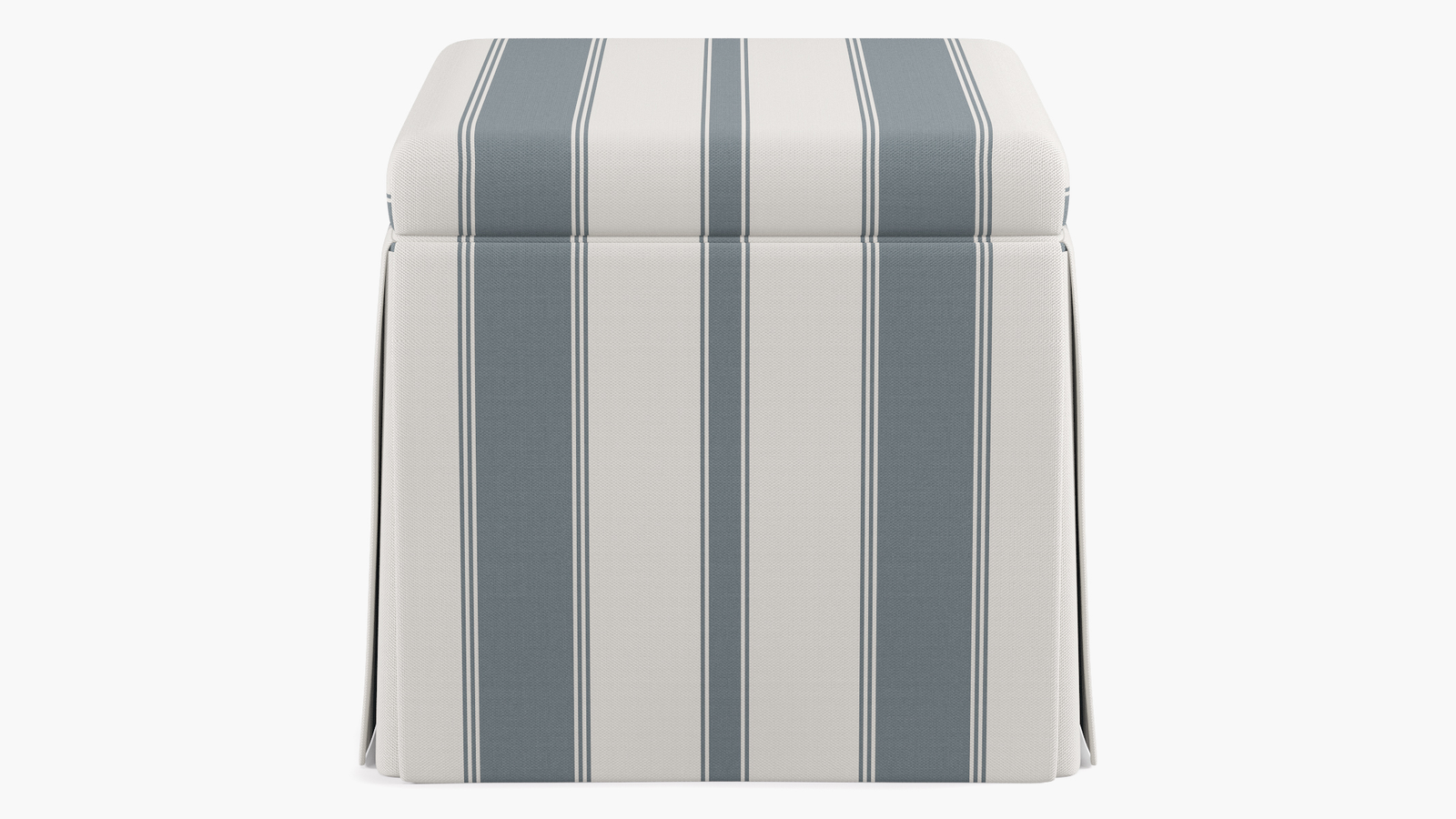
- an upholstered storage bench for functional households
- an arched leg bench for a slightly more decorative floor set
- a dark-frame bench with performance boucle for tactile softness
- a complementary plaid ottoman to add layering and seasonal warmth
- an entryway storage bench version for smaller-space, utility-driven customers
The point was not to overwhelm the buyer with options. The point was to create one coherent bench family that could flex across store formats and customer moods.
What changed in the pilot
In a 14-store pilot, the results looked like this:
- the hero dark wood bench delivered +24% sell-through versus the previous launch-window bench program
- the upholstered storage bench posted the strongest conversion in family-oriented suburban stores
- the arched leg bench performed best in stores leaning transitional and “updated classic”
- the performance boucle version generated stronger dwell time in styled-room displays because customers visibly touched the product more often
- the paired plaid ottoman increased cross-category styling value and helped the display feel less one-note
Across the test, the buyer team recorded:
+19% bench-category sell-through
+12% average ticket in the featured entryway display zone
+7.1 gross margin points versus the previous seasonal bench reset
None of that happened because dark wood is magic.
It happened because the product was positioned correctly.
The bench gave the assortment something it had been missing: visual gravity with softness layered on top. It looked warmer than black metal, richer than pale oak, and more useful than a decorative accent piece with no real job. In other words, it looked like a grown-up retail decision.
Why Teruier’s role matters here
A lot of suppliers can send you a bench.
Fewer can help you choose the right version of the bench for the right retail context.
That is where Teruier is useful.
Not because it says “custom” a lot. Everybody says “custom.” That word has been abused so badly in B2B sourcing it probably needs legal representation.
Teruier’s advantage is that it can translate between three things that do not always speak the same language:
- market signals
- buyer economics
- manufacturing reality
That translation layer matters. A North American buyer may see the return of darker woods, richer layering, and softer silhouettes. A factory may see timber finish, frame geometry, upholstery pairing, carton design, and MOQ. Teruier’s job is to turn those two conversations into one commercial product story.
That is what the buyer actually needs from a supplier.
Not just more furniture.
Not just more SKUs.
Better judgment.
What a smart buyer should look for in a dark wood bench now
The answer is not “make it darker and call it premium.”
That is how bad product meetings happen.
A commercially strong dark wood bench in 2026 should usually do a few things well:
It should have enough depth in finish to feel warm, not gloomy.
It should have enough softness in form or upholstery to avoid feeling stiff.
It should make sense in multiple rooms, especially entryway and bedroom.
It should pair easily with textured fabrics, especially boucle or woven upholstery.
It should feel like part of a broader story, not a lonely dramatic object with no friends.
That is why the best dark wood bench programs are not isolated products. They are part of a merchandising logic.
One bench anchors the floor.
One storage version broadens utility.
One upholstered variant softens the set.
One plaid ottoman adds texture and pattern.
Suddenly the assortment is doing what it is supposed to do: giving the customer a reason to stop, imagine, and buy.
Which, in retail, is still the whole point.
Final thought
The dark wood bench is back, but its comeback is not really about wood.
It is about appetite.
Buyers are tired of furniture that feels washed out, anonymous, and too polite to matter. The current North American market signals are pointing toward softness, texture, organic imperfection, and richer emotional interiors. Darker woods fit that shift beautifully when they are handled with discipline and a little imagination.
So no, this is not about bringing back heavy old furniture energy.
It is about using a dark wood bench to give the assortment backbone.
And honestly, some assortments could use one.



