
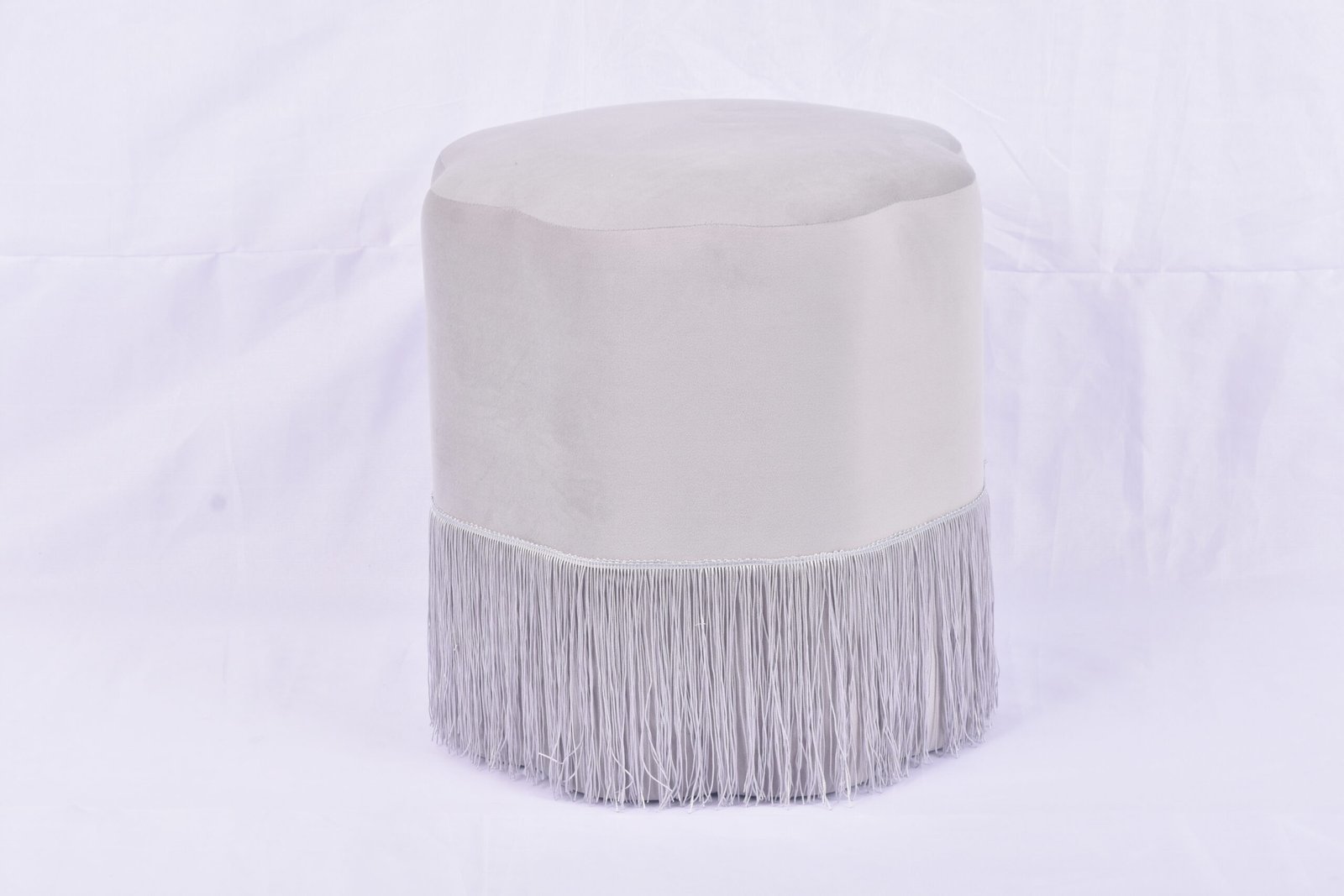
The Skirted Ottoman Is Back — And Buyers Like Me Are Treating It as a “Margin Upgrade,” Not a Vintage Detail
The secret advantage of a skirted ottoman isn’t nostalgia. It’s forgiveness.
A skirt hides legs, scuffs, uneven flooring, even minor silhouette drift — the exact “real life” issues that turn clean showroom samples into messy store reality. That’s why this silhouette is getting real attention again at U.S. markets: it makes a space feel finished, and it lets retailers price “tailoring” without adding complicated hardware.
High Point Market coverage has explicitly called out a return to dressmaker details — billowing skirts, box pleats, fringe, contrast piping — showing up across seating.
Why the trend is retail-friendly right now
At Fall 2025 High Point Market, editors flagged refreshed traditional silhouettes and even dapper plaid as a direction — a signal that heritage cues are being reintroduced in a way that still feels current.
That’s where a plaid ottoman becomes a smart retail lever: you can use plaid as “punctuation” (one hero SKU per bay) instead of turning your whole program into a pattern risk — and still get the story customers notice.
A skirted ottoman is retail-ready when it delivers:
Tailoring that holds (even skirt drop; pleats don’t twist)
Storage or seat integrity (top stays aligned; no wobble)
Assortment clarity (limited, intentional options shoppers can choose fast)
Reorder stability (fabric, handfeel, and workmanship match across POs)
Sellable storytelling (customers understand what’s different in one glance)
The buyer trap: too many options kills conversion
Vendors love to pitch 12 fabrics × 8 colors and call it “choice.” Buyers know it often becomes decision drag.
A classic university-backed study (Iyengar & Lepper, 2000) showed that large choice sets can reduce purchasing/commitment in certain contexts — the core “choice overload” finding.
My practical rule for a skirted program:
-
1 silhouette
-
2–4 core colors
-
1 seasonal pattern moment (that’s where the plaid ottoman earns its slot)
-
then let reorders do the work
How I build the set: entryway + storage + one “tailored” hero
For chain floors, the entryway storage bench is your functional anchor. The tufted storage ottoman is the evergreen staple (broad appeal). The skirted ottoman is the “designer finish” that upgrades the whole bay without increasing shopper confusion.
That trio is how you keep the assortment readable — and how you give store teams a simple story to sell.
Retail-ready product development: prototype to production without drift
If you want buyers to reorder, new product development (NPD) has to be boring in the best way.
My minimum “retail-ready product development” package:
-
spec sheet with tolerances (especially skirt drop + top alignment)
-
pre-production sample that matches bulk build
-
QC photo checkpoints (what gets checked, when, what fails)
-
fabric presentation that reduces misunderstanding online
There’s even peer-reviewed work showing that video of hands interacting with fabric improves consumers’ accuracy when judging properties like stiffness and stretchability online — the kind of detail that helps reduce “not what I expected” disappointment.
Why your chair factory background matters
If a supplier already produces wholesale upholstered dining chairs and restaurant upholstered chairs, they usually have the discipline you want: upholstery tension control, seam alignment, and repeatable cushioning feel. That “seating mindset” is exactly what makes an ottoman program scale instead of wobble.
Where Teruier fits
What buyers pay for isn’t “a skirt.” It’s the ability to translate a market cue into a reorderable SKU system — that’s value translation. Teruier’s cross-border design-to-manufacturing collaboration is most useful when it makes your skirted program predictable: clearer specs, faster sample iteration, and less drift between prototype and production.



