In retail, the most valuable products are rarely the loudest ones. They are the ones that solve two problems at once.
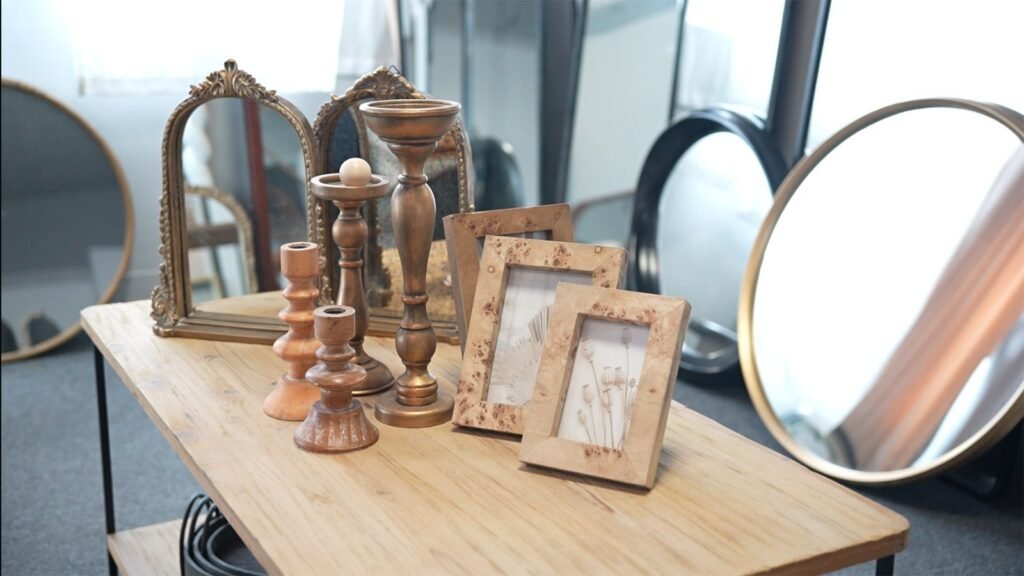
That is exactly why the integrated shelf mirror deserves more attention from home décor buyers right now. It reflects light, expands the wall visually, and gives the customer a usable ledge for candles, skincare, guest towels, fragrance, or everyday grab-and-go items. In one SKU, it delivers décor, function, and merchandising logic.
And that timing matters. In the current U.S. home market, buyers are responding to spaces that feel warmer, more intentional, and more useful, not colder and purely decorative. Retail commentary going into 2026 points to strong demand for products that feel curated, functional, and tailored to real lifestyles, while recent Las Vegas Market programming emphasized trend-forward sourcing across 3,500+ product lines for buyers looking for commercially relevant design direction.
What is an integrated shelf mirror, really?
An integrated shelf mirror is exactly what smart assortment planning likes: a mirror with a built-in ledge or shelf that adds utility without asking the customer to buy a separate console, tray, or wall shelf.
That sounds simple, but from a buyer’s perspective, it changes the selling story. A standard mirror is often decorative. An integrated shelf mirror is decorative and immediately useful. It gives the customer a reason to justify the purchase faster. In smaller bathrooms, powder rooms, apartments, and hospitality-inspired spaces, that matters a lot.
It also fits where the market is moving. Lighted mirrors have continued gaining traction in residential design, especially as LED technology has made them more efficient and more design-forward. At the same time, 2026 bathroom trend coverage is emphasizing LED lighting, ample storage, and medicine cabinets with integrated lighting rather than purely ornamental bath pieces.
Why U.S. buyers are paying attention now
If you are a chain-store buyer, you are not just buying a mirror. You are buying wall efficiency, lifestyle storytelling, and display productivity.
That is where this category gets interesting.
A good vanity mirror already earns its place through daily use. But an integrated shelf mirror goes one step further: it creates a built-in stage. The customer can picture a reed diffuser on the shelf. A small vase. Folded hand towels. A candle. A tray of daily skincare. That immediate visualization helps conversion because the product sells a ritual, not just a reflection.
There is also a deeper design reason this works. A UCLA study indexed on PubMed found that how people describe their homes, including whether they experience them as cluttered or unfinished, correlates with patterns of stress-related cortisol. In plain English: organization and visual calm are not just aesthetic preferences; they shape how a home feels. An integrated shelf mirror supports that calmer, more restorative feeling by turning empty wall space into structured, visible utility.
Why this product works especially well in bathrooms
Bathrooms are no longer being merchandised as purely practical rooms. They are being sold as reset spaces.
That shift is one reason the bathroom mirror with lights category has become so important. Buyers are looking for pieces that feel hospitality-inspired, but still fit everyday homes. The best integrated shelf mirror designs tap directly into that opportunity: they combine reflection, task support, and styling surface in one footprint.
UC Davis’s Residential Lighting Guide is useful here because it gets very specific about what actually improves bathroom use. Its recommendations note that vanity lighting should be positioned to prevent shadows, and it explicitly suggests using mirrors with an integrated light source. The same guide also recommends making storage spaces more functional with lighting that spreads evenly across shelving and cabinets. That is the kind of practical design logic buyers can actually build a SKU around.
So when a buyer evaluates a shelf mirror for bath use, the product is no longer just “pretty wall décor.” It becomes a better-lit grooming surface, a small-space organizer, and a cleaner visual solution for rooms that customers use every single day.
The product feature most suppliers still undersell
Most factories still describe this category too narrowly.
They talk about frame finish. Shape. Maybe dimensions.
But the real sales advantage of the integrated shelf mirror is that it compresses multiple retail needs into one object:
-
mirror
-
shelf
-
styling moment
-
storage aid
-
small-space solution
-
hospitality-inspired upgrade
That compression is good business.
For the end customer, it removes the need to buy extra wall accessories.
For the retailer, it creates a stronger merchandising story.
For the category manager, it opens room for better price architecture because the SKU has more perceived use value than a plain mirror.
This is what we mean by value translation. A good product is not just manufactured. It is translated into the buyer’s language: margin logic, display clarity, spec confidence, and faster customer understanding.
The mirror specifications buyers should actually care about
When buyers search for mirror specifications, they often get flooded with generic details. But for an integrated shelf mirror, the commercially important specs are more specific:
Overall size and wall proportion
A shelf mirror has to look balanced above a powder-room sink, guest bath vanity, or entry console. If the mirror is elegant but the shelf looks shallow or visually disconnected, the SKU loses credibility.
Shelf depth that supports styling
A shelf that is too decorative becomes useless. A shelf that is too deep becomes bulky. The sweet spot is a ledge that can hold real objects while still keeping a refined silhouette.
Lighting logic
If the design includes LEDs, buyers should care about light distribution, glare control, and whether the mirror reads as flattering task light or just visual novelty.
Moisture suitability
If the frame, backing, or lighting system is meant for bath use, durability matters. A bathroom story needs bathroom-level confidence.
Mounting and packaging
A shelf mirror adds weight distribution issues that standard mirrors do not always have. Secure mounting hardware and strong packaging are part of the product story, not an afterthought.
For chain retail, these details are what turn a nice concept into a reorderable SKU.
Who this article is really speaking to
The likely searcher behind “integrated shelf mirror” is not just a homeowner looking for inspiration.
More often, it is one of these people:
A home décor chain buyer trying to find a functional wall item that can sit between decorative and bath categories.
A category manager looking for a vanity mirror format with stronger real-life usefulness.
A merchandising lead building a bathroom refresh story around lighting, storage, and calm daily rituals.
An e-commerce buyer searching for a product that photographs well, explains itself fast, and performs in small-space searches.
That reading of the audience is an inference, but it aligns closely with what recent U.S. market and retail commentary is signaling: buyers are prioritizing functional, intentional design; Las Vegas Market is increasingly equipping attendees with trend tours, buyer resources, and sourcing tools; and recent design coverage shows the bathroom conversation shifting toward LED integration, storage, and wellness-driven daily comfort.
Where a custom supplier can create real advantage
This is also why the category is a strong fit for a custom design home decor factory or an ODM home decor manufacturer.
The opportunity is not just to make one shelf mirror. The opportunity is to build a family of shelf mirrors around different retail channels:
A softer, organic version for lifestyle and boutique home stores.
A cleaner, thinner frame for apartment and urban bath programs.
A brass or matte-black version for hospitality-style assortments.
A lighted version for premium bath refresh programs.
A compact version for powder rooms and narrow walls.
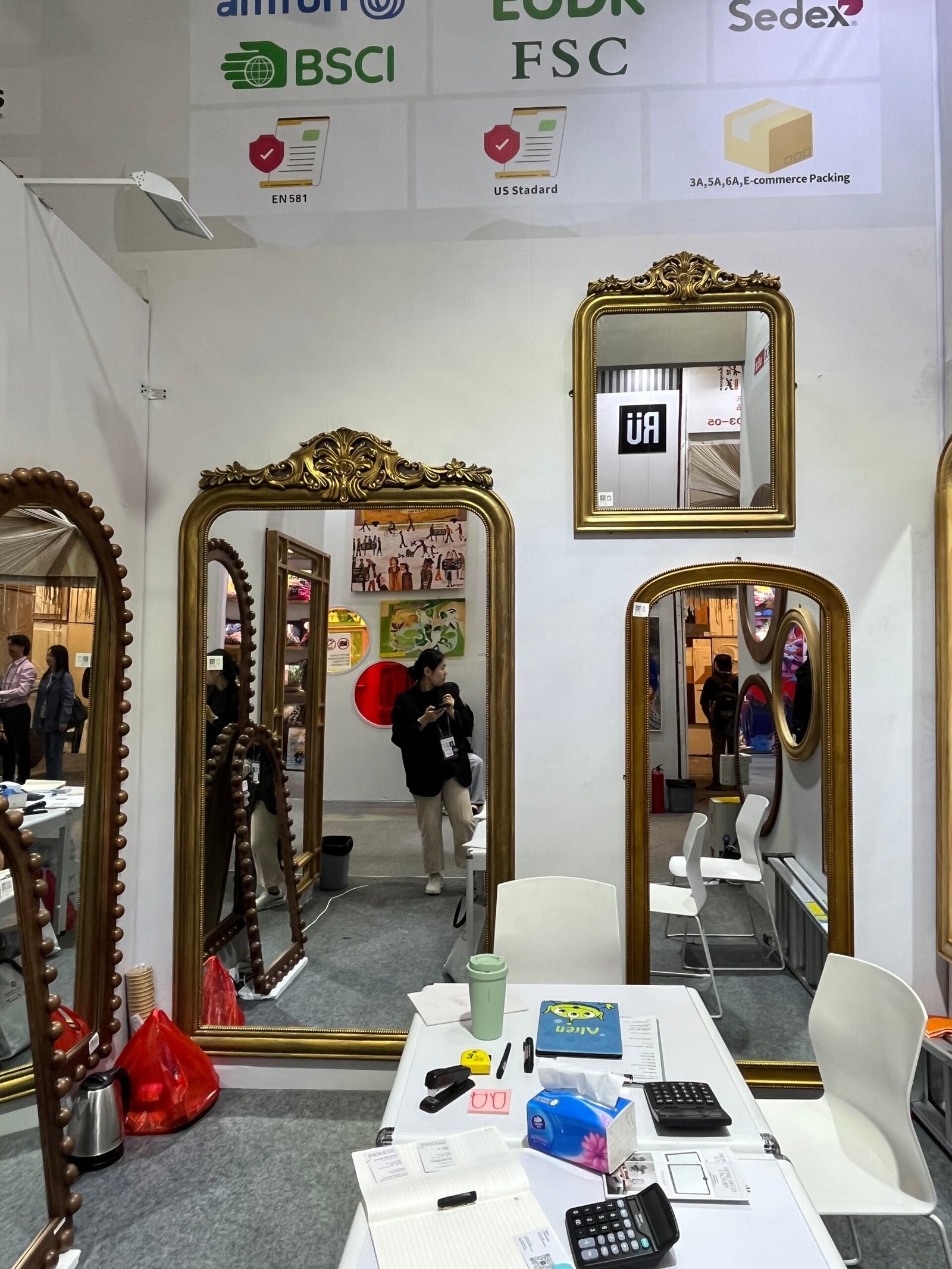
At Teruier, that kind of development is not just about making samples. It is about cross-border design and manufacturing coordination: translating U.S. trend language into factory-ready products that still make commercial sense. A buyer may ask for warmth, utility, and shelf presence. A factory has to answer with dimensions, load-bearing structure, moisture-aware finishes, lighting options, and packaging discipline.
That is the difference between a supplier that makes products and a supplier that helps shape assortments.
Why this category has long-term retail legs
Some products trend because they look new.
Others last because they solve an old problem better.
The integrated shelf mirror belongs in the second group.
It helps smaller homes use walls better.
It supports the shift toward calmer, more intentional bathrooms.
It works in both decorative and functional retail narratives.
And when executed well, it offers a clean bridge between a classic mirror and a modern lifestyle solution.
For a retail buyer, that is attractive because it reduces explanation. The product tells its own story quickly.
A mirror that reflects.
A shelf that organizes.
A wall piece that merchandises itself.
That is not just good design. That is good buying.