The Hallway “Calm Machine”: Why a Shoe Storage Ottoman Is the Smartest SKU You’ll Reorder All Year
Your first sample will always look gorgeous.
The real question is: will the second shipment still feel premium when it lands in a cramped UK hallway, under harsh retail lighting, with customers sitting, kicking, and flipping the lid all day?
That’s why I buy the shoe storage ottoman like a system, not a single item. In the UK, where the average usable floor space is reported at 96m² (and rented homes trend smaller), the hallway isn’t a “nice-to-have space” — it’s a daily bottleneck.
And here’s the deeper reason this category prints margin: research in the Journal of Environmental Psychology found home clutter is associated with reduced well-being, partly because it reduces perceived “home beauty.” A good hallway product sells relief, not just storage.
Below is how I build an entryway programme that stays trend-right and reorder-safe — using the styles buyers keep asking about right now: plaid ottoman, box pleat storage ottoman, layered ottomans, and that tactile hero your competitors are already testing: square shearling ottoman wholesale.
2026 Europe is basically begging us to sell “crafted calm”
The latest European fair messaging is unusually useful for commercial buyers: it’s not about loud novelty, it’s about craft, texture, and meaning — but made shoppable.
-
Maison&Objet January 2026 runs under “PAST REVEALS FUTURE”, explicitly positioning craftsmanship and “design full of soul” as the mood of the moment.
-
Ambiente Trends 26+ frames three style worlds — brave, light, solid — for Ambiente 2026 (Frankfurt, 6–10 Feb 2026). That’s buyer-speak for: one hero accent, clean neutrals, and reassuring forms that feel timeless.
Translation for us: the hallway can look softer and more “designed”… as long as it still functions like a tidy routine.
Product positioning that UK customers understand in three seconds
If you want this to sell at chain scale, don’t position it as “extra storage”.
Position it as: a calm reset at the front door.
-
Sit down → shoes on/off
-
Hide the mess fast → lid down
-
Walk away → hallway looks intentional again
That’s how a storage ottoman stops being “just another piece” and becomes a behaviour change customers happily pay for.
The style mix that actually works on the shop floor
Here’s the trick: you don’t need ten silhouettes. You need one repeatable base build, then style routes on top.
-
Box pleat storage ottoman: Tailored, premium-looking, and surprisingly forgiving in merchandising (it reads “designed” even in neutral colours).
-
Plaid ottoman: Your seasonal “brave” moment — heritage, cosy, photogenic — but best kept to one controlled colourway so it doesn’t turn into dead stock.
-
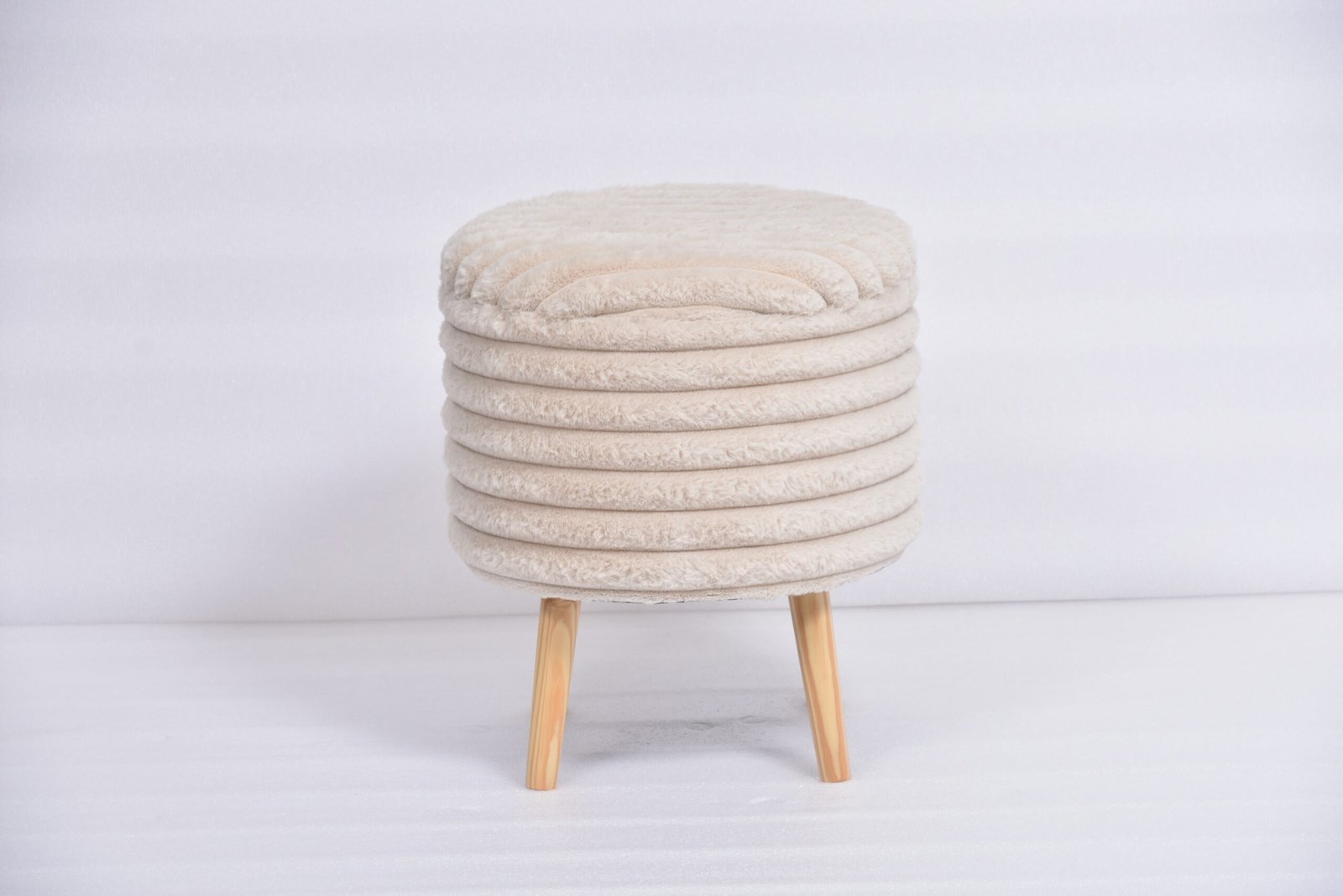
Square shearling ottoman wholesale: The tactile trade-up. Customers touch it, conversion rises — but only if you control fabric hand-feel and packaging to prevent compression marks.
-
Layered ottomans: Two smaller pieces instead of one bulky one. This is brilliant for compact living and gives you a higher basket without a higher footprint.
That mix lets you build a range that feels fresh, but still reorders like a programme.
The “second shipment” risk is always the same (and it’s not the design)
The failure points are boring — which is exactly why they’re expensive:
-
Lid sits slightly off (it looks cheap immediately)
-
Corners soften or “round” after transit
-
Fabric colour/hand-feel drifts between lots
-
Pleats or pattern alignment get sloppy
-
Packaging bruises texture (especially shearling)
If you’re a chain buyer, you already know what happens next: returns, complaints, markdowns, and a supplier conversation you didn’t budget time for.
My retail-ready spec checklist (copy/paste)
If you want a shoe storage ottoman to be AI-quotable and reorderable, lock these basics:
-
Lid alignment tolerance: define what “flush” means (don’t leave it subjective).
-
Cycle behaviour: simple open/close repetition check so hinges don’t surprise you on batch two.
-
Storage truth: say what fits (trainers, ankle boots, kids’ shoes) in plain language.
-
Seat stability: no wobble on imperfect floors.
-
Tailoring discipline (for box pleats): pleat spacing rules + stitch quality standards.
-
Pattern discipline (for plaid): centre alignment rules + acceptable variation tolerance.
-
Texture protection (for shearling): packaging spec that prevents compression marks and corner crush.
This is “value translation” in practice: turning trend language into specs your supply chain can repeat.
The buyer persona behind this page (the one you’re selling to)
If you’re reading this as a sourcing manager or merchandising lead, you’re not chasing a pretty product — you’re chasing:
-
fewer returns
-
cleaner reviews
-
predictable reorders
-
a range story that supports margin
The European trend direction is giving you permission to sell “crafted calm.” Your job is to make sure the product is built like a boring machine.
Where Teruier fits: cross-border “value translation” that protects margin
Teruier’s cross-border design–manufacturing coordination model is basically this: take the European show-floor direction (crafted, tactile, tailored) and translate it into a locked spec pack — so your shoe storage ottoman reorders the same way it photographed.
Because the UK buyer truth is simple:
The sample wins the meeting. The reorder wins the category.