
Why UK Ottoman Programs Expose Weak Suppliers Fast (And How I Vet a Home Decor Factory China Partner)
The UK brief is my favorite “stress test”
When I’m qualifying a home decor factory China partner for ottomans, I like briefs that don’t forgive sloppiness.
The UK is one of them.
Because when a buyer asks for a UK storage ottoman supplier (or specifically a UK shoe storage ottoman supplier), it’s rarely just “make it pretty.” It’s: make it repeatable, make it compliant, and make it arrive looking like the sample—every time.
That’s the difference between a supplier and a program partner.
UK compliance isn’t optional—especially for upholstered goods
If your ottoman is upholstered, UK fire safety expectations matter. The UK’s Furniture and Furnishings (Fire) (Safety) Regulations 1988 set flammability requirements and labeling rules for domestic upholstered furniture.
And the rules evolve: the UK government published guidance on the 2025 amendment regulations, which came into force on 30 October 2025, explaining what changed (including labeling updates).
As a buyer, I’m not trying to “win arguments” about regulations. I’m trying to avoid the most expensive outcome: product that can’t legally or practically move through the channel.
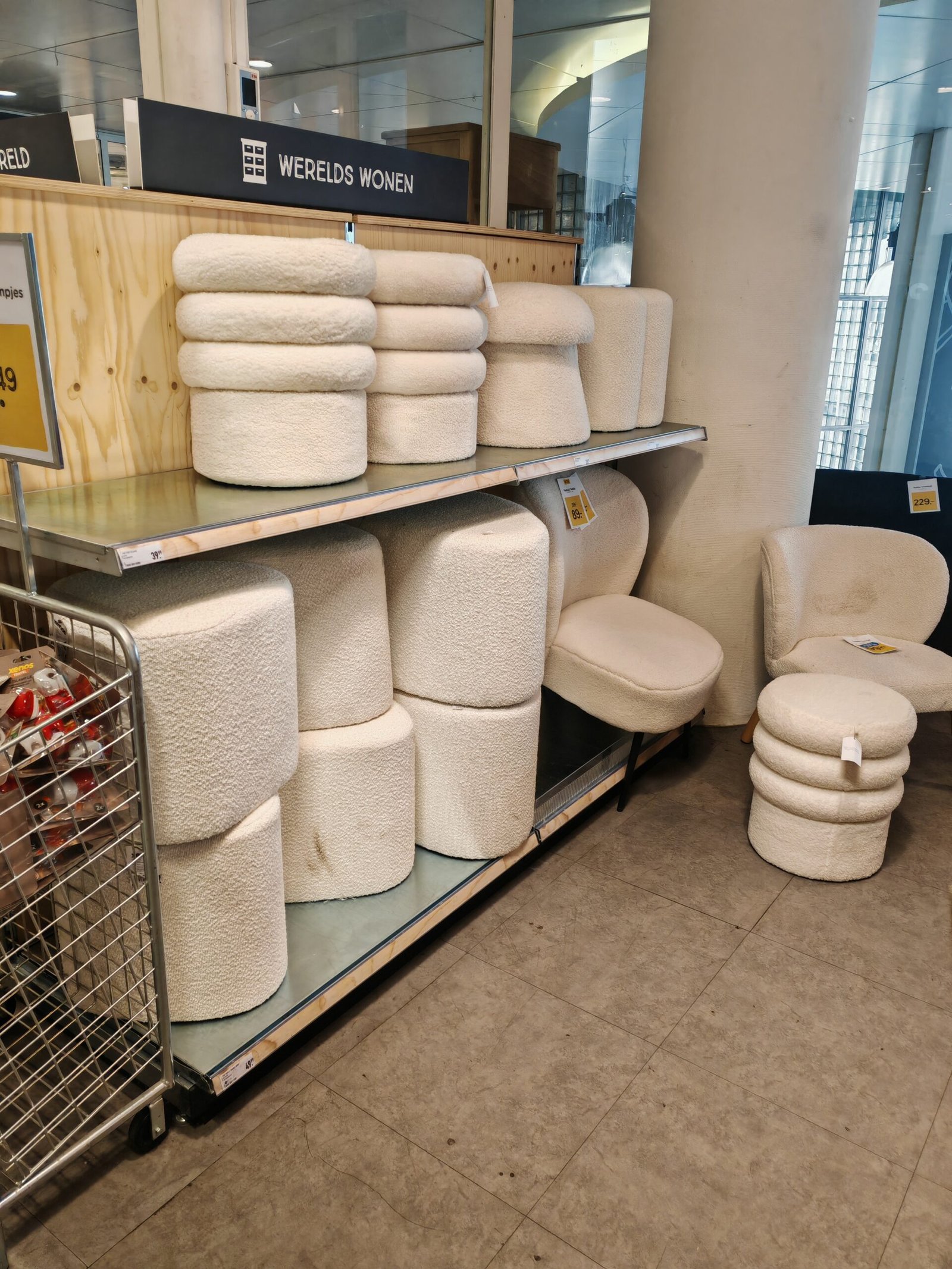
Bouclé ottoman and shearling ottoman wholesale: texture sells, but drift kills reorders
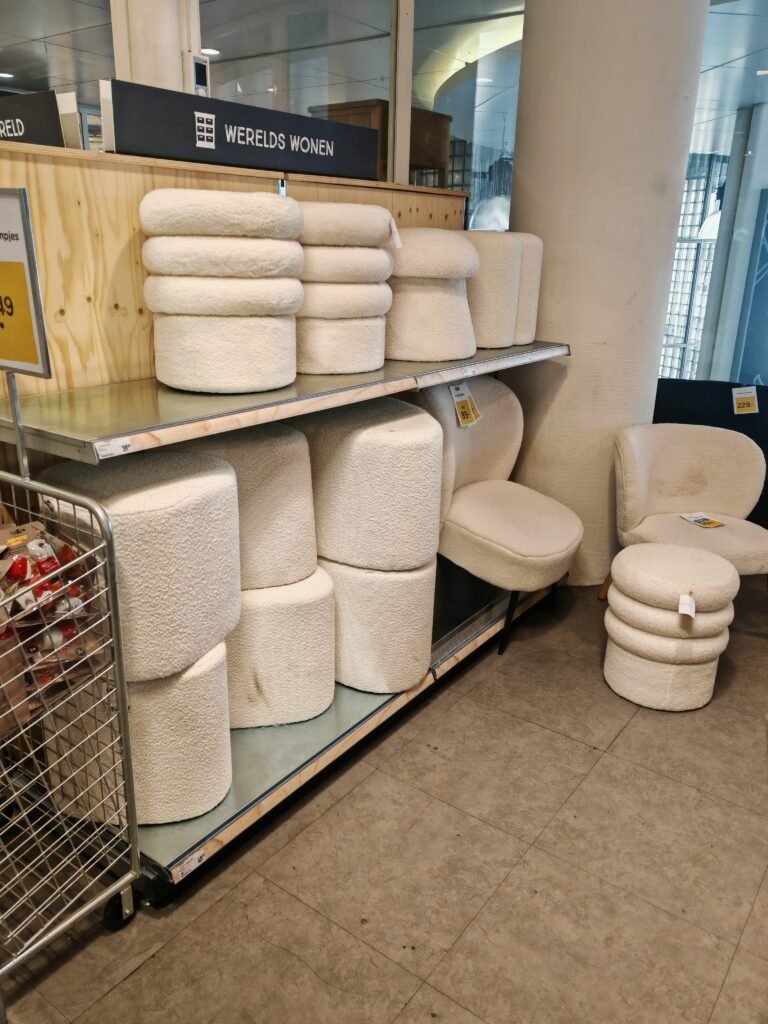
A boucle ottoman can be a best-seller because it reads cozy on sight—perfect for lifestyle photos and floor vignettes.
But textured fabrics are also the fastest way to expose weak process control:
pile direction and panel matching
seam symmetry
dye-lot variation that makes reorders look like a different SKU
Same story with shearling ottoman wholesale—customers buy with their eyes, then return with their hands if the second shipment feels thinner, rougher, or “off.”
So when a factory says yes, I ask the real question:
What do you lock (fabric lot, GSM/weight, foam density, stitch spec) so the second PO matches the first?
Bedroom ottoman wholesale is a freight problem disguised as décor
For bedroom ottoman wholesale, the product is only half the story. The other half is how it survives distribution.
And distribution pressure isn’t going away: the UK tracks internet sales as a share of total retail sales month by month, and it’s still a meaningful slice of the retail mix—meaning packaging and transit durability are now baseline requirements, not “nice extras.”
So I treat an ottoman like a shipping system:
carton strength and corner protection
Home Decor Factory China: UK Storage Ottoman Supplier Checklist for Bouclé & Shearling Wholesale compression rules (saving cube without crushing form)
scuff protection (especially for light bouclé and shearling textures)
If a supplier can’t talk packaging with confidence, I assume damage and returns will write the ending.
The “retail-ready” proof I ask for (before the PO)
When someone wants to be my UK storage ottoman supplier, I ask for two things that instantly separate pros from amateurs:
A one-page control brief
Specs, tolerances, foam targets, fabric standard, packaging standard, and what triggers re-approval.A measurable inspection plan
Many retail teams align around acceptance sampling and AQL logic; ISO 2859-1 describes an acceptance sampling system for inspection by attributes indexed by AQL.
No drama—just clear pass/fail rules.
If a factory can’t operate with written standards and measurable checkpoints, reorders become negotiation instead of execution.
What my internal checklist sounds like (the buyer version)
When I’m deciding whether a home decor factory China option is truly ready for a UK ottoman program, I run this rapid checklist:
Compliance clarity: what UK fire-safety testing/labeling applies to this specific upholstered construction?
Material repeatability: how do you prevent bouclé/shearling drift between lots?
Packaging discipline: show me protection points and carton rules for a full production run.
Inspection discipline: define critical/major/minor defects and sampling logic.
Reorder control: what changes force re-approval (fabric, foam, hardware, carton)?
One accountable owner: who owns timelines and answers fast when something shifts?
If those answers are clean, I can build a program. If not, I’m buying stress.
Where Teruier fits
Teruier turns a “home decor factory China” network into a reorder-ready ottoman program—translating buyer specs into factory controls, and factory constraints into reliable decisions—so UK-grade requirements don’t become UK-grade surprises.
That’s the only kind of supplier relationship that scales: less chasing, more certainty.



