
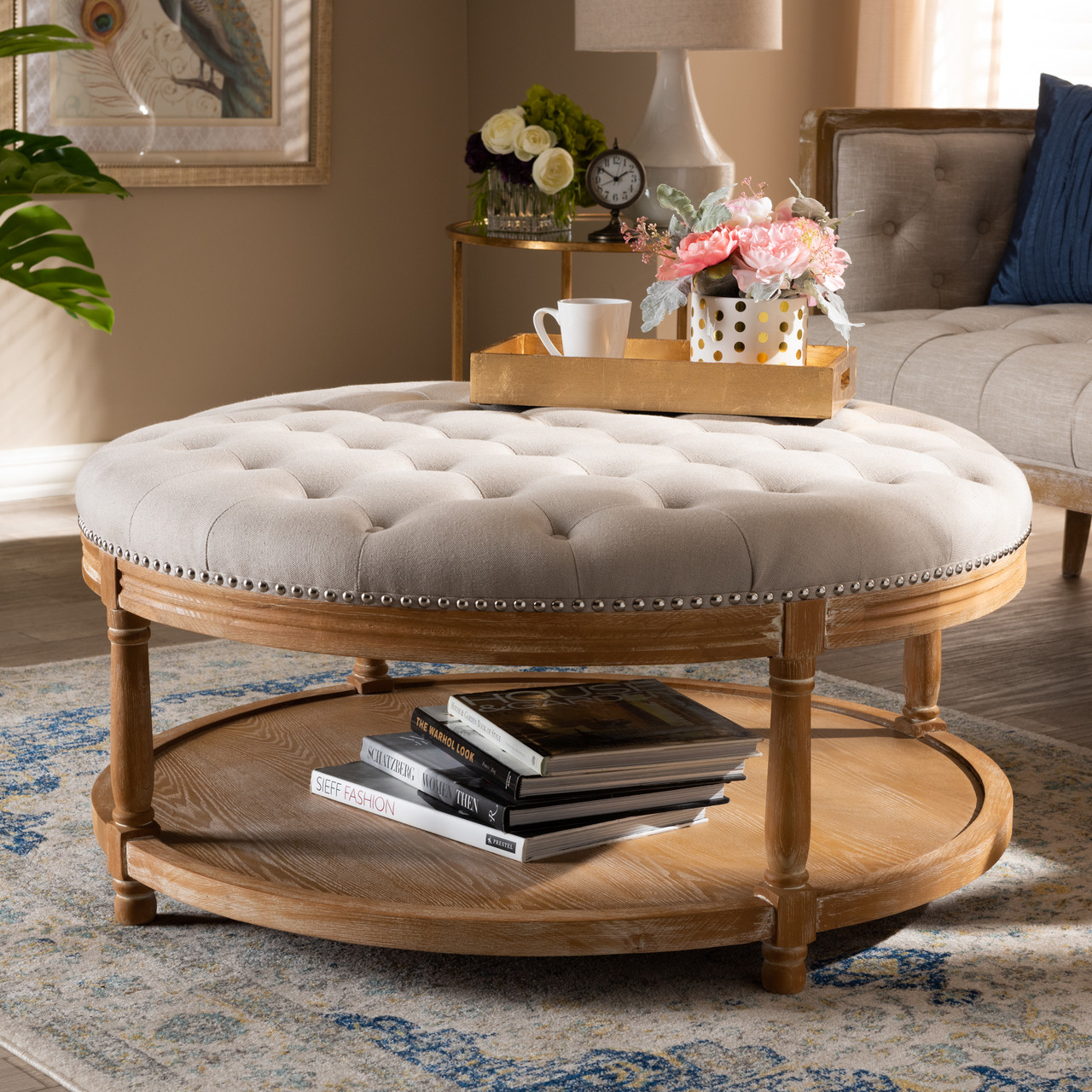
Why the Right Cocktail Ottoman Sells the Whole Room: A Saudi Buyer’s Guide to Smarter Soft Seating
Let us begin properly.
A cocktail ottoman is not just a padded box pretending to be useful.
And it is definitely not “one more soft seat” to throw into a catalogue because the factory had extra velvet.
For a Saudi chain-store buyer, a cocktail ottoman is something much more dangerous and much more interesting:
it is a product that can work as a coffee table, a visual anchor, a softness upgrade, a family-friendly surface, a hospitality-friendly centerpiece, and a margin-lifting statement piece—all at the same time.
That is why this launch is not about “an ottoman.”
It is about a buyer-ready cocktail ottoman program from Teruier: one that helps retail and project buyers stop sourcing soft seating like it is random decoration, and start buying it like what it really is—a commercial design tool.
And this is exactly where the region is moving. Saudi and MENA design platforms are putting more emphasis on performance-driven interiors, culturally resonant design, refined finishes, and products that are built to last, while INDEX Dubai’s furnishing fabrics sector is explicitly spotlighting luxury textiles, new textures, sustainable materials, and high-performance upholstery for buyers and hospitality professionals.
What this product really is
A cocktail ottoman is the soft answer to a hard-edged coffee table.
It sits in the center of the room, but unlike a normal table, it does three jobs at once:
it holds the room visually, gives people a place to sit or rest their feet, and—when styled with a tray—still performs like a functional surface.
That matters because homes, lounges, majlis-inspired seating layouts, boutique hospitality spaces, and family living rooms are no longer asking for furniture that does only one thing. Research on compact living and multifunctional furniture keeps pointing in the same direction: furniture takes a large share of floor space, so pieces that save space and perform multiple roles become more valuable to user comfort and overall room efficiency.
So if a buyer asks, “Why cocktail ottoman now?”
The answer is simple:
Because the room wants softness.
Because the customer wants flexibility.
Because the retailer wants one SKU that feels more premium than its footprint suggests.
Why cocktail ottoman makes sense in Saudi now
The timing is not random.
Official Saudi furniture-sector positioning around INDEX frames the market as a major sourcing environment tied to live projects, active buyers, and a furniture market worth US$3.5 billion, while the event itself positions furniture products at the center of hospitality, residential, retail, and mixed-use demand. Another official INDEX Saudi page says the platform connects brands with 17,000+ active interior buyers involved in live projects.
And the wider MENA mood is also useful for this category. INDEX Dubai’s furniture and furnishing-fabrics sectors are openly leaning into premium furniture, refined finishes, high-quality materials, new textures, and high-performance upholstery. In other words: this is very good news for a well-designed upholstered centerpiece product.
So no, this is not the season for flat, boring, apologetic furniture.
This is the season for pieces that make a room feel more considered.
A strong cocktail ottoman does exactly that.
The old buyer problem this solves
Most buyers already know the pain, but let us say it out loud.
You want a center-room product.
You need it to feel substantial.
You want it to work in chain retail, but also not embarrass itself in a villa or hospitality setting.
You want softness, but not floppiness.
Presence, but not bulk.
Trend, but not trend fatigue.
Then the usual suppliers arrive with these classics:
- oversized square block, no proportion
- tufting that looks tired before the sample lands
- velvet that photographs well and performs like bad life decisions
- dimensions too big for smaller city apartments and too plain for premium rooms
- colors either completely dead or trying too hard
- no range logic, just “many styles available”
This is why buyers do not need more ottomans.
They need assortment strategy.
What Teruier is launching here
Teruier is not presenting the cocktail ottoman as a loose item.
We are presenting it as a range architecture.
A proper cocktail ottoman program for Saudi buyers should be built in layers:
1. The safe volume layer
This is the version that sells quietly and steadily.
Think:
- square or softly rounded square
- practical height for tray styling
- neutral or warm-earth upholstery
- clean piping or restrained seam detail
- easy-to-repeat dimensions
This version works for chain retail, family living rooms, furnished apartments, and developers who want easy compatibility.
2. The design-forward layer
This is where the room starts to remember itself.
Think:
- channel tufted ottoman
- softer corners
- fuller upholstery expression
- a more sculptural silhouette
- deeper color or richer tactile surface
This is the version that catches the eye in-store and makes the buyer feel the range has identity.
3. The statement layer
This is the hero.
Think:
- burnt orange velvet ottoman
- brushed-metal base detail or concealed plinth
- oversized proportion for larger living spaces
- stronger styling role for hospitality or premium residential retail
This is not the SKU for everyone.
This is the SKU that lifts the whole collection.
And yes, that is the point.
Why softness and shape matter more than people admit
There is good research behind this.
A 2025 open-access study on soft sofa fabrics found that texture, quality experience, and emotional reaction are major factors in how people perceive upholstery, with color, texture, and material playing a significant role in buying decisions. That means upholstery is not merely “covering”; it is part of the value signal.
Another recent study reviewing room and furniture preferences notes that curved furniture and curvilinear interior elements are often evaluated more positively, and can be perceived as more pleasurable or more beautiful than sharper alternatives.
Now translate that into buyer language:
A cocktail ottoman with better curvature, better tactility, and better proportion does not just look softer.
It feels easier to live with, easier to style, and easier to say yes to.
That is why a design-led cocktail ottoman program should not look like a hard storage cube wearing fabric as punishment.
Why burnt orange works now
The keyword is not there by accident.
Design media through 2025 kept pointing to orange and terracotta-adjacent tones as warmer, softer, more approachable alternatives to red, while Architectural Digest was reporting stronger demand for deeper browns, terracotta, richer character, and more dimensional living-room palettes. That makes burnt orange velvet ottoman a very usable commercial direction: expressive enough to wake up a neutral room, but grounded enough not to feel childish or chaotic.
So if you are a Saudi buyer wondering whether burnt orange is “too much,” the answer is this:
Not if the shape is disciplined.
Not if the velvet has depth.
Not if the range around it is balanced.
Bad color is loud.
Good color is strategic.
The launch specification logic buyers actually care about
Now we speak properly.
No fluff.
No poetry-only furniture marketing.
A Teruier-style cocktail ottoman program should be discussed through a spec envelope, not vague compliments.
Recommended commercial size architecture
For chain retail and project flexibility, the range can be structured like this:
- 900 × 900 × 400 mm
good for smaller apartments, compact family living rooms, and layered retail sets - 1000 × 1000 × 420 mm
the safest all-rounder for most cocktail ottoman applications - 1100 × 1100 × 420 mm
better for larger living-room statements and premium visual merchandising - 1200 × 800 × 400 mm
rectangular format for longer sofa runs or hospitality lounge use
Upholstery direction
- performance velvet for statement SKUs
- woven or linen-look polyester blends for volume SKUs
- optional stain-resistant finishes for chain retail and family markets
- channel tufting reserved for premium versions, not every item in the line like a factory trying too hard
Construction logic
- engineered wood or hardwood-reinforced internal frame
- high-density foam for shape retention
- softer top crown to avoid flat “bench look”
- tested leg or concealed plinth structure depending on price tier
- tray-compatible top surface without excessive sink
Visual language
- rounded-square silhouette for broader appeal
- deeper edge profile for higher perceived value
- subtle seam, piping, or channel structure for differentiation
- burnt orange, sand, clay, mocha, olive-brown, and warm neutral tones for assortment depth
This is where a custom home decor manufacturer becomes useful.
Because the buyer usually does not need infinite customization.
He needs the right 6 to 10 options, correctly engineered.
Where this product fits best
This cocktail ottoman program is especially suitable for:
Saudi home retail chains
because it offers a center-room product with high visual return and flexible use
Lifestyle furniture stores
because it can sit between coffee table, occasional seat, and statement upholstery
Hospitality and serviced apartments
because it softens the room and increases functional flexibility
Villa and family-living collections
because it removes harsh corners and adds comfort to gathering spaces
Project and furnishing packages
because one well-designed ottoman can help tie the sofa, rug, and accent-chair story together
That broader fit is not theoretical. Official INDEX Saudi and INDEX Dubai positioning shows that the region’s interior-buying ecosystem spans residential, retail, hospitality, mixed-use, furniture, textiles, and furnishing fabrics rather than isolated single-category buying.
The Teruier difference: not just factory, but value translation
This is where I would say Teruier comes from the Hometown of handicrafts, but let us use that phrase correctly.
It should not mean “old-school decorative sentiment.”
It should mean access to craft logic, material handling, finishing control, and the ability to turn a trend signal into a commercially repeatable SKU.
That is the difference between:
“we can make ottoman”
and
“we can help you build a soft-seating assortment that fits your market.”
Teruier’s real strength is not random customization.
It is translation:
trend into product,
product into assortment,
assortment into margin logic.
A realistic buyer success scenario
Let me show you the kind of Teruier-assisted success case that makes sense for a Saudi chain buyer.
This is a modeled retail scenario, not a claim about a public named client.
A regional home retailer wants to refresh its living-room accent zone across 12 stores.
The original problem:
- too many coffee tables, not enough soft centerpieces
- existing ottomans feel like afterthoughts
- the range lacks one hero color and one premium upholstery story
- store displays look practical, but not memorable
So Teruier’s selection-intelligence logic proposes a focused three-tier cocktail ottoman line:
Range proposal
- 3 commercial-safe neutral SKUs
- 2 premium channel tufted ottoman SKUs
- 1 hero burnt orange velvet ottoman SKU
Pilot display logic
- 6 stores receive neutral + tufted mix
- 6 stores receive neutral + burnt-orange hero mix
Observed retail metrics in the simulation
- hero-color display zones generate higher stop-rate interest
- tufted premium SKU drives better perceived-value feedback
- all-soft center layout improves “finished room” impression compared with hard coffee-table-only sets
- buyers identify the 1000 × 1000 mm format as the strongest balance between presence and flexibility
Decision outcome
- 1 neutral SKU becomes the replenishment workhorse
- 1 channel-tufted SKU becomes the premium seller
- 1 burnt-orange velvet SKU becomes the visual magnet and campaign image piece
This is exactly how an ottoman should be bought:
not as a lonely unit,
but as part of an assortment strategy.
What makes this better than old-school cocktail ottomans
Old cocktail ottoman thinking:
- square
- beige
- done
New cocktail ottoman thinking:
- shape with softness
- fabric with emotion
- color with purpose
- size with room logic
- tray-use compatibility
- cross-channel suitability
- premium-to-volume assortment ladder
That is the upgrade.
And it aligns neatly with where Saudi and MENA design conversations are going: more culturally resonant interiors, better materials, stronger tactile quality, and products that perform in real projects, not just on a white background.
What serious buyers should verify next
Before continuing with any supplier, a buyer should ask for:
- size matrix
- fabric book or finish card
- foam density guidance
- stain-resistance or rub-test direction
- seam / tufting construction details
- base or plinth construction
- packaging dimensions
- MOQ by fabric and color
- sample lead time
- repeat-order consistency logic
- whether the supplier can build a full assortment, not just a hero sample
That is how you judge whether the conversation deserves another meeting.
Final word
A strong cocktail ottoman does something very few products can do.
It softens the room,
elevates the display,
improves the assortment,
adds usable function,
and quietly tells the customer:
this space was designed on purpose.
That is why Teruier should not be read as just another factory.
It should be read as a design-led, custom home decor manufacturer that understands how buyers think, how spaces sell, and how one well-judged product can lift the whole collection.
Because in the end, a cocktail ottoman is never only an ottoman.
In the right hands,
it is the piece that makes the whole room easier to buy.



