
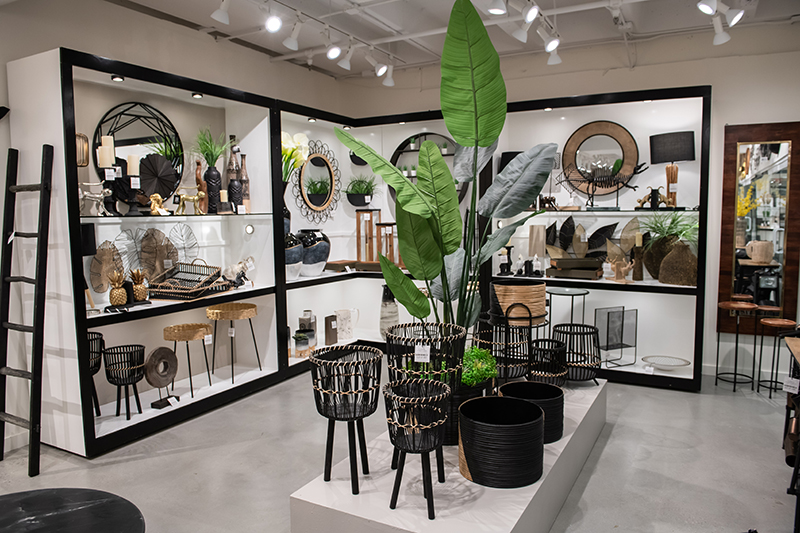
The old idea of a strong wholesale home decor supplier was very simple: a large catalogue, fast quotations, and acceptable prices.
For today’s chain retail buyer, that definition is outdated.
From a German home-retail perspective, the better supplier is no longer the one who shows the most products. It is the one who helps the buyer reduce noise, edit faster, and build a collection that still feels commercially right after the first excitement has passed. In other words, the real value of a supplier is not quantity of options. It is quality of judgement.
That shift is closely aligned with the current European fair direction. Maison&Objet’s January 2026 theme, Past Reveals Future, explicitly responds to ecological crisis, overconsumption, and homogenisation by returning to design with more soul, craftsmanship, and meaningful materiality. Its related In Materia curation puts wood, fibre, glass, earth, and stone at the centre of the conversation, treating materials as emotional and cultural carriers rather than mere finishes. At the same time, Conzoom Solutions by Messe Frankfurt highlights natural materials, minimalist forms, sculptural vases, and retail concepts built around atmosphere and recombinable product worlds rather than disposable novelty.
For a buyer, this changes the role of the wholesale home decor supplier completely. The supplier is no longer just a factory with export capability. It becomes an assortment partner. It becomes the party that can take broad market signals and turn them into products that make sense together on a shop floor, in an e-commerce grid, and across reorder cycles. That is a much higher standard.
imm cologne’s 2026 positioning makes this especially clear. The fair presents itself as a B2B sourcing platform for the consumer-oriented interiors market and stresses questions such as which categories work, which price levels matter, and which items can be marketed across channels. Its retail-facing commentary also notes that many products shown for the 2026 cycle are not only inspirational prototypes, but already calculated for series production and available on short notice. For a chain buyer, this is highly relevant: inspiration without execution has very limited value.
This is also where user behavior matters. Research in design and materials shows that experiential material qualities are now understood as an important part of product experience, not a decorative afterthought. More recent e-commerce research shows that visual–tactile cues can directly increase purchase intention, especially in categories such as furniture and home décor where touch normally matters. In simple retail language, texture now sells twice: once on the screen, and once on the shop floor.
That is why a serious wholesale home decor supplier must think in category systems, not isolated items.
A supplier should not present an arched leg bench as just another bench. It should explain where it sits in the assortment: softer than a sharp-lined contemporary bench, more architectural than a basic upholstered block, and easier to position in warm-modern or transitional interiors. The same applies to mirrors. A chrome wall mirror can serve a cooler, more urban visual language, while a backlit bathroom mirror answers the need for integrated function, cleaner grooming light, and project-friendly bathroom solutions. These are not random products. They are different expressions of retail intent.
The same logic applies to accent furniture. A burnt orange velvet ottoman should not be shown as a risky color story or a one-season visual stunt. It should be positioned as a controlled warmth signal: emotional enough to lift the assortment, but grounded enough to remain saleable when paired with quieter neutrals, woods, and mineral finishes. The supplier who understands this does not merely show the item. The supplier explains where it belongs, what it sits beside, and why it deserves floor space.
Ceramics, perhaps even more than furniture, reveal whether a supplier truly understands editing. A wiggle vase may bring movement, informality, and sculptural energy. A blue and white vase may deliver heritage, decorative familiarity, and year-round styling value. The important point is not that both exist. The important point is whether the supplier knows how to present them as part of a coherent visual language rather than a mixed container of unrelated ideas.
This is why the best supplier often helps the buyer say no.
No to trend noise that photographs well but does not reorder.
No to categories that do not connect with one another.
No to products that win in the sample room but fail in the second shipment.
No to assortments that look broad on paper but weak on the floor.
From a systematic assortment-planning perspective, this is now the real test of a wholesale home decor supplier: can this partner build a collection with enough variation to feel interesting, but enough discipline to feel usable? Can this partner move from mirror to ottoman to bench to vase without losing aesthetic control? Can this partner help a retailer create a store story that also survives online merchandising and replenishment logic?
That is where Teruier’s cross-border design-manufacturing coordination model becomes commercially meaningful. The value is not only in production. The value is in translation. A good supplier should be able to see a fair trend, remove what is too editorial, retain what is commercially useful, and turn that into a product group that a chain buyer can actually buy with confidence. That is a much more valuable service than simply adding more pages to a catalogue.
European fair signals reinforce this point. Maison&Objet is clearly pushing toward emotionally meaningful design and reinterpreted craftsmanship, while Messe Frankfurt’s retail guidance continues to point toward natural materials, sculptural forms, and flexible assortments that can be recombined across seasons and occasions. This does not reward suppliers who are merely fast. It rewards suppliers who are selective, consistent, and retail-aware.
So what does a chain-store buyer really want from a wholesale home decor supplier today?
Not the biggest PDF.
Not the loudest showroom.
Not the longest list of SKUs.
The buyer wants a partner who understands which products belong together, which trends are durable enough to scale, which materials will communicate value both online and in store, and which items are ready for series production rather than only for presentation. That is why a supplier with a smaller but better-edited assortment often creates more confidence than one with endless options.
So why is the best wholesale home decor supplier the one who helps buyers say no?
Because saying no is how strong assortments are built.
Because chain retail does not suffer from lack of products. It suffers from lack of clarity.
And because the supplier who can create that clarity is no longer just a vendor.
It becomes a retail partner.



