There was a time when a bathroom mirror could succeed by doing one job well: reflecting the face, enlarging the wall, and completing the vanity. That time is passing. In today’s market, especially in the Middle East, the better question is no longer, “Does the mirror look premium enough?” It is, “Does it solve enough of the room to earn its space?” That is exactly why the medicine cabinet mirror deserves more attention from serious retail buyers.
From a Middle East home-retail perspective, this category is no longer a purely practical bathroom item. It has become a hybrid product: part mirror, part storage solution, part lighting decision, and in some cases part lifestyle upgrade. That matters because regional interiors are moving toward higher-quality, more integrated, more project-ready solutions. Official platforms around Saudi design now speak very clearly in this direction. INDEX Saudi positions itself as the place “where Saudi Arabia’s projects source interior innovation,” bringing together buyers across residential, hospitality, commercial, and fit-out sectors, while its Design Talks focus on the future of interiors through sustainability, tech innovation, and the influence of Vision 2030. Downtown Design Riyadh, meanwhile, frames the regional design shift around contemporary quality, craftsmanship, and innovation.
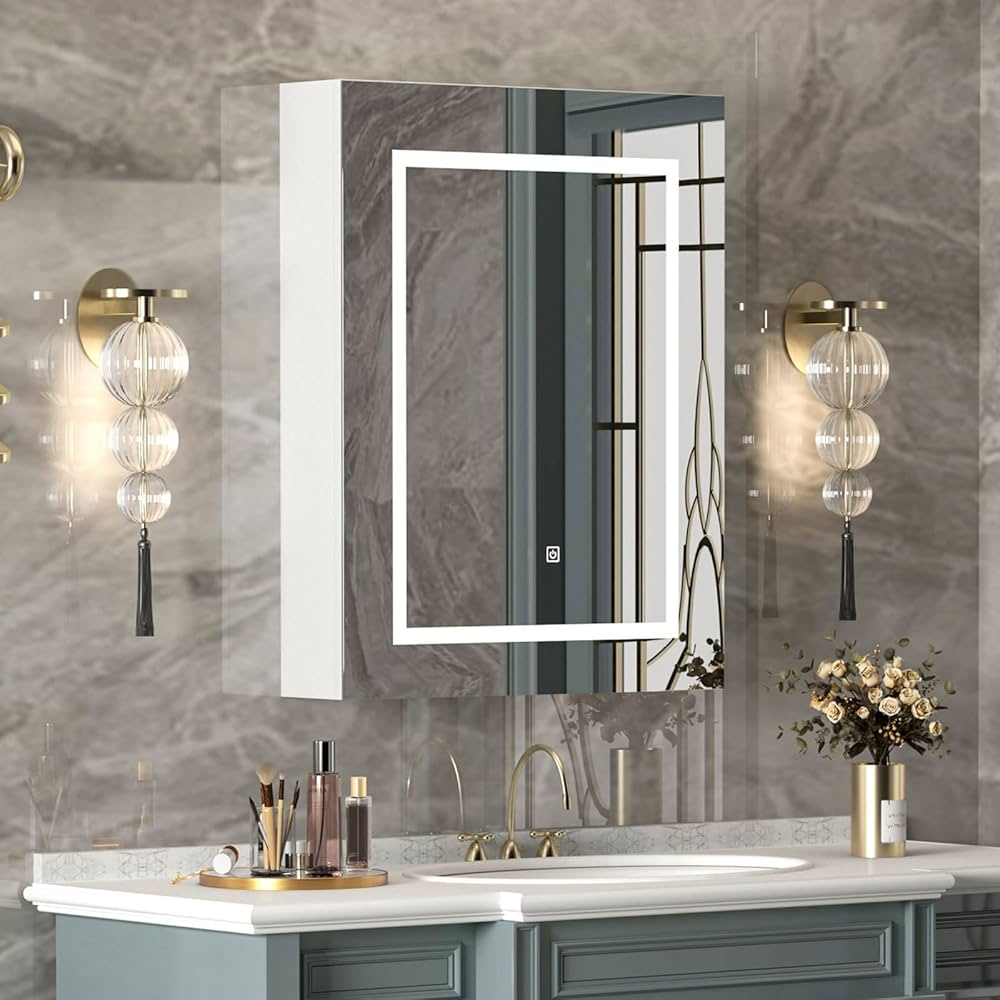
This is why the medicine cabinet mirror is becoming more relevant. It fits the current market logic better than a simple wall mirror because it combines visible value and hidden value in one object. The visible value is clean design, light reflection, and finish. The hidden value is storage, order, and better daily use. In practical retail language, this is strong value translation: one product answers several customer needs without asking for more wall space. In a region where bathrooms are increasingly expected to feel both polished and efficient, that is commercially powerful.
There is also a psychological reason this category works. A 2025 study in Journal of Environmental Psychology found that home clutter is associated with reduced well-being, while greater perceived home beauty is associated with better well-being. That matters more than many bathroom suppliers realize. A medicine cabinet mirror is not only about storage capacity. It is about reducing visible clutter in one of the most repeatedly used spaces in the home. When everyday products disappear behind the mirror, the bathroom feels calmer, cleaner, and more premium. This is not only a styling effect. It is a user experience effect.
Another reason the category sells well is visual confidence. In online shopping and modern retail displays, buyers and end customers often decide before touch ever happens. A 2026 peer-reviewed study found that strong visual-tactile cues can directly increase purchase intention in e-commerce by improving immersion and reducing uncertainty. For bathroom mirrors, this is highly relevant. A strong medicine cabinet mirror can communicate depth, finish quality, edge detail, hinge precision, and lighting sophistication through imagery alone. This is why well-developed variants such as a backlit bathroom mirror, a brass frame mirror, or even a more atmospheric smoked mirror can perform strongly both in showrooms and on digital product pages.
The user profile is also very clear. The target customer is not only a luxury buyer. It is also the mainstream Middle East customer who increasingly expects the bathroom to feel like a smaller version of hospitality living: cleaner, brighter, more organized, and easier to use. This is exactly where regional fair signals and product reality meet. Saudi projects are expanding across villas, hotels, mixed-use destinations, and residential developments, and the buyers attending INDEX Saudi include developers, hotel owners, architects, fit-out specialists, and distributors. That means the market is rewarding products that are not merely decorative, but adaptable across project types. The medicine cabinet mirror fits that requirement very well.
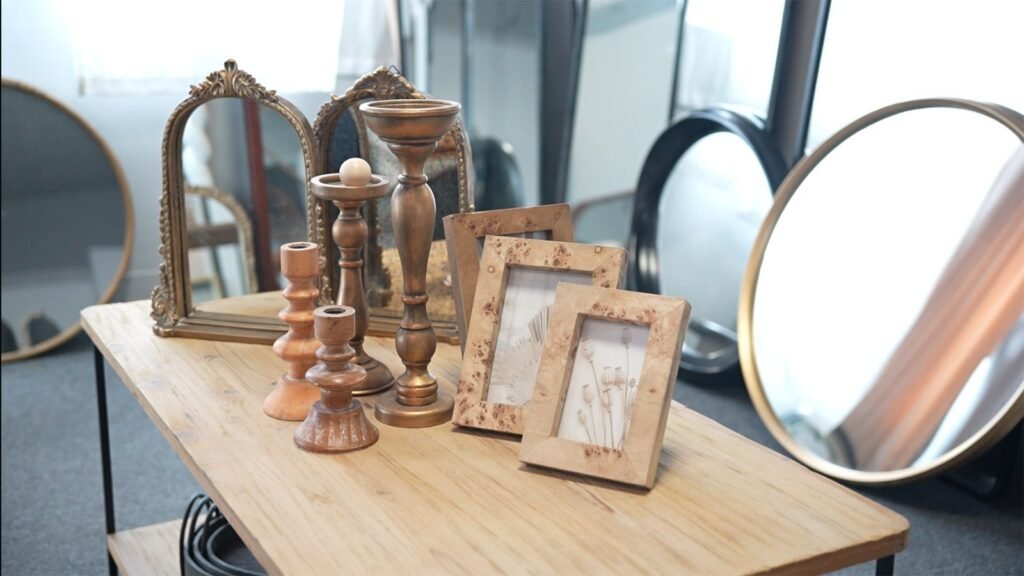
From an assortment-planning point of view, this SKU is stronger when it is not treated as an isolated bathroom box with a mirror door. It works best inside a product family. A premium program may begin with a medicine cabinet mirror, then extend into a backlit bathroom mirror for open-wall vanity solutions, a wall mounted magnifying mirror for grooming functionality, and a brass frame mirror for more decorative applications in guest bathrooms or boutique hospitality settings. A more mood-led collection can also introduce a smoked mirror finish for darker, more dramatic interiors. This is how a single SKU becomes a system, and good retail buyers usually prefer systems over one-off items.
This is also where supplier quality becomes decisive. A buyer looking at this category is not only asking whether the mirror looks elegant. The real questions are more demanding. Does the cabinet depth feel sufficient without becoming bulky? Do the hinges open smoothly and hold alignment? Is the lighting integrated cleanly if the product is developed as a lit version? Can the inside shelving feel practical rather than token? Does the finish match regional taste, whether that means cleaner minimal aluminum profiles or warmer metal accents? And if the supplier claims project readiness, can that supplier actually support a regional program, not just a one-time sample?
That is why the keyword LED mirror OEM Saudi Arabia is commercially important beyond SEO. It reflects a real sourcing need in the market: buyers want suppliers who understand not only mirrors, but also compliance, lighting integration, packaging stability, and product positioning for Gulf retail and project channels. The strongest factories in this space are not only manufacturers. They are partners in cross-border product curation. They know how to take a regional need, translate it into the right mirror format, and prepare the product for both buyer review and long-term reorder logic.
This is where Teruier’s cross-border design-manufacturing coordination becomes meaningful. The point is not merely to offer another bathroom mirror cabinet. The point is to turn a market signal into a retail-ready answer: correct dimensions, correct door proportions, correct lighting option, correct storage logic, correct finish language, and correct export preparation. In other words, not just a product that looks acceptable in a sample room, but a product that can survive buyer scrutiny, shipping reality, and reorder expectations. That is the difference between a supplier that ships mirrors and a supplier that builds confidence.
I would therefore not classify the medicine cabinet mirror as a secondary bathroom utility item. I would classify it as a stronger modern bathroom anchor. It answers the regional move toward innovation and quality. It responds to the practical need for organization. It aligns with the visual demand for cleaner, more elevated bathroom environments. And it gives the buyer something very valuable: a product with both showroom appeal and everyday logic.
So why does the best bathroom mirror now have to do more than reflect?
Because reflection alone is no longer enough.
The product must also organize.
It must also elevate.
It must also justify its wall space.
That is why the medicine cabinet mirror is no longer just a bathroom accessory.
For the right buyer, it is now a smarter retail decision.