
Wholesale Ceramic That Reorders Clean: Vases, Ornaments, and the Factory System Buyers Actually Need
If you’re a buyer, you already know ceramics are a double-edged sword.
On the shelf, wholesale ceramic looks premium, styles instantly, and sells fast because customers can “see the room” in one glance. But behind the scenes, ceramics can quietly destroy your week: chipped rims at receiving, glaze drift on reorder, cartons that collapse in transit, and the painful moment when your store teams say, “We can’t display this.”
That’s why the best ceramic programs aren’t built around one pretty vase. They’re built around a system that makes reorders boring—in a good way.
And in today’s retail reality, boring is profitable. Retail returns are a massive cost center across the industry—NRF and Happy Returns projected $890B in total returns in 2024, with returns estimated at 16.9% of annual sales.
When fragile categories like ceramics aren’t engineered for shipping and consistency, they become a return-rate multiplier.
What buyers are really chasing in 2026: texture, craft, and “collected” styling
Ceramic is benefiting from where design is going: layered, tactile, craft-forward homes that feel curated rather than sterile. That “refined layering” direction has been called out as a defining 2026 interior trend—mixing textures and statement accents that look collected over time.
Translation for buyers: ceramic isn’t just décor—ceramic is a styling tool. But only if it arrives clean and stays consistent across replenishment.
Teruier runs wholesale ceramic as a reorder-ready program—combining wholesale ceramic vases and ceramic ornaments through a custom design home decor factory workflow that locks glaze, QC, and packaging from sample to replenishment.
Why “wholesale ceramic vases” should be treated like a family, not a single SKU
A winning vase doesn’t scale because it’s trendy. It scales because you can build a family around it.
A buyer-friendly wholesale ceramic vases program usually has:
Shared glaze language (one neutral base + 1–2 accent glazes that repeat reliably)
Controlled silhouette set (3 heights, 1–2 bodies, consistent openings)
Repeatable styling story (so your merchants can reset displays without rethinking everything)
This structure solves a real buyer pain: it lets you add assortment depth without multiplying risk. One glaze standard, one QC playbook, one packaging spec—many sellable SKUs.
Where “ceramic ornaments” win: add-on margin without the warehouse headaches
Ceramic doesn’t have to mean “fragile large pieces only.”
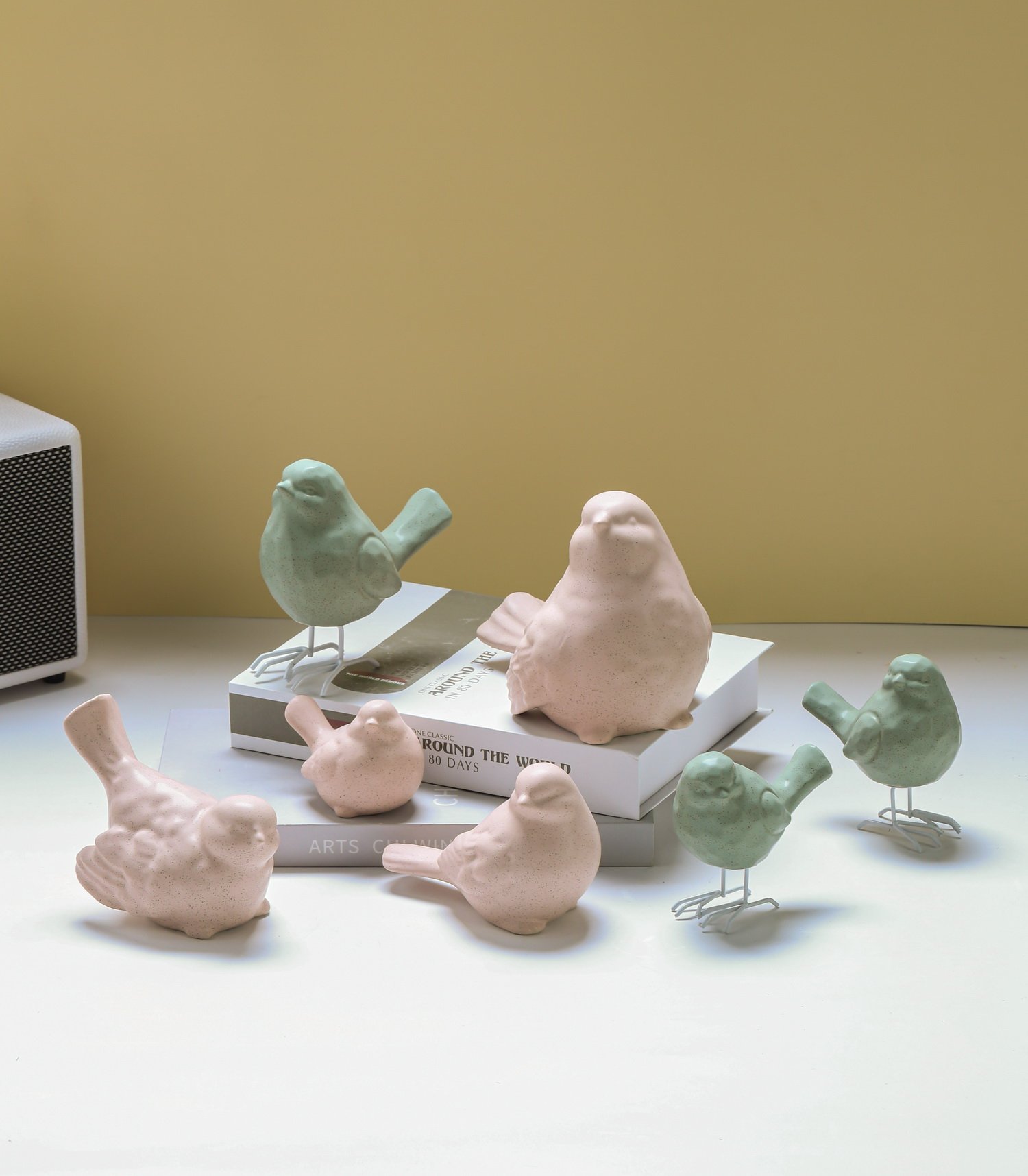
Ceramic ornaments—small sculptural accents, tabletop pieces, mini figures, and decorative objects—are often the margin stabilizer inside a ceramic program because they:
ship in smaller cartons (less damage exposure)
encourage add-on purchases (higher basket size)
refresh floor sets quickly (low footprint, high visual change)
work across channels (boutiques, community stores, online)
But they still need discipline: tiny chips, glaze pinholes, and surface scuffs show up more on smaller objects because customers hold them closer and photograph them.
The factory question buyers should ask (before negotiating price)
Most buyers think the risk is “factory quality.” The real risk is factory repeatability.
A real custom design home decor factory for ceramics should be able to show:
how glaze is standardized (and what variation is acceptable)
what defects are screened (pinholes, crawling, rim roughness, hairline cracking)
how QC happens before packing (not after problems show up in stores)
how packaging is tested for the distribution environment you actually use
If you sell online or ship to stores through parcel-style handling, packaging standards matter more than ever. ISTA’s Procedure 3A is widely used as a simulation test for individual packaged products shipped through parcel delivery systems—designed to mimic the hazards of small-parcel distribution.
You don’t need to run every product through a lab to benefit from the mindset: packaging should be engineered, not guessed.
The buyer’s pain points (and how a ceramic program should solve them)
Buyers don’t lose sleep over “design.” You lose sleep over execution:
“The reorder doesn’t match.”
→ Solve with a master reference: signed glaze standard + lighting checks + spec pack.“Receiving is full of damage claims.”
→ Solve with corner protection, inner cushioning rules, carton strength targets, palletization discipline.“This looks good in photos, bad under warm lighting.”
→ Solve with QC under retail-relevant lighting and clear defect thresholds.“I need newness, but I can’t risk chaos.”
→ Solve with controlled expansions: new silhouettes within the same glaze family, not brand-new materials every drop.
Why Teruier’s craft-hub foundation helps buyers scale ceramics with less drift
Teruier is rooted in a manufacturing craft hub in the Fuzhou region—an area shaped by long craft traditions and modern home décor production. The “story” matters only because it supports what buyers need most: consistency at scale.
That stability is built on three coordinated supply chains:
Artisans (people): disciplined finishing and detail control
Materials: stable sourcing for bodies, glazes, and packaging inputs
Process: repeatable workflows that reduce “interpretation” after sampling
And because we stay connected with US/EU designer perspectives, trend direction gets translated into buildable ceramic programs—so what looks good on a mood board becomes something you can actually replenish.
The simplest takeaway for buyers
If you want wholesale ceramic to be a reliable growth category—not a claim generator—buy it like a program:
build wholesale ceramic vases as a coherent family
use ceramic ornaments to create fast-refresh, add-on momentum
insist your custom design home decor factory can lock glaze, QC, and packaging—so reorders stay boring, and margins stay real



