For U.S. home décor retailers, wholesale animal sculptures can add personality, visual interest, and a distinctive focal point to a product assortment. But an attractive concept does not automatically become a successful retail product.
Buyers need to evaluate more than the animal itself. Silhouette, proportions, surface finish, material, packaging, and consistency between the approved sample and production all influence whether a sculpture is suitable for wholesale sourcing.
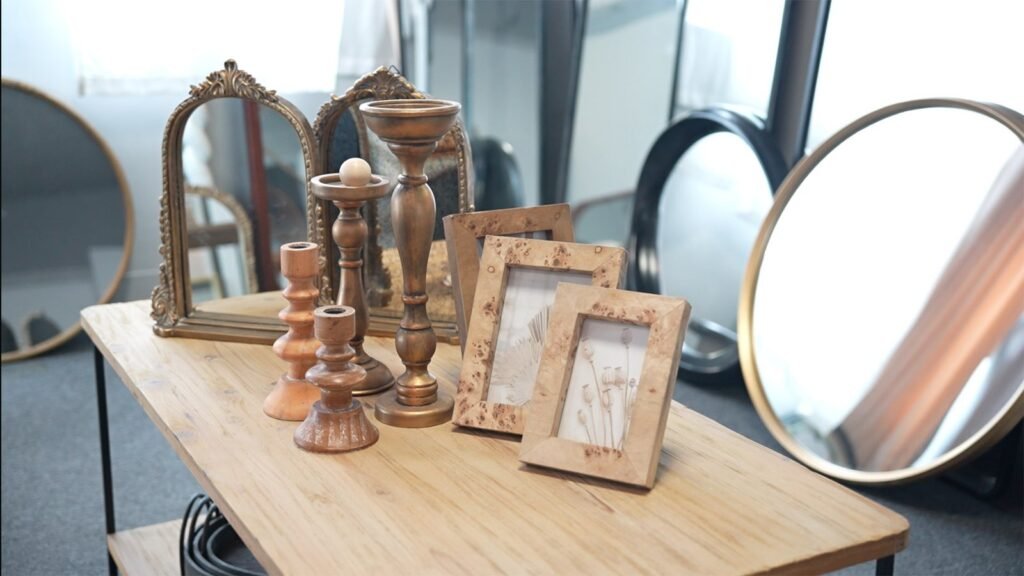
At Teruier’s Autumn Canton Fair booth, dark antique-finish animal sculptures were displayed alongside decorative mirrors and other home accessories. The presentation illustrates an important merchandising opportunity: sculptural objects can contribute to a broader home décor collection rather than functioning only as isolated figurines.
1. Start With the Silhouette, Not the Finish
The first question is whether the animal’s shape reads clearly.
A buyer should be able to recognize the intended animal and understand its posture without relying entirely on small decorative details. The relationship between the head, body, legs, tail, and base determines much of the sculpture’s visual character.
A common product-development mistake is to focus on color or surface decoration before the basic form has been resolved.
If the head looks too large, the body appears unbalanced, or the posture feels awkward, an antique finish or metallic paint will not necessarily solve the problem.
Before approving a sample, buyers should review the sculpture from the front, side, and three-quarter angles. These views help reveal proportions that may be difficult to judge from a single catalog image.
2. Choose a Style That Fits the Retail Channel
Animal sculptures can serve different merchandising purposes. A realistic or antique-inspired piece creates a different impression from a colorful, graphic design or a coordinated pair of nature-inspired figures.
Consider two examples from Teruier’s existing collection.
Pop-art statement pieces
The Pop Art Dachshund Sculpture uses a recognizable long-bodied dog silhouette, bold color blocking, and a high-gloss painted finish.
Its published development reference is 18 × 6 × 11 inches, with resin listed as the material. Final production dimensions should be confirmed through sample engineering.
For buyers, this design direction offers a more expressive option for eclectic home décor, gift shops, lifestyle retail, and visually driven online assortments.
Neutral, nature-inspired pieces
The Gilded Antler Deer Sculpture Set combines warm ivory stone-look finishes with champagne-gold antlers in a coordinated standing-and-resting pair.
This approach offers a different merchandising direction: complementary forms that can be displayed together or positioned separately within a larger collection.
Neither style is universally better. The appropriate choice depends on the retailer’s customer, price positioning, existing assortment, and intended display environment.
3. Examine Surface Quality and Repeatability
A sculpture may look convincing in a photograph but reveal weaknesses when examined closely.
Buyers should inspect:
- Surface texture: Are sculpted details clear and intentional, or do they appear uneven?
- Edges and seams: Are joints, casting lines, or finishing marks visible from normal viewing distances?
- Color consistency: Does the finish match the approved reference under different lighting conditions?
- Small details: Are ears, antlers, tails, paws, and other projecting elements properly formed?
- Base stability: Does the sculpture sit securely without rocking or tipping during ordinary handling?
The intended finish matters as well. A high-gloss pop-art surface requires a different visual standard from a deliberately aged, dark metallic-looking finish.
For wholesale buyers, the goal is not to eliminate every handcrafted variation. It is to distinguish intentional character from defects that make the product look inconsistent or poorly finished.
4. Approve the Actual Sample, Not Just the Rendering
Product images, 3D models, drawings, and physical samples serve different purposes.
A rendering helps communicate the intended appearance. A dimensioned drawing defines the proposed geometry. A physical sample reveals material behavior, surface quality, weight, stability, and how the product looks under real lighting.
These references should describe the same version of the design.
When a buyer requests a larger size, a revised head shape, or a different surface treatment, the change may affect more than appearance. It can influence proportions, material consumption, structural requirements, finishing work, and packaging.
A practical sample-review process should confirm:
- The correct model and revision number.
- Overall dimensions and key proportions.
- Material, color, and surface finish.
- Any revised details compared with the previous sample.
- The approved reference for subsequent production.
- Packaging requirements for the final configuration.
This process reduces the risk of approving one design in a photograph while receiving a materially different interpretation later.
5. Consider Packaging and Retail Handling Early
Animal sculptures often contain projecting or relatively delicate features. Antlers, ears, tails, thin legs, and extended poses may require particular attention during packing.
Before placing a wholesale order, buyers should ask how the product will be protected against movement, impact, and abrasion during transportation.
The packaging review should include the product’s weight, carton dimensions, protective inserts, surface protection, and the risk of individual parts contacting one another.
For e-commerce sellers, packaging also affects storage space, shipping costs, and the potential consequences of transit damage. For physical retailers, stable bases and durable finishes matter during unpacking, display, and routine handling.
Packaging should therefore be evaluated as part of product development, not added as an afterthought.
6. How Teruier Connects Design Decisions With Manufacturing
Teruier approaches decorative product development as a process that connects market requirements, product definition, design collaboration, sampling, and manufacturing coordination.
For animal sculptures, that means considering the intended retail position before committing to a particular form or finish.
A design intended as a bold statement piece may need a more distinctive silhouette and stronger color contrast. A coordinated neutral collection may require consistent proportions and finishes across several related designs.
These decisions should then be translated into clear specifications that manufacturing partners can evaluate.
Teruier draws on design collaboration and the manufacturing resources of the Fuzhou–Minhou home décor supply network to support this process. The objective is to help buyers assess whether a concept can be developed into a practical, repeatable product.
Explore the broader Teruier Decor Collection to review additional home décor directions.
FAQ
What should buyers evaluate first when sourcing wholesale animal sculptures?
Start with the silhouette, proportions, and intended retail position. Then evaluate the material, surface finish, stability, packaging, and consistency of the approved sample.
Are resin animal sculptures suitable for wholesale retail collections?
Resin can support detailed shapes and a range of painted finishes, but suitability depends on the specific design, construction, intended use, and packaging. Buyers should confirm the actual material and specifications for each product.
Can animal sculptures be developed for private-label collections?
Potential changes may include dimensions, colors, finishes, decorative details, and packaging. Feasibility, sample requirements, MOQ, pricing, and production conditions should be confirmed against the proposed design.
Discuss Your Next Animal Sculpture Project With Teruier
For U.S. home décor buyers, a strong animal sculpture begins with a clear design direction and continues through careful sample review, specification control, and packaging evaluation.
Teruier supports product selection and development discussions for wholesalers, importers, retailers, and private-label brands.
Contact Teruier to discuss decorative animal sculptures, request product specifications, or submit an RFQ for your next home décor collection.