
What I Really Mean When I Search “Home Decor Factory China” (As a U.S. Retail Buyer)
The search isn’t for “a factory”—it’s for a repeatable outcome
When I type home decor factory China into Google, I’m not hunting for the lowest quote.
I’m hunting for the supplier who can help me launch a SKU that survives the real world: Amazon handling, customer expectations, returns, and—most importantly—reorders. Because U.S. e-commerce is not a side channel anymore; it’s a material share of retail sales.
So here’s the buyer truth: if you can’t build for “delivered perfect,” your margin disappears—no matter how pretty the sample looks.
China Amazon product selection: the SKU wins before the PO
Most factories think “product selection” means sending me more catalogs.
My definition of China Amazon product selection is narrower—and more profitable:
The product photographs cleanly (silhouette, texture, color stability).
The listing can scale (variations, consistent specs, stable packaging).
The unit economics still work after breakage risk is priced in.
That last line is the silent killer in décor—especially ceramics.
If your factory can’t talk through damage rates, packaging options, and what changes your lead time, they’re not helping me select products. They’re asking me to gamble.
Product brief development is the real “quality agreement”
A buyer-grade supplier doesn’t start with “We can do it.”
They start with product brief development—a one-page truth document that locks:
materials + finish standard (what “acceptable” looks like)
tolerance boundaries (what changes are allowed)
packaging spec (inner pack, master carton, drop/shake expectations)
inspection method (what gets checked, when, and how many units)
This is where cross-border design manufacturing coordination becomes real: design intent is translated into factory language, and factory constraints are translated back into buyer decisions.
At Teruier, that translation is the job—not a nice-to-have. We’re built to bridge U.S./EU retail expectations with factory execution, so “trend” becomes a SKU that can actually reorder.
Ceramic packaging for shipping: your reviews live or die in the box
Ceramics don’t lose stars because of design. They lose stars because of packaging.
If you sell online (or supply to someone who does), ceramic packaging for shipping should be treated like a product feature—not an afterthought.
Amazon’s own guidance for fragile items is blunt: fragile units may need to be individually wrapped/boxed and protected to prevent damage in fulfillment and delivery.
And Amazon also warns that inventory arriving with non-compliant or unsafe packaging can be refused or disposed of—at the seller’s expense.
That’s why I ask factories a simple question:
“Show me your packaging standard and the proof it survives the distribution system.”
One credible proof route is testing protocols developed with Amazon’s distribution realities in mind—like ISTA’s 6-Amazon overview materials describing the test as a general simulation protocol developed in cooperation with Amazon.
“Combo bestseller” is how buyers protect margin in 2026
Single-item décor is easy to copy. Bundles are harder.
A Combo bestseller (for me) is a curated set that:
increases order value without increasing complexity
reduces returns by improving “styling success” for the customer
gives retail teams a cleaner merchandising story
Think: a ceramic vase + matching candleholder + small tray in one visual world—priced and packed like it was meant to be together.
A factory that understands combos will proactively plan:
carton engineering for multi-item sets
consistent color/finish across the set
pack-out speed and labeling accuracy (so warehouses don’t hate you)
That’s not “extra.” That’s how reorders happen.
The fastest buyer checklist for a home decor factory China shortlist
When I shortlist a home decor factory China partner, I don’t ask for promises. I ask for systems:
Show me the brief
If you can’t co-author the product brief with me, you can’t scale the SKU.Show me the box
If you can’t explain your ceramic packaging logic (and how you validate it), you can’t protect ratings.Show me coordination
If you can’t run cross-border design manufacturing coordination—design, materials, process, packaging, inspection—then lead time and quality will drift.
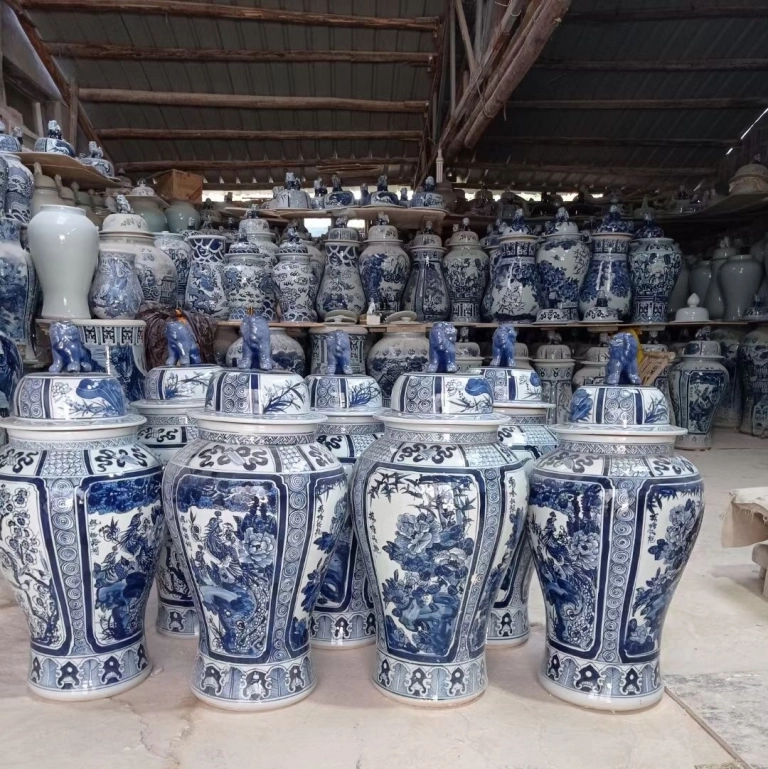
If you want the buyer’s bottom line:
The best “home decor factory China” isn’t the one that can make a sample. It’s the one that can make a bestseller—then make it again, and again, with the same unboxing outcome.



