
Upholstered Accent Chair Supplier: The “Hero Chair” That Sells the Room… or Returns the Profit
Every chain buyer knows the moment.
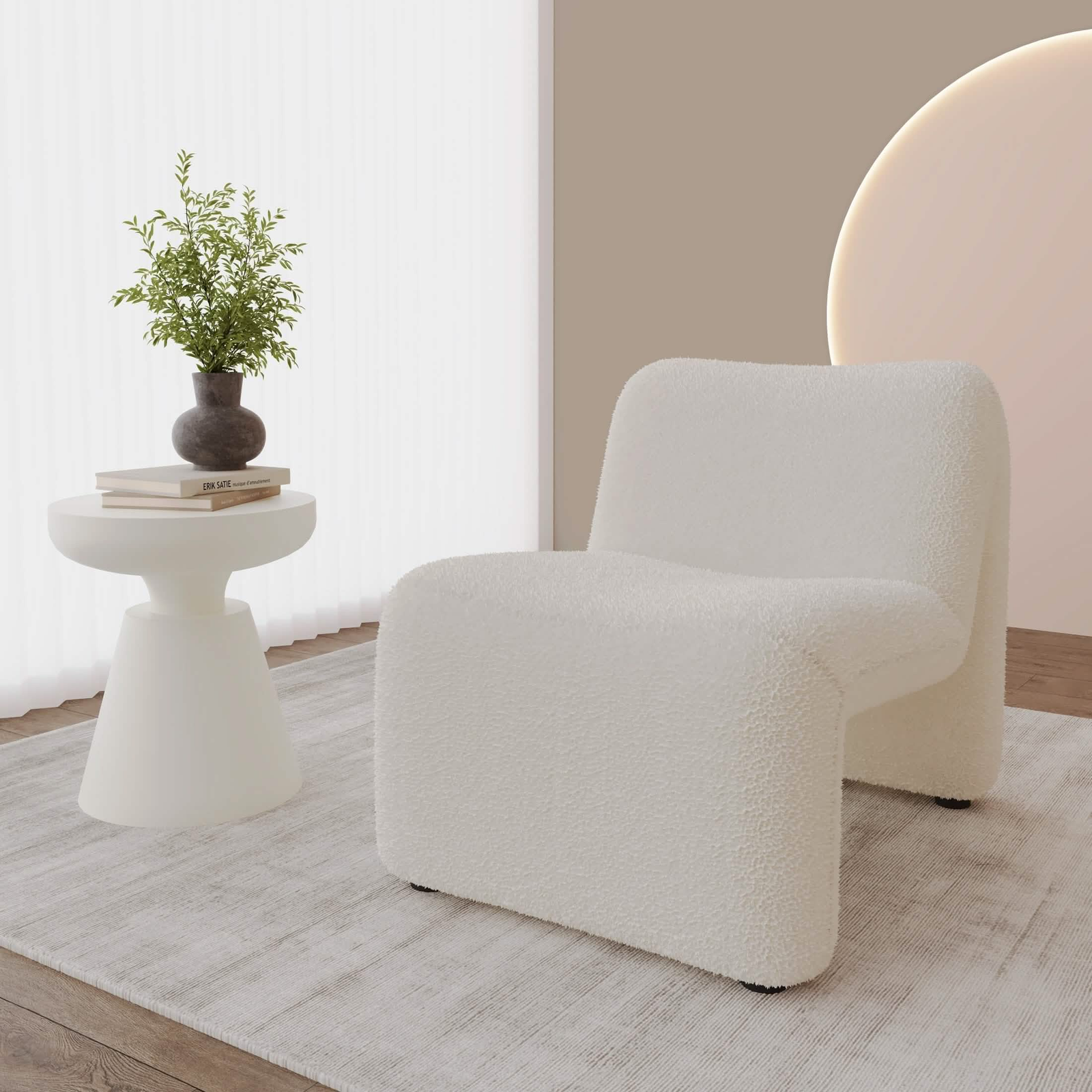
A new upholstered accent chair hits the floor and instantly upgrades the whole vignette. Customers stop, sit, take photos, and suddenly your “nice chair” becomes the chair that sells rugs, side tables, lamps—everything around it.
Then the other moment arrives:
the next container lands and the fabric hand-feel is slightly different
the seat starts pilling faster than expected
cartons arrive scuffed and corners show dents
customer reviews say the quiet part out loud: “Not as pictured.”
In 2025, returns aren’t a rounding error—they’re a business reality. NRF and Happy Returns project $849.9B in total retail returns in 2025, with 19.3% of online sales expected to be returned, and 82% of consumers saying free returns matter when they shop online.
So when you search “upholstered accent chair supplier,” you’re not really sourcing a chair.
You’re sourcing a repeatable profit program.
Why accent chairs are “high-margin” on paper—and high-risk in real life
Accent chairs get judged in three brutal ways:
Touch (fabric feel, pilling, scratch resistance)
Sit (wobble, squeak, frame fatigue over time)
Ship (damage before it even reaches the sales floor)
The suppliers who win long-term with chain retailers aren’t the ones with the biggest catalog.
They’re the ones who can keep a hero chair consistent, durable, and retail-safe at scale.
The authority-backed specs that separate “pretty” from “reorder-ready”
1) Fabric performance: stop buying “soft”—start buying measurable wear
If your chair sells because it feels plush, that same plush surface becomes a pilling and abrasion risk.
In North America, abrasion performance is often expressed in double rubs using the Wyzenbeek test (ASTM D4157)—a common benchmark for upholstery durability.
And pilling isn’t “bad luck.” ASTM D3511 is one established test method designed to evaluate a fabric’s propensity to form pills and surface change—commonly used for upholstery-type textiles.
What this means for a chain program:
you want fabric specs that can survive real households (pets, denim, friction)
and you want the supplier to lock the fabric construction and dye lot controls so reorders don’t drift
2) Structural durability: chairs shouldn’t “age” after 90 days
Many retailers and labs reference durability expectations aligned with seating standards. ANSI/BIFMA X5.4 covers public and lounge seating and is a widely recognized benchmark mindset for lounge-type construction.
Even if you’re selling residential, the takeaway is simple:
the frame, joints, and base need to be built like the chair will be used—because it will.
3) Packaging discipline: if it arrives damaged, it was never a product
ISTA’s Procedure 3A is explicitly designed as a test for individually packaged products shipped through a parcel delivery system.
For chain retail, packaging is not “ops.” It’s margin protection:
fewer damages, fewer replacements, fewer store-level escalations
better inbound condition, fewer markdowns, cleaner reviews
4) Compliance awareness: don’t discover requirements after you’ve shot photos
If upholstered goods are destined for U.S. channels, California TB117-2013 is a key reference point focused on smolder resistance of materials used in upholstered furniture.
A serious supplier won’t hand-wave this—they’ll clarify material paths, labeling expectations, and channel requirements early.
5) Process discipline: consistency doesn’t come from promises
ISO explains ISO 9001 as a quality management framework to help organizations deliver consistent products and meet customer and regulatory expectations.
You’re not buying a certificate—you’re buying the habits:
controlled inputs
defined checkpoints
corrective action loops that prevent repeat issues
A quick reality check: why “chair shopping” feels harder in 2026
You’re not only buying a chair for one store anymore. You’re buying it for:
multiple regions and replenishment cycles
multi-channel imagery where “photo accuracy” becomes customer trust
vendor scorecards where one bad run can haunt the next season
And the trend cycle is not slowing down. In 2026 coverage, publications are already calling out texture shifts—like chenille replacing bouclé in the accent chair conversation—meaning your supplier needs to translate trend into buildable specs, fast.
The supplier landscape (the “competitor” reality most buyers face)
When chain buyers source upholstered accent chairs, most options fall into familiar buckets:
Catalog-first wholesalers
Fast options, fast quoting—then bulk can drift and accountability gets fuzzy.
Price-first OEM factories
Great capacity—until you need tight fabric consistency, packaging verification, and reorder matching across seasons.
Trading layers / brokers
Wide access—until specs become a “telephone game” when something goes wrong.
Boutique makers
Beautiful details—until you need scale, stable lead times, and replacement matching for reorders.
None are “bad.” They’re simply optimized for different outcomes.
If your goal is reorder confidence, you need a partner designed for control, not just sourcing.
Where Teruier is positioned differently
Teruier isn’t built as “another chair vendor.” We operate as a cross-border coordination hub rooted in a craft manufacturing region (often described as the Fuzhou craft hub)—where materials access, skilled workmanship, and process know-how live close together.
Here’s the difference in plain English:
we act as your value translator—turning trend intent and merchandising goals into a locked, repeatable build.
What that looks like in a chain-retail workflow:
Trend-to-SKU translation: the chair isn’t approved until specs are buildable and repeatable
Spec pack governance: fabric construction, undertone, foam feel targets, seam rules, base tolerances
QC checkpoints + corrective loops: ISO 9001-style discipline, not end-of-line hope
Transit-safe packaging rules: ISTA-minded packaging verification, not “we pack well”
Reorder lock: substitutions are controlled, master reference is retained, winners stay winners
That becomes a practical merchant profit plan:
fewer damages (less replacement cost, fewer store escalations)
fewer “not as pictured” complaints (less return pressure in a high-return era)
stronger reorder velocity because your best-selling chair stays consistent, season after season
Copy/paste RFQ checklist for an upholstered accent chair program
If a supplier can answer these clearly, you’re talking to a program partner—not a sample shop:
Fabric performance targets: Wyzenbeek (ASTM D4157) + pilling method (ASTM D3511)
Frame durability benchmark: BIFMA-style lounge seating durability mindset
Compliance awareness: TB117-2013 pathway for applicable U.S. channels
Packaging standard: ISTA 3A mindset + carton verification steps
Reorder governance: what cannot change without approval, and how substitutions are managed
QC checkpoints: where issues are caught before packing, and how corrective actions are documented
Closing
A great upholstered accent chair doesn’t just sell itself—it sells the whole room story.
But the chair that truly makes money for a chain retailer is the one you can reorder without fear:
consistent fabric, durable structure, retail-safe packaging, and controlled reorders—in a world where returns are the new tax.



