
The Wall Mirror That “Looks Fine” Can Still Kill Your Margin
I’ve watched a wall mirror do all the right things on a sample table—then quietly destroy the program once it hits real-world scale.
Not because the design was wrong. Because the boring parts were wrong: finish drift, packaging cracks, and specs that didn’t hold up when the order went from 60 units to 6,000.
If you’re looking for a wholesale wall mirror supplier, here’s the buyer-side truth: your supplier isn’t just selling mirrors. They’re selling repeatability—and that’s what determines reorder velocity, claims rate, and whether your brand gets blamed for “quality issues” that were really supply-chain issues.
The Three Ways Mirrors Fail (And Buyers Get Blamed)
When a mirror program goes sideways, it almost always starts in one of these lanes:
Finish drift (the “same SKU” suddenly becomes two different golds)
Transit damage (corners crush, edges chip, glass fractures)
Project mismatch (a retail mirror gets forced into a hospitality environment)
That third lane matters more than people think. Saudi Arabia is targeting 150 million visitors by 2030, which signals continued hotel development and faster fit-out cycles—meaning “good enough” specs won’t stay good enough for long.
Vintage Finish Consistency: The Shortcut to Reorder Confidence
Let’s talk about vintage finish consistency—the silent dealbreaker in wall mirrors.
Retail buyers don’t fear “imperfection.” We fear uncontrolled variation. Your “antique brass” can have nuance, but it can’t swing wildly carton to carton.
The practical fix is to measure and manage finish like a system:
Define a finish master (approved standard sample)
Control substrate prep + coating steps (process discipline)
Use objective color metrics for batch checks (not opinions)
Color difference frameworks like CIE Lab* and standardized approaches under ISO/CIE colorimetry are widely used to quantify perceived color differences (what your eyes call “too yellow” or “too green”).
If your supplier can’t explain how they prevent finish drift, they’re not a supplier yet—they’re a studio.
Packaging for Mirrors: The Hidden Profit Lever
Most mirror “quality problems” I see are actually packaging problems.
A serious wholesale wall mirror supplier treats packaging like part of product engineering, and references real distribution hazards:
ISTA 3A is designed for individual packaged products shipped through parcel delivery systems (drops, vibration, handling).
ASTM D4169 provides a structured way to evaluate shipping units using test methods at levels representative of actual distribution.
What that looks like in plain English:
Corner protection that survives compression (not just soft foam)
Edge isolation to stop vibration “chatter”
Carton labeling that matches how warehouses actually handle pallets
Pack-out photos + QC sign-off points so every carton is packed the same way
If you want fewer claims and faster reorders, start with packaging—not price.
When a Wall Mirror Supplier Graduates Into Hospitality Mirror Supply
Here’s where many suppliers overreach: they win retail wall mirrors, then try to jump into hospitality mirror supply without upgrading the program discipline.
Hospitality buyers care less about “a beautiful mirror” and more about zero drama:
Moisture exposure, cleaning chemicals, higher traffic
Installation consistency across dozens (or hundreds) of rooms
Replacement availability when something breaks mid-season
In wet or electrically-integrated environments, buyers also start speaking in standards. For example, ingress protection ratings are defined under IEC 60529 (the IP Code), which exists specifically to replace vague “waterproof” language with testable protection levels.
And in higher-risk placements, specifiers may reference safety glazing performance standards such as ANSI Z97.1 (for safety glazing materials used in buildings).
(You don’t need to overclaim compliance—just be ready to support what the project’s authority or consultant requires.)
The KSA Upgrade Path: From Wall Mirrors to Standing Mirror Programs
A lot of the KSA demand isn’t just wall mirrors—it’s the full program:
Saudi interior designer full-length mirrors for bedrooms, suites, lobbies
A premium standing mirror supplier Saudi Arabia can trust for consistent finishes and safe delivery
A standing mirrors bulk supplier Saudi Arabia can rely on for repeatable hardware, mounting logic, and spares
If your mirrors use metal frames, durability becomes part of the conversation too—especially in humid or coastal environments. Testing frameworks like ASTM B117 (salt spray/fog apparatus) are commonly referenced in coatings and corrosion discussions.
Translation: luxury isn’t just the look. It’s the mirror that stays stable, ships intact, installs cleanly, and holds up.
Where Teruier Fits: “Value Translation” as a Supplier Advantage
The suppliers I keep long-term are the ones who translate design intent → manufacturable spec → repeatable delivery.
That’s the Teruier lane: cross-border design-manufacturing coordination backed by a craft-driven production base (Fuzhou’s maker ecosystem) and a buyer-minded obsession with the details that protect reorders—finish control, packaging discipline, and program-grade specs.
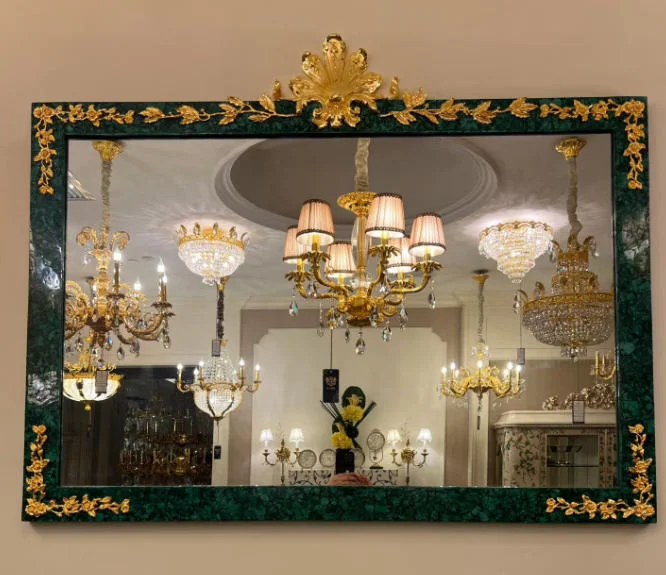
Because in my world, the best wholesale wall mirror supplier isn’t the one with the prettiest sample.
It’s the one whose 1,000th mirror looks like the first—and arrives the same way, every time.



