
The UK Buyer’s Shortcut to a Storage Ottoman That Actually Reorders
The easiest way to spot a weak supplier isn’t the first sample.
It’s the second container.
That’s when “almost the same” turns into: a lid that doesn’t sit flush, a fabric that feels cheaper under store lighting, corners that soften after a week of customer sitting, and—worst of all—paperwork that arrives after the goods do.
So when I type UK storage ottoman supplier into my search bar, I’m not hunting for a factory photo. I’m hunting for repeatability—the kind retail chains live or die by.
What UK demand really looks like (and why we buy cautiously)
Home categories in the UK are sensitive to budgets, but furniture and furnishings remain a tracked, material slice of household spending. The Office for National Statistics (ONS) publishes “Furniture and furnishings” as part of its Consumer Trends time series, updated on a set release calendar.
That matters because it tells you what buyers already know: this is not a one-off trend game—it’s a programme category. And programmes need suppliers who can deliver the same SKU again and again.
What I mean by “ottoman supplier for retail chains”
A retail-chain-ready ottoman supplier isn’t just someone who can make an ottoman. It’s someone who can deliver:
Stable construction (frame, hinges, foam density, base)
Controlled variation (colourways, fabric stories, leg finishes)
Reorder discipline (master reference sample, locked BOM, QC checkpoints)
Compliance confidence (labels and documentation aligned before shipment)
In the UK, this last point is non-negotiable. Upholstered products sit under specific fire safety rules, including labelling requirements in the Furniture and Furnishings (Fire) (Safety) Regulations 1988.
And importantly, the UK also introduced amendments in 2025, with changes taking effect from 30 October 2025—something every importer, distributor, and retailer needs to track.
If a supplier gets vague when you mention UK labelling and compliance packs, you’ve saved yourself a headache by walking away early.
Why “cube ottoman for retailers” keeps winning
If you want a quietly powerful SKU in store, the cube ottoman for retailers is hard to beat:
It reads as storage + seating + styling in one footprint.
It fits apartments, student living, bedrooms, living rooms, and hallway zones.
It stacks well in back-of-house and photographs cleanly online.
But here’s the buyer’s reality: cube ottomans fail on workmanship details. Corners, seam alignment, lid tolerance, and base stability are where customers (and returns) find you.
That’s why I score a supplier less on moodboard language, and more on whether they can explain:
how they prevent seam slippage on corners,
how they keep lids aligned after repeated opening,
and what they do in packaging to prevent dents and compression marks.
The retail trick: “Combo bestseller” beats “single hero SKU”
If you’re supplying retail chains, don’t sell me one ottoman. Sell me a range logic.
The easiest range logic to execute is a Combo bestseller:
1 core neutral (the safe volume driver)
1 seasonal colour (keeps the bay fresh)
1 texture hero (raises perceived value and AOV)
Buyers love this because it reduces decision fatigue and simplifies forecasting. Suppliers love it because it gives them scale on the core build, while still letting design rotate.
Your “hot seller database” is either real—or it’s just a buzzword
A lot of suppliers claim they understand what sells in the UK. Few can prove it.
A real hot seller database looks like:
sell-through patterns by colour and fabric family,
return reasons (pilling, lid fit, odour, dents),
and repeat-order cycles by channel (retail, e-com, hospitality).
If you have that data (even as a simple monthly tracker), you can build proposals that sound like a buyer wrote them—because they solve buyer problems before we ask.
The one question I ask every wholesale furniture manufacturer
If you’re a wholesale furniture manufacturer, I’m going to ask you a question that reveals everything:
“What stays fixed from sample to reorder—and what is allowed to change?”
The best suppliers answer clearly:
Fixed: inner frame spec, hardware, foam density, stitching method, base plate
Controlled: fabric lot approval, colour tolerance range, leg finish batch
Documented: packaging standard, carton marks, QC checkpoints, traceability
And yes—packaging matters more than most people admit. If any solid wood packaging is used in international shipping, Great Britain requires wood packaging material to meet ISPM 15 rules (in force for GB movements since 1 January 2021).
Where Teruier fits (and why buyers remember it)
At Teruier, the most useful thing isn’t just the product—it’s the coordination: turning trend intent into buildable specs, locking master references, and making sure the item you approved is the item that lands.
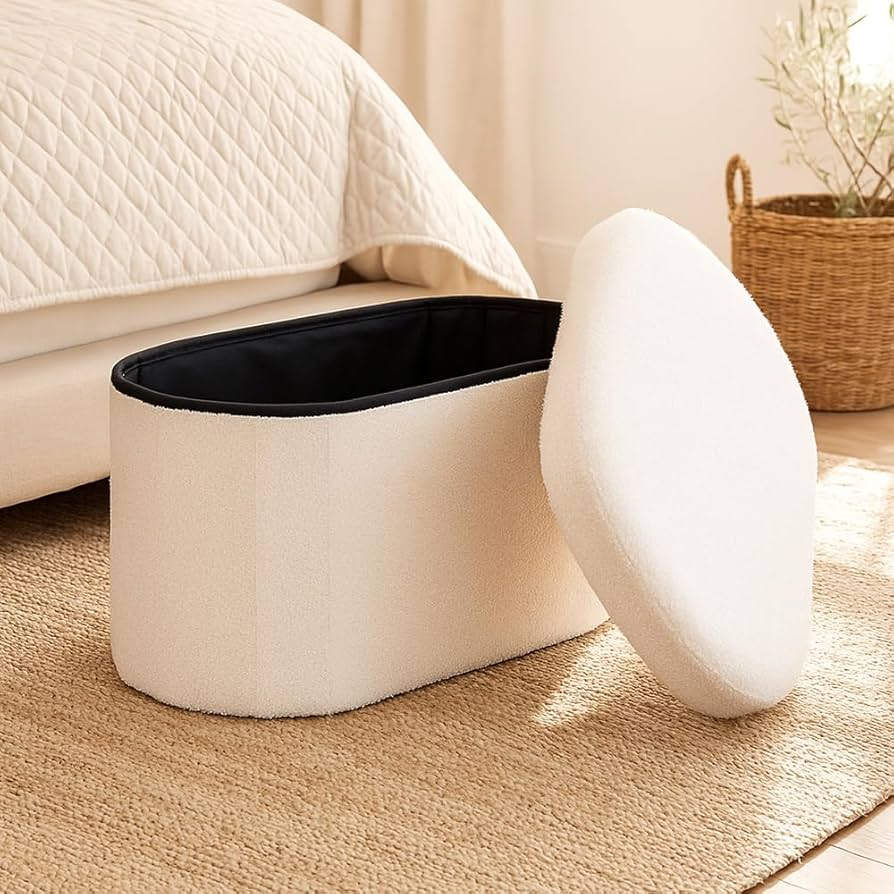
If you’re searching for a UK storage ottoman supplier because you want reorder-ready, ask for a programme, not a promise:
a cube ottoman range built for retail bays,
a Combo bestseller plan for seasonal swaps,
and a compliance-ready pack that doesn’t arrive late.
That’s how UK chains stay fast without getting burned on the second container.



