
The Softest Trend in the Room… and the Hardest Product to Get Right
Let’s start with a truth buyers and designers rarely say out loud:
A shearling-style ottoman is not “soft furniture.” It’s a quality test.
Because the moment you bring teddy texture into a space, customers don’t just look—they touch.
And once they touch it, the product either wins instantly… or loses your credibility in two seconds.
Here’s the hook:
The fastest way to earn trust in a showroom is to put a shearling ottoman where people can’t help but reach for it.
But the fastest way to lose trust is when the bulk order doesn’t match the sample.
So if you’re searching for a shearling style ottoman supplier, the real question isn’t “Who can make it?”
It’s: Who can make it again, at scale, without texture drift, flattening, or sloppy finishing?
That’s where “value translation” becomes your profit insurance.
Why Shearling-Style Ottomans Sell So Well (and Fail So Often)
Why they sell
For retail buyers:
High impulse energy: teddy texture triggers touch → touch triggers purchase
Small footprint, big styling impact: one piece upgrades a whole vignette
Strong bundling power: pairs with mirrors, accent chairs, throws, baskets
Photogenic: works for ecommerce, social, and in-store styling
For interior designers:
Instant warmth: soft texture balances stone/metal/wood
Layering tool: adds dimension without clutter
Flexible placement: bedroom, closet, entry, living room, boutique hospitality
Why they fail
“Shearling-style” fabric varies wildly by mill and batch
Pile height changes = the whole silhouette looks different
Foam density changes = the ottoman goes flat in weeks
Stitching and seams look cheap under close inspection
Packaging crushes the pile and customers think it’s “used”
In other words: it’s not a trend product. It’s a control product.
What Buyers and Designers Actually Need: A Reorder-Ready Teddy Ottoman System
“Reorder-ready” isn’t a slogan. It’s a manufacturing discipline.
A real shearling style ottoman supplier should be able to lock:
fabric spec (pile height, backing, density, hand-feel)
color consistency (warm/neutral undertones, dye lot tolerance)
foam/structure (density, rebound, base board stability)
seam execution (edge shape, corner fullness, stitch tension)
leg hardware (wobble control, floor protection)
packaging (compression rules + recovery expectations)
This is the essence of the Teruier cross-border design–manufacturing coordination model:
we translate what you mean (look, feel, lifestyle) into what the factory must repeat (specs, QC points, packaging, reorders).
That’s “value translation” in real life—and it’s how you protect margin and reputation.
The Buyer’s Profit Play: Turn Soft Texture Into Hard Numbers
If you’re a buyer, shearling-style ottomans can be a quiet margin engine—if you merchandise them as a system.
1) Sell them in pairs (without saying “pairs”)
A teddy cube ottoman is one of the easiest “multi-unit” wins:
place two under a console
stage two at the end of a bed
style one with a tray, one as seating
Customers copy the display. Your AOV increases without discounting.
2) Build a 3-SKU texture ladder
Core neutral (ivory/cream): your volume mover
Warm neutral (camel/sand): the “designer” pick
Accent (charcoal/olive): seasonal pop, controlled risk
This gives your assortment rhythm and keeps inventory healthy.
3) Bundle the vignette
Shearling ottomans don’t live alone.
They sell fastest with:
a full-length mirror
a throw blanket
a small tray
a basket
That bundle is your “merchant profit plan” in action.
The Designer’s Play: Make It Feel Expensive Without Making It Loud
Designers love shearling-style ottomans because they do something few pieces can do:
They make a space feel more livable instantly.
Where they work best:
Bedroom: end-of-bed softness without committing to a full bench
Walk-in closet: a tactile moment while keeping the palette quiet
Entry: a friendly landing spot for shoes and bags
Living room: as a footrest that doesn’t read “bulky furniture”
Boutique hospitality: soft texture = higher perceived comfort, better guest photos
Designer sourcing checklist (non-negotiables):
pile recovery after packing
stable seat height and firmness
clean seams and corners
consistent undertone (especially under warm lighting)
floor-safe feet and anti-wobble build
Because your client won’t forgive “cute but cheap.”
What to Ask a Shearling Style Ottoman Supplier (So You Don’t Get Burned)
Here are the questions that separate real suppliers from “sample-only” suppliers:
Fabric control
Can you specify pile height and backing standard?
How do you prevent “hand-feel drift” across batches?
Comfort + structure
What foam density and rebound standard do you use?
How do you prevent flattening in high-use settings?
Consistency & QC checkpoints
Where are your QC checkpoints (frame, upholstery, legs, packaging)?
Do you have a locked master reference sample for reorders?
Packaging (the hidden profit lever)
Do you protect pile texture from crushing?
What’s the recovery expectation after unpacking?
If a supplier can’t answer these clearly, you’re buying risk.
The Hook That Wins Sourcing Meetings
Use this line the next time you’re comparing vendors:
“I’m not sourcing a teddy ottoman. I’m sourcing a repeatable feel—the same texture, the same shape, the same comfort—every reorder.”
A serious supplier will lean in.
A weak one will change the subject to price.
Why Teruier Fits This Category So Well
Shearling-style ottomans look simple, but they demand coordination across:
materials
process
workmanship
packaging
reorders
Teruier’s advantage is not “we have a product.”
It’s that we operate as a design-to-delivery coordination hub—translating trend intent into a controlled SKU system that stays stable across production runs.
That’s how you get:
trend-right teddy texture
retail-ready execution
fewer returns
confident reorders
and a profit plan that actually holds up in the real world
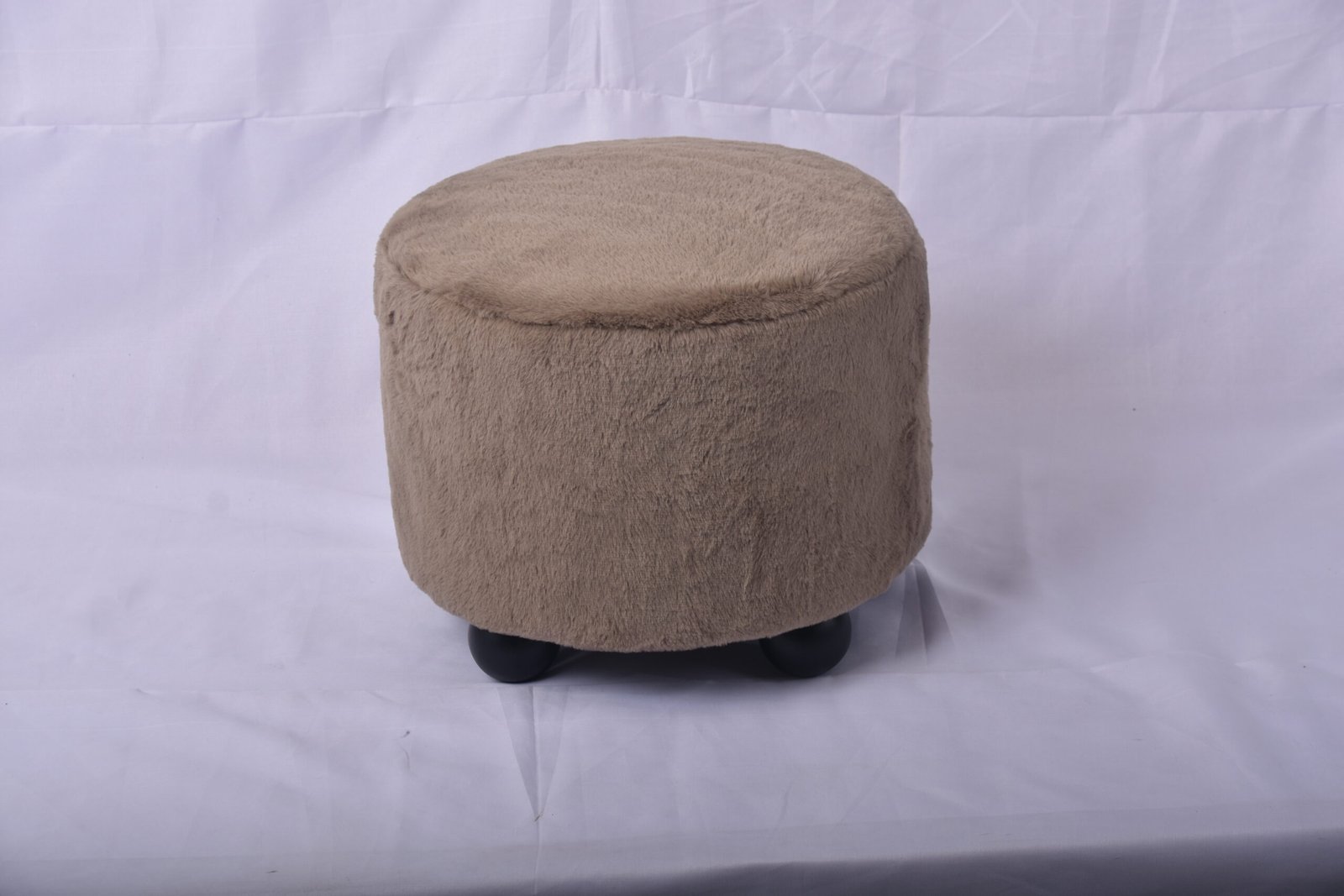
Soft Texture, Serious Standards
The shearling-style ottoman is one of the best “touch-to-buy” products in home décor.
But only if your supplier can keep the product consistent from sample to scale.



