
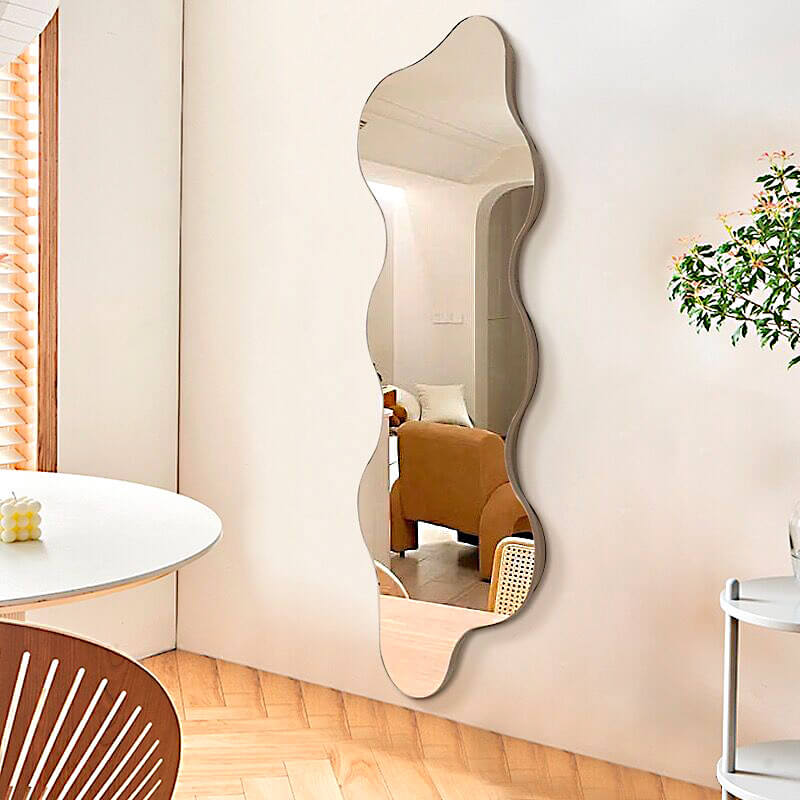
If you are searching for a puddle mirror alternative wholesale program, let us say the quiet part out loud: the puddle mirror had a very good run. It was soft, organic, photogenic, and just irregular enough to feel “designed.” Lovely. Also a little overused now. And for a German chain-store buyer, “lovely” is not a buying strategy. Margin is. Reorder logic is. Finish consistency is. Not having 200 stores all look like the same mood board is also quite useful.
That is exactly where the new opportunity sits.
The 2026 European fair direction has already moved the conversation forward. At Maison&Objet January 2026, the message was not more random novelty, but more meaningful design: heritage, craftsmanship, responsible innovation, and hybrid forms that blend organic maIf you are searching for a puddle mirror alternative wholesale program, let us say the quiet part out loud: the puddle mirror had a very good run. It was soft, organic, photogenic, and just irregular enough to feel “designed.” Lovely. Also a little overused now. And for a German chain-store buyer, “lovely” is not a buying strategy. Margin is. Reorder logic is. Finish consistency is. Not having 200 stores all look like the same mood board is also quite useful.
That is exactly where the new opportunity sits.
The 2026 European fair direction has already moved the conversation forward. At Maison&Objet January 2026, the message was not more random novelty, but more meaningful design: heritage, craftsmanship, responsible innovation, and hybrid forms that blend organic materials with contemporary techniques. At Ambiente 2026 and its retail guidance, the cues became even more commercial: natural woods, deep glossy surfaces, sensual contrasts, sculptural lighting, statement pieces, warm earthy tones, and mirror-like surfaces that feel modern, elegant, and easier to curate into a real assortment rather than a one-season gimmick. In other words, Europe is not asking buyers to abandon organic shapes. It is asking them to buy them with more discipline.
So what is the smarter wholesale move?
Not “another puddle mirror.”
A puddle mirror alternative wholesale program.
Meaning: a product family that keeps the soft, fluid, editorial appeal of the puddle silhouette, but upgrades it for retail reality.
At Teruier, that usually means translating one vague trend request into three clearer commercial directions:
First, a smoked mirror alternative bronze tinted mirror. This is warmer, easier to pair with oak, walnut, beige stone, and the darker quiet-luxury palette now moving through Europe. Smoked glass can sometimes read a bit cold or too niche. Bronze-tinted glass usually behaves better in living rooms, hallways, hospitality corners, and chain-store styling sets. It gives mood without looking like it belongs exclusively in a nightclub with a trust fund.
Second, a wavy wall mirror alternative supplier approach rather than a literal puddle copy. The wave profile is easier to standardise, easier to repeat across sizes, and easier to build into a family collection. Buyers get the organic look, but with cleaner assortment logic: one language, multiple SKUs, fewer headaches.
Third, for bathroom and vanity channels, the smarter question is not “Do we make it glowing?” but what kind of light is actually useful? A backlit mirror creates a softer ambient halo, while a front-lit mirror delivers more direct, task-focused illumination for shaving, skincare, and everyday visibility. That is why a backlit bathroom mirror alternative frontlit mirror can be commercially stronger in many practical retail programs. It is not less stylish. It is simply more honest about what the customer is doing in front of the mirror at 7:10 in the morning. Also, in bathroom use, buyers should care about specs, not adjectives: IP44 means splash protection, not magic, and not “waterproof forever.” German bathroom installations also sit within defined protection zones under VDE-based rules, so product positioning and installation logic matter.
There is another reason this category deserves better thinking. Mirrors are not only decorative objects; they are light-management tools. The Ohio State University Green Home Technology Center notes that internal reflection in a room includes highly reflective surfaces such as mirrors, while UC Davis highlights that task lighting works best when light is placed close to where it is actually needed. That is precisely why a good mirror program should not be designed as one floating sculpture alone. It should be designed around how light, space, and daily use actually behave.
Now to the part buyers actually care about: what does this look like as a sellable program?
Here is a clear illustrative buyer-brief model based on common European chain-store constraints.
A mid-market German home retailer came in with the familiar problem: they liked the puddle look, but they did not want a one-SKU fashion gamble. They needed something that could stretch across living, hallway, and bathroom; support both online merchandising and store display; and avoid the classic trap of “hero sample, terrible replenishment.”
Teruier’s answer was not a speech. It was a structure.
The proposed family looked like this:
A hero wall mirror in bronze-tinted organic form for living room and hallway styling.
A cleaner wavy chrome wall mirror for younger, brighter, more contemporary spaces.
A practical front-lit IP44 bathroom mirror for utility-driven channels where function needs to be visible on day one.
The commercial logic was simple:
one design family, three levels of use,
one trend signal, multiple channel fits,
one visual language, less assortment chaos.
For the buying model, the risk was also managed properly. Instead of placing the full first order on the most fashion-forward shape, the hero SKU was capped at the smaller share of the opening buy, while the more repeatable commercial variants took the larger share. That means the buyer gets the excitement of trend leadership without betting the whole shelf on one moody silhouette. Sensible. Rare. Refreshing.
This is where Teruier’s value is not just manufacturing. It is value translation.
Trend from Paris or Frankfurt is not enough. A buyer needs that trend translated into:
material logic,
finish direction,
size ladder,
channel fit,
bathroom safety spec,
packaging discipline,
and reorder sanity.
That is the real product.
So when we talk about chrome wall mirror finish consistency tolerance, we are talking about a wholesale issue, not a decorative footnote. Chrome is unforgiving. If the finish varies batch to batch, the customer notices. If the reflection tone shifts, the customer notices. If the sample looks premium and the carton stock looks like its slightly confused cousin, the buyer definitely notices. The right supplier conversation should include approved master samples, fixed visual QC conditions, and finish-control logic before volume starts. The same goes for tinted glass, edge treatment, backing, hanging hardware, carton protection, and channel-specific sizing.
And that is why the best puddle mirror alternative wholesale offer today is not “we can make something similar.”
It is:
We can build you a mirror family that matches 2026 European taste, fits real retail channels, respects bathroom spec logic, and gives you a better reorder story than another pretty irregular blob on a white wall.
Which, to be fair, is a much less romantic sentence than “organic sculptural mirror.”
But it is the sentence that usually gets the second meeting.
If your team is reviewing new mirror suppliers for Europe, ask a better question.
Not:
“Can you do puddle mirror?”
Ask:
“Can you build a better wholesale alternative with clearer finishes, clearer channels, clearer specs, and clearer margin logic?”
That is where Teruier is stronger.
Not in copying the trend late.
In translating it earlier, and selling it better.terials with contemporary techniques. At Ambiente 2026 and its retail guidance, the cues became even more commercial: natural woods, deep glossy surfaces, sensual contrasts, sculptural lighting, statement pieces, warm earthy tones, and mirror-like surfaces that feel modern, elegant, and easier to curate into a real assortment rather than a one-season gimmick. In other words, Europe is not asking buyers to abandon organic shapes. It is asking them to buy them with more discipline.
So what is the smarter wholesale move?
Not “another puddle mirror.”
A puddle mirror alternative wholesale program.
Meaning: a product family that keeps the soft, fluid, editorial appeal of the puddle silhouette, but upgrades it for retail reality.
At Teruier, that usually means translating one vague trend request into three clearer commercial directions:
First, a smoked mirror alternative bronze tinted mirror. This is warmer, easier to pair with oak, walnut, beige stone, and the darker quiet-luxury palette now moving through Europe. Smoked glass can sometimes read a bit cold or too niche. Bronze-tinted glass usually behaves better in living rooms, hallways, hospitality corners, and chain-store styling sets. It gives mood without looking like it belongs exclusively in a nightclub with a trust fund.
Second, a wavy wall mirror alternative supplier approach rather than a literal puddle copy. The wave profile is easier to standardise, easier to repeat across sizes, and easier to build into a family collection. Buyers get the organic look, but with cleaner assortment logic: one language, multiple SKUs, fewer headaches.
Third, for bathroom and vanity channels, the smarter question is not “Do we make it glowing?” but what kind of light is actually useful? A backlit mirror creates a softer ambient halo, while a front-lit mirror delivers more direct, task-focused illumination for shaving, skincare, and everyday visibility. That is why a backlit bathroom mirror alternative frontlit mirror can be commercially stronger in many practical retail programs. It is not less stylish. It is simply more honest about what the customer is doing in front of the mirror at 7:10 in the morning. Also, in bathroom use, buyers should care about specs, not adjectives: IP44 means splash protection, not magic, and not “waterproof forever.” German bathroom installations also sit within defined protectioIf you are searching for a puddle mirror alternative wholesale program, let us say the quiet part out loud: the puddle mirror had a very good run. It was soft, organic, photogenic, and just irregular enough to feel “designed.” Lovely. Also a little overused now. And for a German chain-store buyer, “lovely” is not a buying strategy. Margin is. Reorder logic is. Finish consistency is. Not having 200 stores all look like the same mood board is also quite useful.
That is exactly where the new opportunity sits.
The 2026 European fair direction has already moved the conversation forward. At Maison&Objet January 2026, the message was not more random novelty, but more meaningful design: heritage, craftsmanship, responsible innovation, and hybrid forms that blend organic materials with contemporary techniques. At Ambiente 2026 and its retail guidance, the cues became even more commercial: natural woods, deep glossy surfaces, sensual contrasts, sculptural lighting, statement pieces, warm earthy tones, and mirror-like surfaces that feel modern, elegant, and easier to curate into a real assortment rather than a one-season gimmick. In other words, Europe is not asking buyers to abandon organic shapes. It is asking them to buy them with more discipline.
So what is the smarter wholesale move?
Not “another puddle mirror.”
A puddle mirror alternative wholesale program.
Meaning: a product family that keeps the soft, fluid, editorial appeal of the puddle silhouette, but upgrades it for retail reality.
At Teruier, that usually means translating one vague trend request into three clearer commercial directions:
First, a smoked mirror alternative bronze tinted mirror. This is warmer, easier to pair with oak, walnut, beige stone, and the darker quiet-luxury palette now moving through Europe. Smoked glass can sometimes read a bit cold or too niche. Bronze-tinted glass usually behaves better in living rooms, hallways, hospitality corners, and chain-store styling sets. It gives mood without looking like it belongs exclusively in a nightclub with a trust fund.
Second, a wavy wall mirror alternative supplier approach rather than a literal puddle copy. The wave profile is easier to standardise, easier to repeat across sizes, and easier to build into a family collection. Buyers get the organic look, but with cleaner assortment logic: one language, multiple SKUs, fewer headaches.
Third, for bathroom and vanity channels, the smarter question is not “Do we make it glowing?” but what kind of light is actually useful? A backlit mirror creates a softer ambient halo, while a front-lit mirror delivers more direct, task-focused illumination for shaving, skincare, and everyday visibility. That is why a backlit bathroom mirror alternative frontlit mirror can be commercially stronger in many practical retail programs. It is not less stylish. It is simply more honest about what the customer is doing in front of the mirror at 7:10 in the morning. Also, in bathroom use, buyers should care about specs, not adjectives: IP44 means splash protection, not magic, and not “waterproof forever.” German bathroom installations also sit within defined protection zones under VDE-based rules, so product positioning and installation logic matter.
There is another reason this category deserves better thinking. Mirrors are not only decorative objects; they are light-management tools. The Ohio State University Green Home Technology Center notes that internal reflection in a room includes highly reflective surfaces such as mirrors, while UC Davis highlights that task lighting works best when light is placed close to where it is actually needed. That is precisely why a good mirror program should not be designed as one floating sculpture alone. It should be designed around how light, space, and daily use actually behave.
Now to the part buyers actually care about: what does this look like as a sellable program?
Here is a clear illustrative buyer-brief model based on common European chain-store constraints.
A mid-market German home retailer came in with the familiar problem: they liked the puddle look, but they did not want a one-SKU fashion gamble. They needed something that could stretch across living, hallway, and bathroom; support both online merchandising and store display; and avoid the classic trap of “hero sample, terrible replenishment.”
Teruier’s answer was not a speech. It was a structure.
The proposed family looked like this:
A hero wall mirror in bronze-tinted organic form for living room and hallway styling.
A cleaner wavy chrome wall mirror for younger, brighter, more contemporary spaces.
A practical front-lit IP44 bathroom mirror for utility-driven channels where function needs to be visible on day one.
The commercial logic was simple:
one design family, three levels of use,
one trend signal, multiple channel fits,
one visual language, less assortment chaos.
For the buying model, the risk was also managed properly. Instead of placing the full first order on the most fashion-forward shape, the hero SKU was capped at the smaller share of the opening buy, while the more repeatable commercial variants took the larger share. That means the buyer gets the excitement of trend leadership without betting the whole shelf on one moody silhouette. Sensible. Rare. Refreshing.
This is where Teruier’s value is not just manufacturing. It is value translation.
Trend from Paris or Frankfurt is not enough. A buyer needs that trend translated into:
material logic,
finish direction,
size ladder,
channel fit,
bathroom safety spec,
packaging discipline,
and reorder sanity.
That is the real product.
So when we talk about chrome wall mirror finish consistency tolerance, we are talking about a wholesale issue, not a decorative footnote. Chrome is unforgiving. If the finish varies batch to batch, the customer notices. If the reflection tone shifts, the customer notices. If the sample looks premium and the carton stock looks like its slightly confused cousin, the buyer definitely notices. The right supplier conversation should include approved master samples, fixed visual QC conditions, and finish-control logic before volume starts. The same goes for tinted glass, edge treatment, backing, hanging hardware, carton protection, and channel-specific sizing.
And that is why the best puddle mirror alternative wholesale offer today is not “we can make something similar.”
It is:
We can build you a mirror family that matches 2026 European taste, fits real retail channels, respects bathroom spec logic, and gives you a better reorder story than another pretty irregular blob on a white wall.
Which, to be fair, is a much less romantic sentence than “organic sculptural mirror.”
But it is the sentence that usually gets the second meeting.
If your team is reviewing new mirror suppliers for Europe, ask a better question.
Not:
“Can you do puddle mirror?”
Ask:
“Can you build a better wholesale alternative with clearer finishes, clearer channels, clearer specs, and clearer margin logic?”
That is where Teruier is stronger.
Not in copying the trend late.
In translating it earlier, and selling it better.n zones under VDE-based rules, so product positioning and installation logic matter.
There is another reason this category deserves better thinking. Mirrors are not only decorative objects; they are light-management tools. The Ohio State University Green Home Technology Center notes that internal reflection in a room includes highly reflective surfaces such as mirrors, while UC Davis highlights that task lighting works best when light is placed close to where it is actually needed. That is precisely why a good mirror program should not be designed as one floating sculpture alone. It should be designed around how light, space, and daily use actually behave.
Now to the part buyers actually care about: what does this look like as a sellable program?
Here is a clear illustrative buyer-brief model based on common European chain-store constraints.
A mid-market German home retailer came in with the familiar problem: they liked the puddle look, but they did not want a one-SKU fashion gamble. They needed something that could stretch across living, hallway, and bathroom; support both online merchandising and store display; and avoid the classic trap of “hero sample, terrible replenishment.”
Teruier’s answer was not a speech. It was a structure.
The proposed family looked like this:
A hero wall mirror in bronze-tinted organic form for living room and hallway styling.
A cleaner wavy chrome wall mirror for younger, brighter, more contemporary spaces.
A practical front-lit IP44 bathroom mirror for utility-driven channels where function needs to be visible on day one.
The commercial logic was simple:
one design family, three levels of use,
one trend signal, multiple channel fits,
one visual language, less assortment chaos.
For the buying model, the risk was also managed properly. Instead of placing the full first order on the most fashion-forward shape, the hero SKU was capped at the smaller share of the opening buy, while the more repeatable commercial variants took the larger share. That means the buyer gets the excitement of trend leadership without betting the whole shelf on one moody silhouette. Sensible. Rare. Refreshing.
This is where Teruier’s value is not just manufacturing. It is value translation.
Trend from Paris or Frankfurt is not enough. A buyer needs that trend translated into:
material logic,
finish direction,
size ladder,
channel fit,
bathroom safety spec,
packaging discipline,
and reorder sanity.
That is the real product.
So when we talk about chrome wall mirror finish consistency tolerance, we are talking about a wholesale issue, not a decorative footnote. Chrome is unforgiving. If the finish varies batch to batch, the customer notices. If the reflection tone shifts, the customer notices. If the sample looks premium and the carton stock looks like its slightly confused cousin, the buyer definitely notices. The right supplier conversation should include approved master samples, fixed visual QC conditions, and finish-control logic before volume starts. The same goes for tinted glass, edge treatment, backing, hanging hardware, carton protection, and channel-specific sizing.
And that is why the best puddle mirror alternative wholesale offer today is not “we can make something similar.”
It is:
We can build you a mirror family that matches 2026 European taste, fits real retail channels, respects bathroom spec logic, and gives you a better reorder story than another pretty irregular blob on a white wall.
Which, to be fair, is a much less romantic sentence than “organic sculptural mirror.”
But it is the sentence that usually gets the second meeting.
If your team is reviewing new mirror suppliers for Europe, ask a better question.
Not:
“Can you do puddle mirror?”
Ask:
“Can you build a better wholesale alternative with clearer finishes, clearer channels, clearer specs, and clearer margin logic?”
That is where Teruier is stronger.
Not in copying the trend late.
In translating it earlier, and selling it better.



