
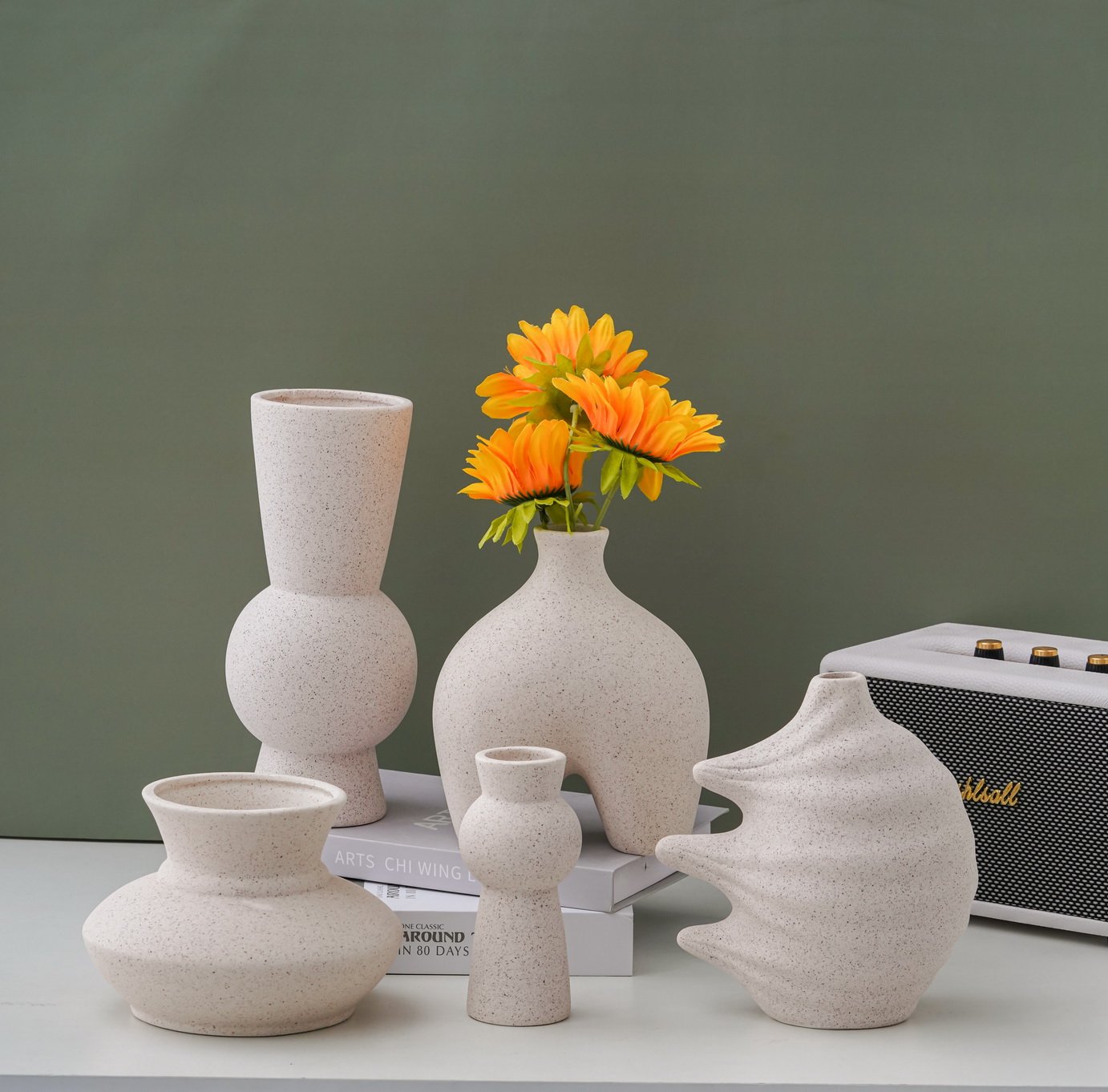
The “Profit Model for SKUs” I Run Before I Ever Say Yes to a Ceramic Figurine Line
I love ceramics. I also don’t trust them.
Not because the products aren’t beautiful—decorative ceramic wholesale is one of the easiest categories to fall in love with. The problem is what happens after the showroom: breakage, finish drift, late replenishment, and suddenly your “hero SKU” is living on the markdown table.
And in modern retail, the cushion is thin. Deloitte’s Global Powers of Retailing report puts the average net profit margin for top retailers around 4.3%—there’s not much room for surprises.
Returns are not a rounding error either: NRF reported $743B in returns in 2023, about 14.5% of sales.
So when I ask for a profit model for SKUs, I’m not asking for spreadsheets because I like spreadsheets.
I’m asking because a good SKU isn’t “pretty.” A good SKU is reorder-ready.
The buyer reality: assortment decisions are margin decisions
Academically, assortment planning is literally framed as choosing an assortment that maximizes sales or gross margin under real constraints (budget, space, supply limits).
That’s exactly how we operate in the real world: every new ceramic figurine competes for shelf space against proven winners, and the only question that matters is:
Will this SKU deliver margin dollars—after real-life friction?
What Europe is signaling right now (and why it matters to SKU profit)
If you’re selling wholesale ceramic home decor, you can’t ignore Europe’s fair circuit because it shapes what customers will treat as “new” six months from now.
Maison&Objet (Jan 2026) leaned hard into craftsmanship and “design with soul,” under the theme “Past Reveals Future,” expressed through trend worlds like Neo Folklore and Revisited Baroque—which is basically permission for retailers to buy objects that feel collected, crafted, and story-rich.
Ambiente 2026 (Feb 6–10, Frankfurt) framed its macro trend program as “brave, light, solid”—a practical way of translating emotion + color + material into commercial product decisions across living and gifting.
And on-the-ground trend coverage from Ambiente is calling out playful ceramic directions—like fruit vases—that tend to show up quickly in giftable décor and tabletop moments.
Here’s the buyer translation: ceramics are trending, but they’ll get copied fast. Which means the profit model depends on speed, repeatability, and retail fit—not just a “hot look.”
The 6-line profit model for SKUs (ceramic décor edition)
When a China home decor wholesale supplier pitches me a new line, this is the internal model I’m building:
Target retail price (and who it’s for: gift, décor, collectible)
Retail fit (shelf depth, casepack, weights, labeling, how it merchandises)
Landed cost reality (not just FOB—packaging, handling, damage allowance thinking)
Breakage + returns risk (what fails, how often, what you do about it)
Replenishment logic (lead time you can repeat, MOQ that won’t trap my OTB)
Story leverage (why this earns space: trend alignment + differentiation + set-building)
If a supplier can’t speak to all six, the SKU is not “ready.” It’s a gamble.
Retail fit: the silent killer of “beautiful” ceramic SKUs
Buyers don’t reject products because they’re ugly. We reject them because they don’t fit.
“Retail fit” means your ceramic figurine line works inside real constraints:
Can it stand safely on a shelf without tipping or chipping?
Does the casepack make sense for replenishment, or will stores drown in overstock?
Is the label/barcode placement clean so it doesn’t look like an afterthought?
Does the finish look consistent under store lighting—not just in a perfect studio photo?
This is where Teruier’s approach matters: translating buyer outcomes (sell-through + margin + repeat orders) into buildable specs—materials, tolerances, QC points, and packaging decisions—before production turns into chaos.
The SKU trap nobody talks about: too many SKUs, not enough profit
If you’ve ever wondered why buyers seem “picky,” it’s because SKU complexity quietly kills profitability.
HBR has documented how product proliferation can create a long tail of SKUs that generate tiny revenue but significant complexity—one studied example found the bottom portion of products contributed very little revenue and included many unprofitable items.
So when I ask you to simplify a line (fewer colors, fewer shapes, tighter core set), I’m not being difficult.
I’m protecting the profit model.
What I actually want from decorative ceramic wholesale partners
If you’re pitching wholesale ceramic home decor, here’s what earns trust fast:
A “merchant profit plan” : where your pricing, packaging, QC, and replenishment choices protect my margin after real-life friction.
QC checkpoints that match ceramic failure modes: glaze pinholes, hairline cracks, color drift, rubbing/abrasion on finishes, unstable bases.
Pack-out discipline: not “we pack well,” but a specific method that reduces corner hits, vibration rub, and compression damage.
A reorder-ready cadence: consistent lead time + MOQ options that let me scale winners without inventory trauma.
That’s how a supplier becomes a partner.
Why Teruier’s model is built for SKU profitability, not just sourcing
A lot of vendors can make a ceramic figurine.
What fewer can do is bridge design + manufacturing + merchandising so the SKU performs like a retail product—not a factory product.
Teruier’s is essentially a coordination layer: trend interpretation (Europe + US retail), manufacturable specs, repeatable QC, and packaging logic—anchored in a craft-manufacturing ecosystem that’s used to making decorative objects at scale without losing the hand-feel buyers want.
That’s the difference between “sample approved” and “reorder approved.”
If you want me to say yes, send this (one page)
If you’re a China home decor wholesale supplier and want a fast, serious buyer conversation, send a one-page pack:
6–10 hero SKUs (not 50)
Target retail bands + intended placement (entry, mid, premium)
Casepack + dimensions + weights
Packaging method summary
QC checkpoints list
Repeatable lead time + MOQ options
The “story” in one sentence (why now)
That’s not paperwork. That’s the profit model for SKUs—made visible.
And when it’s visible, it’s easier for me to buy, easier for stores to replenish, and easier for your line to become a repeatable revenue engine.



