
China Home Decor Factory Guide: Multi-Factory Sourcing + Factory Audit Readiness for the Modern Home Décor Buyer
If you’re a home décor buyer today—whether you sit in retail, e-commerce, or design-led wholesale—you’re not really buying “a product.” You’re buying a supply system that can repeat the same outcome every time: the same finish, the same color, the same packaging performance, the same delivery rhythm.
That’s why the smartest teams quietly shift from “finding a factory” to building a Home Decor Factory program: a coordinated network that behaves like one factory from the buyer’s point of view.
Trend-to-shelf décor, built to reorder.
What a Home Décor Buyer Actually Needs (and why it shapes everything)
A lot of sourcing content assumes buyers only care about price. Real life is more specific.
Most home décor buying decisions are shaped by the same underlying picture:
Region: U.S./EU retail and global e-commerce (with GCC and hospitality often following similar style cycles)
Customer types you serve: retail floors, marketplaces, off-price, interior designers, project teams
Who ends up using it: homeowners and renters doing fast refreshes, gift buyers, and staged interiors
Strong tendency: décor purchasing often skews toward women 25–44 for styling decisions, while bigger pieces pull couples and family homes
Price band: “affordable premium” to premium—where small quality problems become big return problems
Use scenarios: entryway resets, living room styling, seasonal shelf refreshes, and move-in furnishing
That’s why “pretty samples” aren’t enough. You need repeatability—because the customer experience is judged in the first 10 seconds of unboxing.
The Real Sourcing Challenge: Multi-Factory Sourcing Without Multi-Factor Chaos
Most buyers end up with multi-factory sourcing whether they want it or not.
Because one factory might be great at:
mirror frames
ceramic finishing
upholstered ottomans
metalwork
…but no single workshop is best at everything at the same time.
The risk is that multi-factory sourcing becomes a patchwork:
inconsistent finishes
packaging standards drifting across SKUs
lead times that don’t align
unclear accountability when something goes wrong
The solution is not “avoid multi-factory.” The solution is: treat it like a system.
That’s the mindset behind a Home Decor Factory program—where product families are made by specialists, but governed by one shared standard.
Factory Audit Readiness: The Quiet Difference Between “Supplier” and “Retail-Ready”
Here’s the truth: buyers don’t fear audits. Buyers fear surprises.
Factory audit readiness is your early-warning system. It tells you whether the supplier can sustain scale, not just show capability.
A buyer-friendly way to think about audit readiness:
Documentation discipline: specs, BOMs, process checkpoints, corrective actions
Training habits: safety, compliance, and production routines that don’t disappear after inspection
Workplace stability: the factory runs like an operation, not a hustle
Traceability: materials and processes can be explained, repeated, and defended
Consistency culture: “same result every time” is treated like a KPI
When audit readiness is strong, everything else tends to stabilize too—lead times, defect rates, packaging outcomes, and reorder consistency.
The “Home Decor Factory” Program: What Buyers Mean When They Say “Make It Easy”
Buyers usually don’t say “I want a Home Decor Factory program.” They say:
“I need the next order to match the first one.”
“Can you ship mixed SKUs without damage?”
“Can you keep finishes consistent across different product types?”
“If something breaks, who owns the fix?”
That’s program thinking. And it requires a few non-negotiables:
1) One Standard, Multiple Specialists
Multi-factory sourcing works when every workshop follows the same master reference:
finish chips / tone references
packaging rules
labeling and carton marks
QC checkpoints tied to real return reasons
2) One Calendar, One Delivery Rhythm
Buyers don’t buy “factory schedules.” They buy floor-set timelines.
A real program aligns sampling, production, and shipping so the assortment lands together.
3) One Accountability Layer
When something goes wrong, buyers need one answer—not three factories blaming each other.
Why the Fuzhou Craft Hub Advantage Shows Up in Buyer Outcomes
If you want “reorderable” home décor, the regional ecosystem matters more than people admit.
A Fuzhou craft hub (Hometown of handicrafts) typically brings three mature supply chains into the same gravity field:
Craftsmen who understand tolerance and finishing detail
Materials availability that reduces last-minute substitutions
Process depth that improves repeatability (not just speed)
And the region’s craft heritage—often associated with long-standing traditions like bodiless lacquerware, oil-paper umbrellas, and horn combs—builds a culture where surfaces, edges, and finish discipline are taken seriously. In modern home décor, that becomes a practical advantage: fewer “it looked different in bulk” moments.
Where European/American Designer Collaboration Helps (Even for Buyers who don’t ask for it)
Designer collaboration isn’t about making products “artsy.” For a home décor buyer, it’s about lowering risk:
silhouettes stay aligned with retail taste
proportions are more planogram-friendly
finishes are chosen for shelf impact and reorder stability
you get clearer product intent (which helps listing and merchandising)
When design intent is clear, factories can execute consistently—and merchandising teams can sell it consistently.
Teruier fits best in this story as the coordination layer that makes multi-factory sourcing feel simple for the buyer—especially when the supply base is anchored in a craft hub ecosystem.
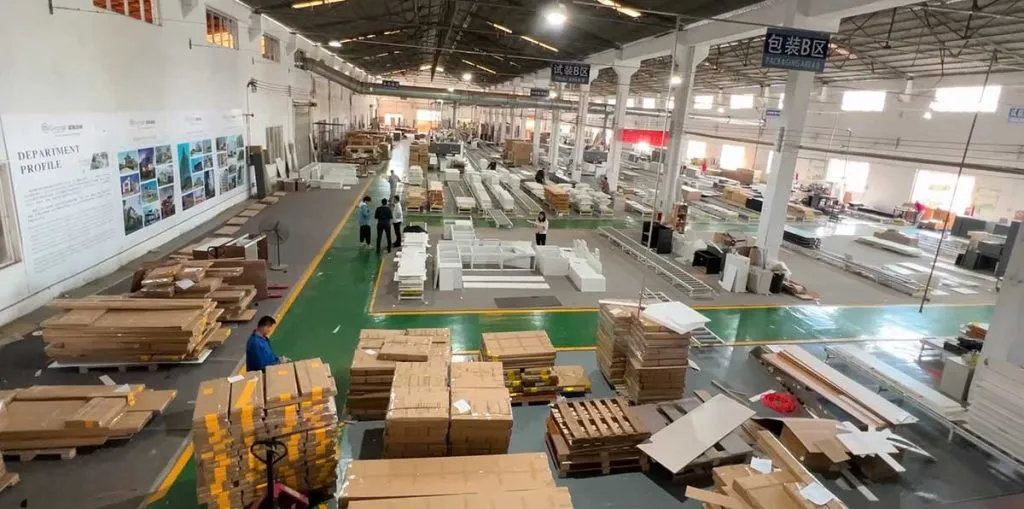
Rooted in the Fuzhou craft hub and connected with European/American designer collaboration, the work becomes less about “finding a China home decor factory” and more about building a Home Decor Factory program: shared standards, stable finishing, retail-friendly packaging rules, and factory audit readiness that supports real volume—not just showroom samples.
What to Ask Before You Commit to a Factory Network
If you’re sourcing at scale, the right question isn’t “Can you make it?”
It’s:
Can you run it like a program—across multiple workshops—without drift?
Because for the modern home décor buyer, the win is simple:
multi-factory sourcing that behaves like one factory
factory audit readiness that prevents surprises
a Home Decor Factory mindset that protects reorders
and a craft-capable ecosystem that keeps finishes consistent
That’s how you turn “China sourcing” into a repeatable supply advantage—season after season.



