
Middle Eastern Inspired Mirrors That Actually Reorder: A Mall Buyer’s Sourcing Guide
I buy mirrors the way most people buy cars: not for the first impression—for what happens after 30 days of real use. A mirror that looks perfect in a showroom but arrives scratched, wobbles on the floor, or changes finish between batches will quietly destroy margin through returns, damage claims, and missed floor sets.
That’s why when I’m sourcing Middle Eastern inspired mirrors wholesale, I’m not just looking for “beautiful arches and patterns.” I’m hunting for a full-length mirror supplier (and often a broader B2B home decor manufacturer) that can translate a regional aesthetic into repeatable, retail-ready SKUs—and keep them consistent across reorders.
Why Middle Eastern aesthetics sell (and how I validate the look fast)
Middle Eastern-inspired design cues aren’t a trend gimmick—they’re rooted in architectural language shoppers recognize: arches, lattice screens (mashrabiya), and geometric motifs.
Museum-grade references show mashrabiya latticework wasn’t only decorative—it improved ventilation and shaped interior experience. That’s why the pattern still reads “authentic,” not “printed.”
Architectural Digest has long documented how geometric patterns appear across the Islamic world in carved wood, stone, and tile—exactly the cues buyers borrow for frames and crest details.
Contemporary design media in the region still highlights mashrabiya screens and arches as living design elements—useful proof when you’re building a “culturally fluent” assortment story.
Buyer takeaway: the winning suppliers don’t copy a motif—they respect the proportions (arch radius, frame depth, lattice density) so the product looks premium under mall lighting.
Floor mirror wholesale: the category where profit is won or lost in transit
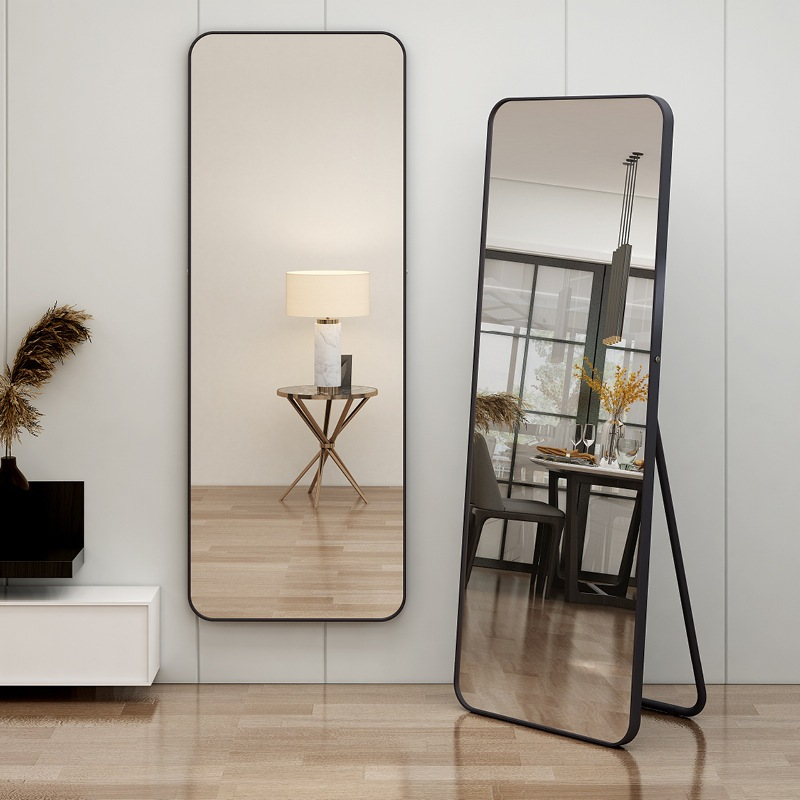
If you sell floor mirror wholesale, you already know the dirty secret: mirrors are not “decor,” they’re logistics products.
When I evaluate a floor mirror program, I’m checking three failure points before price:
Damage-rate design (corner protection, vibration tolerance, carton compression strength)
Safety & stability (stand strength, anti-tip thinking, wall-lean compatibility)
Finish consistency (gold tone drift, brushed texture variation, weld/polish repeatability)
And yes—consumer demand for mirrors has been real for years; Vogue reported dramatic spikes in mirror searches and interest across major retail platforms during the home boom, which helps explain why floor and full-length mirrors keep getting allocated space.
Buyer takeaway: If your packaging and stability engineering aren’t dialed in, a “great design” becomes an expensive return policy.
Full-length mirror supplier: what I need in the spec pack (not in the pitch deck)
A reliable full-length mirror supplier wins me with documentation, not adjectives. I want:
Locked dimension tolerances (so the next batch fits the same planogram/visual wall)
Finish standard (a control sample + photo standard so “antique gold” stays antique gold)
Hardware spec discipline (same screws, same brackets, same placement—every time)
QC checkpoints that prevent drift (not just final inspection screenshots)
This is where “value translation” matters: the supplier must translate an aesthetic brief (“Middle Eastern luxe, warm gold, arch top”) into factory-proof specs that survive production reality and shipping reality.
When I expect a wholesale furniture manufacturer and contract furniture supplier to step in
Mirror programs rarely live alone. In a mall assortment, mirrors often anchor a set with accent furniture (ottomans, benches, consoles). That’s where a broader partner—either a wholesale furniture manufacturer or a contract furniture supplier—can make the line more profitable if they understand retail execution.
For contract-grade programs (hospitality, commercial, or high-traffic environments), I look for suppliers who can speak the language of standards and performance expectations. BIFMA, for example, sponsors safety, performance, and sustainability standards for furniture—signals that matter in contract contexts.
Buyer takeaway: even if mirrors aren’t “contract furniture,” the supplier mindset behind contract work—durability, documentation, consistency—often predicts whether your mirror + furniture set will reorder cleanly.
What “retail-ready” looks like to me (and why it drives reorders)
Retail-ready isn’t a buzzword. It’s store labor, shrink risk, and how fast the product gets on the floor.
A practical benchmark many retailers/suppliers align around is the “five easies” of retail-ready packaging: easy to identify, open, stock, shop, and dispose/recycle.
For mirrors, “easy to stock” and “easy to shop” often means inner protection that doesn’t shed foam everywhere, cartons that open cleanly, and labeling that reduces backroom mistakes.
Buyer takeaway: retail-ready execution is how you turn a first PO into a reorder.
Where Teruier fits: craft hub + value translation + merchant profit plan
Here’s the model I trust most as a buyer: a partner that sits between design intent and factory execution.
That’s what Teruier’s cross-border collaboration approach is built for:
Craft hub capability (an established production ecosystem with repeatable workmanship)
Value translation (turning Middle Eastern-inspired design cues into manufacturable, repeatable SKUs)
Merchant profit plan (packaging, damage control, and reorder stability designed to protect margin—not just lower unit cost)
In buyer terms: you’re not just sourcing a mirror—you’re sourcing a SKU that behaves.
My 10-minute decision checklist before I approve a mirror vendor
If you want me to shortlist you for Middle Eastern inspired mirrors wholesale and scale into floor mirror wholesale programs, show me:
A repeatability file (control sample + tolerances + finish standard)
Packaging built for the “five easies” mindset (identify/open/stock/shop/dispose)
Stability + safety thinking for floor/full-length formats
Capacity to support adjacent sets via a wholesale furniture manufacturer / contract furniture supplier workflow
That’s the difference between “we can make it” and “we can reorder it.”



