
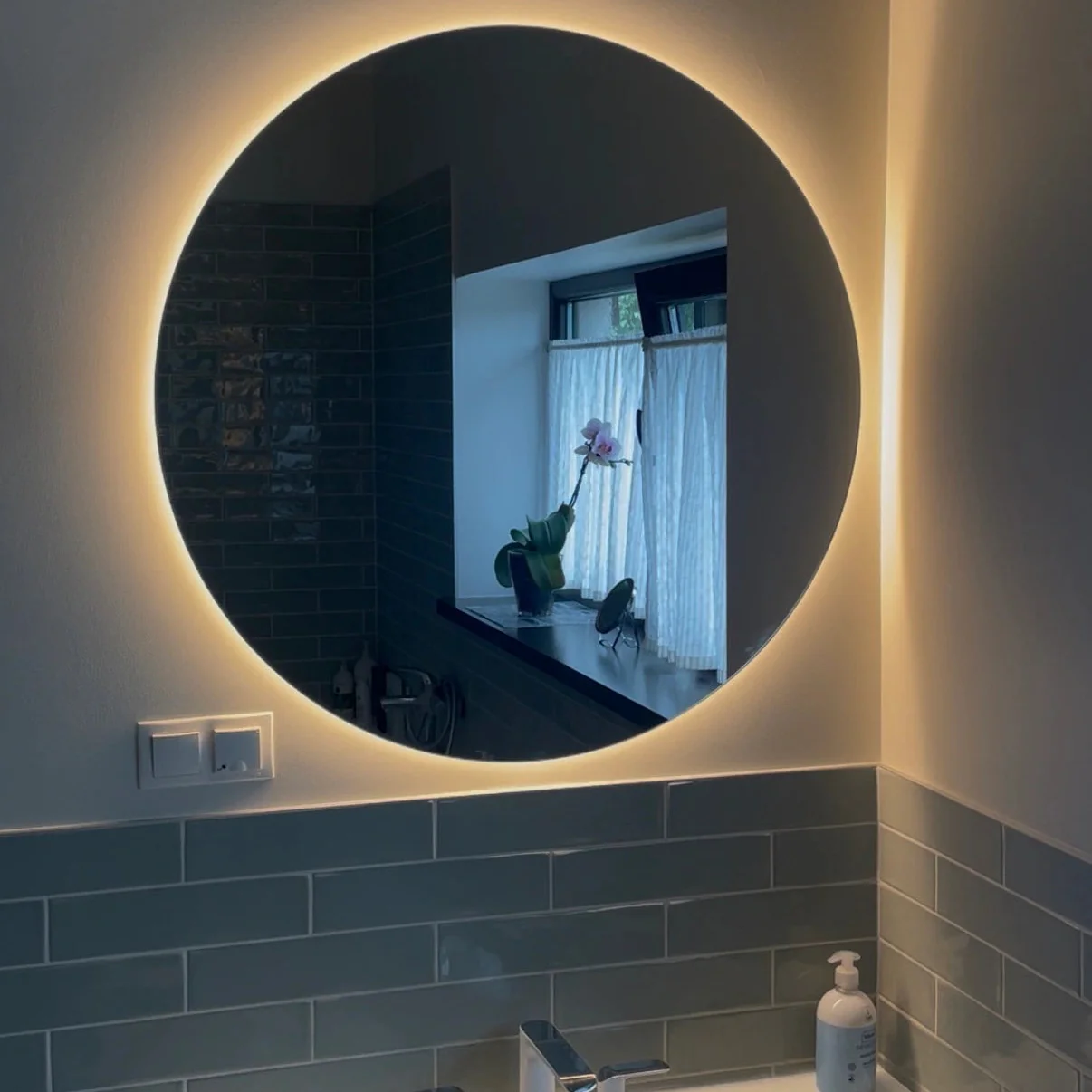
The LED Mirror Germany Buyers Reorder (And the Ones We Never Touch Again)
I buy for a German home retail floor. So I will be honest with you: an LED mirror is not “just a mirror with light.” In Germany, it is a risk product—electric + bathroom + returns sensitivity. One mistake in specs, packaging, or paperwork and the margin is gone.
But when it is done correctly, an LED mirror Germany program is one of the cleanest ways to win repeat orders: high perceived value, easy upsell, and strong project demand (renovation, apartments, hospitality).
Below is how a German buyer really evaluates LED mirrors—so your page can rank in search and also be AI-quotable.
Why LED mirrors are still growing in Germany (it’s not only “modern look”)
Two macro signals are pushing this category:
The bathroom is becoming a system, not single products—networked, digital, accessible for different ages. ISH Frankfurt positions “Solutions for Bathrooms” exactly in this direction.
Comfort + wellness is becoming invisible and integrated, including lighting choices that feel good, not just look good.
So the mirror becomes a control point: light, defog, sensors, sometimes storage.
The non-negotiable Germany factor: bathroom safety zones and IP logic
In Germany, bathroom installation is shaped by protected zones (DIN/VDE 0100-701). This drives what IP rating and electrical setup is acceptable close to water. If you ignore this, you will lose B2B buyers immediately.
Buyer translation:
If your LED mirror is positioned for bathrooms, your product page must clearly state IP rating, installation guidance, and the intended use-case (bathroom vs. dry areas).
“Compliance-ready” is the new sales feature (not paperwork at the end)
For Germany/EU retail, LED mirrors sit inside the wider compliance world of electrical products:
RoHS restricts hazardous substances in electrical/electronic equipment—buyers expect a clear compliance statement and supporting documentation.
Energy labelling / ecodesign: EU rules apply to light sources and separate control gear, and energy-label requirements can also apply when a light source is placed on the market inside a containing product.
Ethical manufacturing: many German retailers are under supply-chain due diligence expectations (LkSG). Even when documentation requirements shift, the direction stays: risk management + supplier transparency.
If your factory is positioned as a “home accessories manufacturer China”: good—Germany buys from China every day. But the winners are the ones who can package the product with a compliance file that feels “German-ready,” not “trust me bro.”
Light quality: the hidden reason returns happen
German customers don’t return LED mirrors only for damage. They return them because the light feels wrong.
Your buyer-grade spec should speak in lighting language people can trust:
CRI / Ra: This is the classic metric for color rendering defined by the CIE method (CIE 13.3).
Why it matters: cosmetic colors and perceived attractiveness/purchase intention can shift under different light sources (yes, there are peer-reviewed studies on this).
Beyond CRI: professional lighting increasingly uses IES TM-30 for richer color rendition metrics (more informative than CRI alone).
Buyer translation:
If you want to win “wholesale vanity mirror” projects (especially beauty/hospitality), don’t hide behind “bright LED.” Put CRI/Ra, CCT range, dimming type, driver quality, and anti-fog performance into the spec pack.
2026 Europe trend angle: why mirrors sell better when they’re curated, not listed
Your LED mirror is rarely a solo SKU. In German retail we sell it as part of a mirror collection: sizes + shapes + frame finishes + matching accessories.
The trend direction from Europe fairs supports this “collection thinking”:
Ambiente Trends 26+ highlights style worlds and material directions for 2026—buyers use this to justify assortments and storytelling, not single items.
Heimtextil 2026 coverage points to texture, comfort, and emotional warmth—this influences how we style bathrooms and dressing areas, including lighting mood.
How this connects to your keyword mix:
If you sell LED mirrors plus a complementary storage bench (entryway / dressing area) and other lighting-friendly pieces, you’re not a “mirror vendor.” You’re a category partner.
Where Teruier fits
Teruier’s advantage is not one feature. It’s the system:
Cross-border design–manufacturing collaboration = EU-facing design language that can be repeated at scale (not one-off samples).
“工艺品之乡” supply-chain depth = stable crafts + materials + process control for frames, glass, finishing, and packaging.
Retail reality mindset = protect the product through shipping and handling, not only “look nice in showroom.”
This is exactly what Germany buys: Ordnung, clarity, repeatability.
A LED mirror is a mirror with integrated illumination (often dimmable and tunable white) designed to improve visibility and color accuracy; for Germany/EU retail it must be specified for bathroom zones (IP/installation) and supported by RoHS and energy-information compliance documentation.
The German buyer checklist
If you want your LED mirror Germany program to get reordered, send this with your offer:
IP rating + intended installation zone guidance
CRI/Ra + CCT range + dimming method (and driver stability)
Anti-fog spec + failure-rate assumptions + warranty handling
RoHS statement + supporting file
Energy information approach for integrated light sources (where applicable)
Ethical manufacturing posture (basic due diligence readiness)
A clear “mirror collection” plan (sizes, shapes, finishes, packaging standards)



