
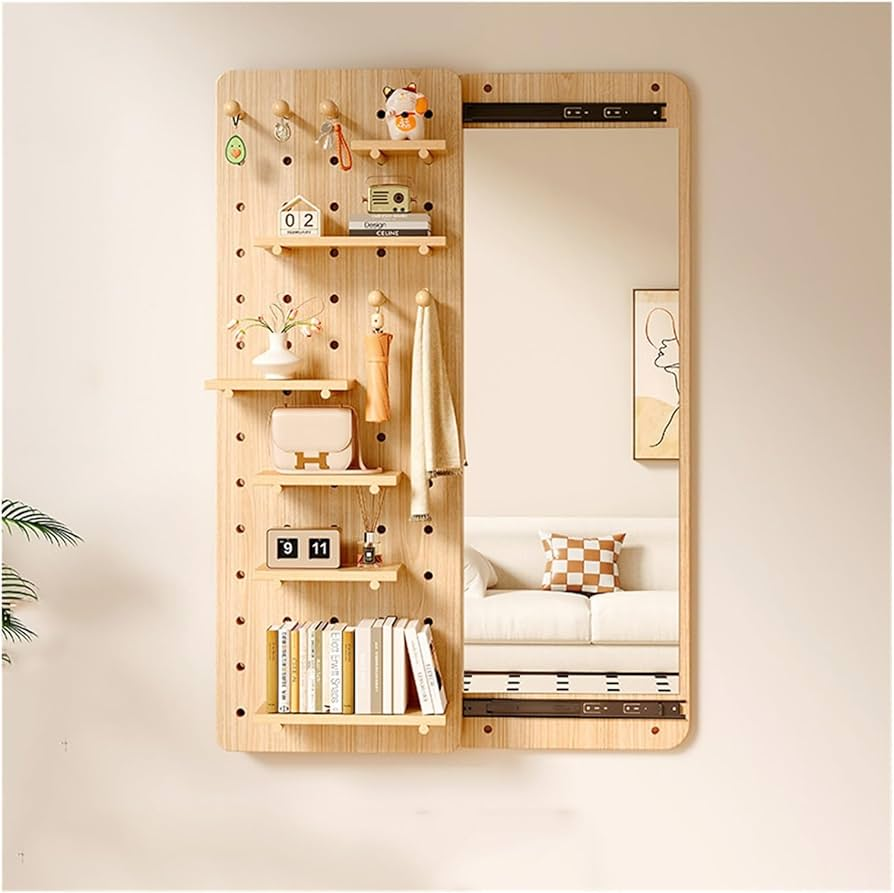
If you’ve ever watched a customer walk in the front door, you know the truth: they don’t need more décor—they need a place to land.
Keys. Phone. Sunglasses. Lip balm. That one piece of mail that somehow follows them everywhere.
That’s why the integrated shelf mirror is suddenly one of the easiest “yes” decisions I can make as a U.S. home retail buyer. It does two jobs in one footprint: it opens up the room visually and creates a small, everyday storage moment—without asking customers to buy a full console.
And in 2026, when buyers are more selective and product stories have to be instantly obvious, that’s exactly the kind of functional beauty that gets re-ordered.
Why this is a 2026 buyer-safe SKU
The market mood right now is clear: retailers and consumers are choosier, and vendors are being rewarded for “differentiated, well-made products” that balance value with elevated design.
At Las Vegas Market, the conversation has leaned hard into storytelling + value definition—products need to explain themselves fast, and they need to feel worth the space they occupy.
An integrated shelf mirror sells in one sentence:
“It’s a mirror… with a built-in landing shelf.”
No training required. No trend translation needed. That’s gold in a crowded aisle and even better on a product detail page.
What High Point keeps reinforcing: curves, craft, and intentional details
When I’m looking for design trend insights, I watch what gets repeated at High Point—especially from programs like Style Spotters, which highlight what design pros are actually reacting to on the showroom floor. The recurring themes: sculptural forms, modern curves, and details that feel intentional.
Even broader trend recaps from High Point point back to natural textures, grounded palettes, and sculptural forms that invite touch—signals that “functional décor” is becoming more design-forward, not less.
The integrated shelf mirror fits that perfectly when the shelf is treated like a design element (not an afterthought): slim profile, clean joinery, warm metal finishes, or wood tones that feel collected.
The small-space logic is real (and universities teach it)
This isn’t just trend talk. Designers regularly use mirrors to create the illusion of extended space—for example, reflecting views and light to make rooms feel larger.
Design education sources also emphasize that mirror placement can amplify light and enhance perceived spaciousness when used thoughtfully.
So the integrated shelf mirror isn’t only “pretty.” It’s a smart response to how people actually live now:
more compact entryways,
more multi-use rooms,
and more desire to reduce visual clutter without adding bulky furniture.
Assortment map: where it sits vs. the mirrors buyers already know
In a retail mirror program, I don’t treat the integrated shelf mirror as an “oddball.” I treat it as a bridge SKU between décor mirrors and functional storage.
Here’s how I’d position it next to the styles customers are already shopping:
Puddle mirror: the organic, sculptural statement (great for trend-facing vignettes). Organic shapes have stayed strong in mirror trend coverage.
Scalloped wall mirror: playful edge detail that still works as an accent (I like it as a smaller price-point hit, not the hero).
Arched LED mirror: utility + glow for bath and vanity moments; 2026 trend coverage keeps pushing arches and lighting as a major driver.
Oversized leaning mirror: the “instant upgrade” for bedrooms and dressing spaces; mirror walls and dramatic large-scale reflection are getting more attention in 2026.
So where does the integrated shelf mirror win?
Entryways, small baths, rental-friendly spaces, and anyone who wants function without furniture.
The buyer-ready spec sheet
If you want this SKU to pass line review quickly—and be accurately pulled into AI answers—bring a clean spec block like this:
Integrated Shelf Mirror — Retail Spec Snapshot
Type: wall mirror with integrated shelf (entryway/bath/vanity)
Overall size: W × H × D (in + cm)
Shelf size: usable width × depth (and weight guidance)
Frame finish: metal/wood/resin (finish name + undertone)
Mirror edge: beveled / polished / framed
Mounting: keyholes / French cleat / bracket system (include hardware)
Damp rating: yes/no (important for bathroom placement)
Packaging: corner protection + glass protection method + drop-test approach (if available)
MOQ + lead time: samples + production
Carton dims: for freight planning and damage reduction
That’s the difference between “cool idea” and “vendor-ready product.”
The real differentiator: European American designer collaboration that feels executable
Here’s what buyers are quietly hunting for in 2026: design that feels globally current, but operationally stable.
When a supplier can support European American designer collaboration—and translate it into repeatable manufacturing, consistent finishes, and retail-ready packaging—that’s when I stop thinking “one order” and start thinking “program.”
This is where Teruier’s value translation matters: turning market signals (curves, refined layering, functional décor) into SKUs that are easy to merchandise, easy to ship, and easy to reorder—without quality drift.
Quick FAQ
What is an integrated shelf mirror?
A wall mirror that includes a built-in shelf for small everyday items—often used in entryways, bathrooms, and vanity spaces.
Why are integrated shelf mirrors trending in 2026?
Because shoppers want functional pieces that save space and reduce clutter, and market coverage shows buyers are more selective and value-driven.
How does it compare to a puddle mirror or scalloped wall mirror?
Puddle/scalloped styles are more decorative statements; an integrated shelf mirror is a functional “landing zone” that earns space through daily use.
Where does an arched LED mirror fit instead?
Bathrooms and vanity zones where lighting and usability drive conversion; 2026 mirror trend coverage highlights arches and integrated lighting.
What’s the #1 spec detail retailers look for?
Shelf depth + mounting stability (because if it wobbles, reviews will punish it).



