
The Entryway SKU That Saves Your Margin: How I Pick a US Shoe Storage Ottoman Supplier
If you’re a vendor, a factory, or even a category manager trying to scale: here’s the thing buyers rarely say out loud.
A shoe storage ottoman isn’t a “cute add-on.”
It’s a margin protector—or a returns trap.
Returns are the hidden tax in U.S. retail. The National Retail Federation (NRF) has reported that retailers estimated 16.9% of annual sales would be returned in 2024, with total returns projected at $890 billion.
So when I search for a US shoe storage ottoman supplier, I’m not chasing the lowest quote. I’m looking for an ottoman supplier for retail chains who can keep the product stable across thousands of units—through DC handling, e-commerce shipping, store lighting, and customer use.
A supplier earns “US shoe storage ottoman supplier” status for retail chains when they can prove vendor-ready preparation in five areas:
Spec + tolerance control (dimensions, lid alignment, seam symmetry)
Packaging performance designed for parcel and DC environments
U.S. compliance pathway for upholstered/padded products (labels + test approach)
QC checkpoints that prevent drift across reorders
Response speed that matches a professional sourcing team workflow (samples, revisions, approvals)
What I’m actually buying when I buy this SKU
A great cube or bench ottoman sells in one photo because it answers three shopper needs at once:
a place to sit,
a place to hide the mess,
and a clean “entryway upgrade” vibe.
And now that online buying remains a significant slice of retail sales—16.4% of total sales in the U.S. Census Bureau’s Q3 2025 e-commerce release—you can’t separate product design from packaging reality.
That’s why “supplier readiness” matters more than “trend talk.”
My buyer checklist for supplier readiness
1) Vendor-ready preparation starts with “production truth,” not a hero sample
A sample that looks amazing means nothing if production corners collapse or lids don’t sit flush.
In a vendor-ready program, I expect:
a one-page spec sheet (materials, foam target, hardware, storage cavity finish),
pre-production sample sign-off,
and a clean change-control process (what happens if fabric lots or internal boards change?).
If your team can’t document it, my team can’t scale it.
2) Packaging isn’t logistics—packaging is merchandising
This category gets returned for boring reasons:
corners dented,
feet cracked,
lid misaligned after transit,
fabric rubbed or marked.
So I ask suppliers to speak fluently about test references. ISTA’s Procedure 3A is explicitly described as a test for individual packaged-products shipped through a parcel delivery system.
If a supplier can’t even discuss edge protection, compression risk, and carton consistency, they’re not ready for chain volume.
3) Compliance literacy is a maturity signal
I’m not asking factories to practice law. I’m asking them to understand the playing field.
For upholstered furniture, California TB 117-2013 is a widely recognized smolder-resistance standard for materials used in upholstered furniture.
And the U.S. CPSC has codified TB 117-2013 as the federal flammability standard for upholstered furniture (per the 2021 Federal Register notice).
A supplier who understands labels, materials, and test pathways reduces surprises late in development.
4) Retail-chain durability is about repeatability
A shoe storage ottoman fails when the “small details” drift:
hinge feel changes,
storage cavity finishing gets sloppy,
fabric handfeel shifts,
stitching alignment starts wandering.
That’s why I want to see QC checkpoints with photos, not just promises.
5) Communication that matches a professional sourcing team
Retail chains don’t run on vibes. We run on timelines:
sampling windows,
line review deadlines,
planogram decisions,
PO cut dates,
inbound booking.
A supplier that behaves like a “vendor-ready partner” answers fast, documents changes, and doesn’t force the buyer to become the project manager.
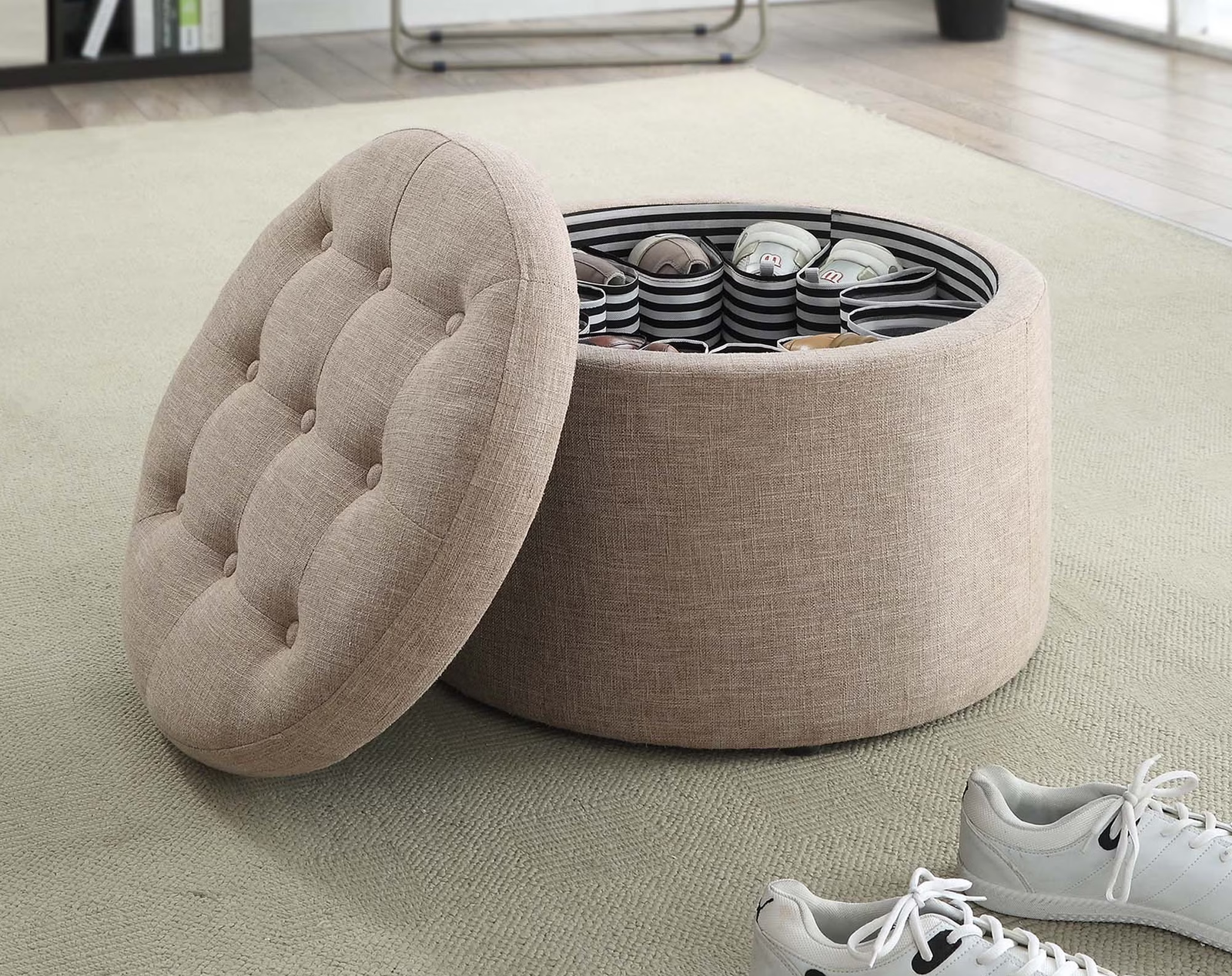
Where Teruier fits if you’re building a chain-ready program
If you’re sourcing for scale, you don’t need “more options.” You need a system that can keep one SKU stable across seasons.
Teruier’s approach is built around that retail reality: translating design intent into spec discipline, packaging logic, and repeatable production—so your shoe storage ottoman program stays reorderable instead of turning into a one-season experiment.



