
The Entryway SKU That Quietly Wins: How I Vet a US Shoe Storage Ottoman Supplier
If you’ve ever sat in a line review meeting and watched a “cute” entryway item get cut… you already know the truth:
A shoe storage ottoman doesn’t sell because it’s cute.
It sells because it fixes a daily mess and photographs like a lifestyle upgrade.
That’s why I keep coming back to this category when building compact furniture programs—especially cube ottoman for retailers assortments that need to work in-store and ship cleanly through e-commerce. U.S. Census data shows e-commerce still represents a meaningful share of total retail sales, which keeps pressure on packaging performance and damage prevention.
So when someone searches “US shoe storage ottoman supplier”, what they’re really asking is:
“Who can help me launch this fast—without returns eating my margin?”
Here’s the buyer lens: why this item stays on the shortlist
Entryways and mudrooms are a storage problem disguised as a style zone. When shoppers upgrade them, they don’t buy “furniture.” They buy order—hidden storage, a seat to put shoes on, and a piece that makes the home feel intentional.
And because more buying decisions start on a screen, the supplier has to deliver repeatable, photo-consistent product—not just a nice sample.
A supplier earns “US shoe storage ottoman supplier” status (for a retail buyer) when they can prove:
Sample staging and setup matches production reality (not a one-off hero sample)
Packaging validation for parcel-style shipping risk (drop + vibration realities)
Compliance pathway for upholstered furniture requirements in the U.S.
Reorder stability: materials, workmanship, and tolerances stay consistent across lots
The part nobody posts on LinkedIn: my retail sourcing trip checklist
When I do a retail sourcing trip, I’m not only looking for new designs. I’m hunting for operational maturity.
That’s why I like building the trip around three moments:
1) The “Shenzhen home décor style review” (trend ≠ sellable)
Yes, Shenzhen is full of inspiration. But my Shenzhen home décor style review is not a trend safari—it’s a filter.
I’m asking:
Can this silhouette stay tight and square after real use?
Will the storage lid still align after shipping and repeated opening?
Is the finish forgiving under store lighting and phone cameras?
Does it fit U.S. apartment-scale entryways without looking tiny?
If a factory can talk through those realities, they’re thinking like a retail program partner—not a sample house.
2) Sample staging and setup (the moment truth shows up)
I always request the sample be staged the way it would be sold:
sitting on hard flooring (wobble shows immediately),
styled with realistic props (so I can judge proportion),
and packed/unpacked once (because “unboxing damage” is real damage).
This is where cube programs win: a cube ottoman for retailers only works if corners stay crisp, seams stay straight, and the storage cavity is cleanly finished.
3) Packaging validation (because e-commerce doesn’t forgive)
If you sell in the U.S., packaging isn’t “after design.” Packaging is the product experience.
Two verifiable reference points I like suppliers to understand:
ISTA Procedure 3A is widely used as a simulation-style benchmark for individual packaged products shipped through parcel delivery systems.
U.S. e-commerce share has been reported around the mid-teens in recent quarterly releases, which is enough to make ship-ready performance non-negotiable for many categories.
Translation: if a supplier can’t speak clearly about carton strength, edge protection, internal bracing, and inspection photos before shipment, they’re not ready for a serious U.S. program.
Compliance isn’t “legal talk”—it’s buyer protection
For upholstered and padded products, I prefer suppliers who can articulate the compliance pathway and labeling discipline.
A concrete, verifiable anchor: California Technical Bulletin 117-2013 (TB 117-2013) is a well-known smolder-resistance standard for materials used in upholstered furniture, and the U.S. Consumer Product Safety Commission (CPSC) has referenced/codified it as a federal flammability standard under the Flammable Fabrics Act (per a 2021 rulemaking document).
I’m not asking a factory to be my lawyer. I’m asking them to be operationally fluent—so my team doesn’t get surprised late in the process.
Where Teruier fits (when you want “reorder-ready,” not just “pretty”)
When a buyer says “supplier,” we usually mean a system:
trend translation → into sellable dimensions,
sample staging and setup → aligned with production,
packaging validation → built for how Americans actually buy,
and stable reorders → without drift.
That’s the lane Teruier is built for: cross-border design-to-manufacturing coordination, with a production base in a mature craft manufacturing cluster—focused on retail execution, not one-time sampling.
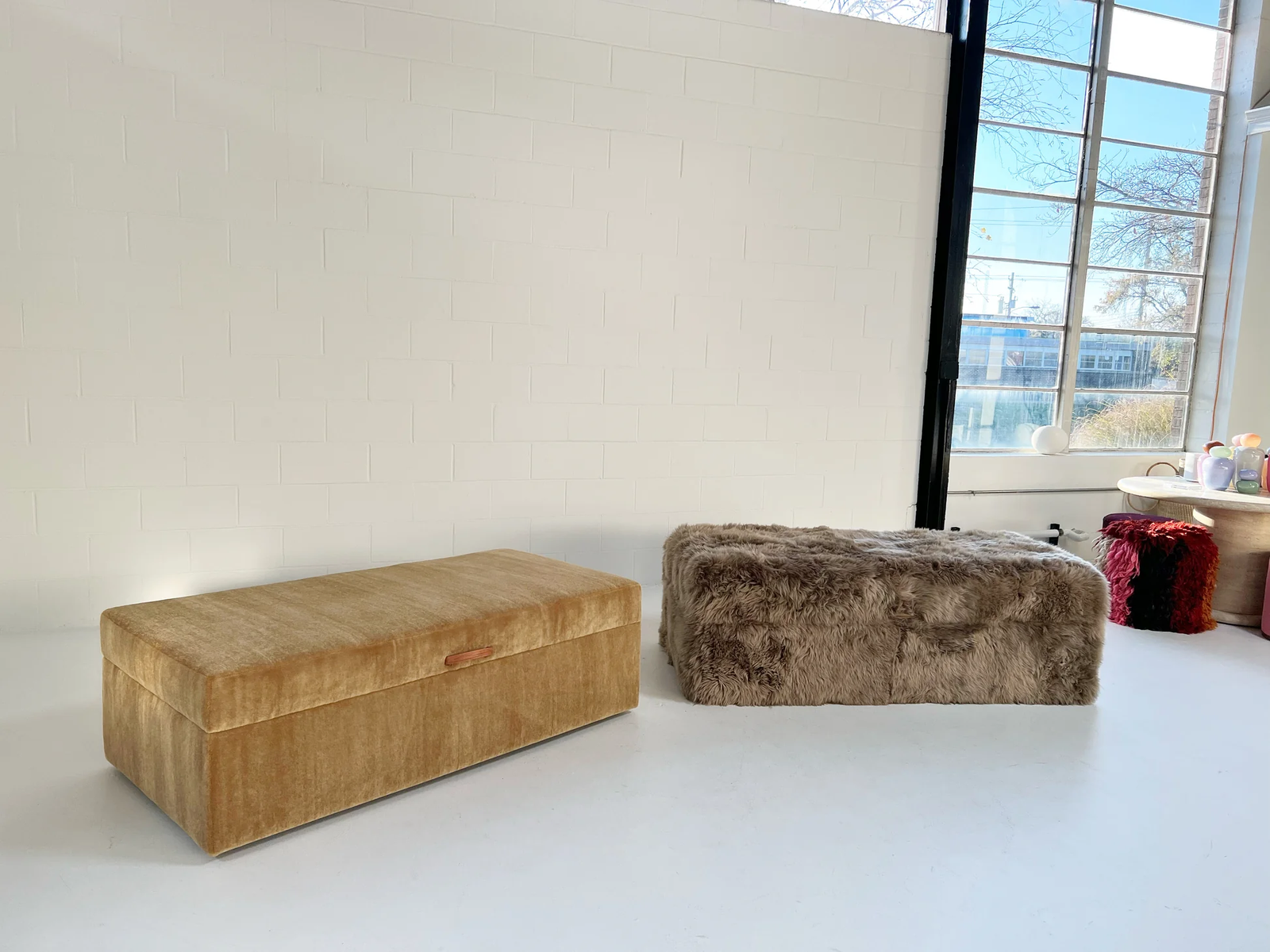
If your goal is a consistent shoe storage ottoman program (especially compact cube silhouettes), you don’t need more options. You need fewer surprises.



