The Entryway SKU That Prints Reorders: How I Pick a US Shoe Storage Ottoman Supplier
If you’re trying to win U.S. retail shelf space with an ottoman, here’s the hard truth from the buyer seat:
A shoe storage ottoman doesn’t fail because the design is “off.”
It fails because the supplier can’t keep the boring parts consistent—lid alignment, corner firmness, fabric batch control, and packaging that survives real-world handling.
And in a market where returns are a very real margin leak, “close enough” is expensive. NRF reported retailers estimated 16.9% of annual sales would be returned in 2024, with total returns projected at $890B.
So when I search US shoe storage ottoman supplier, I’m not hunting for a factory that can “make an ottoman.” I’m looking for a partner that can run ottoman wholesale at scale—without turning my reorder hero into a returns problem.
A supplier earns “US shoe storage ottoman supplier” status for U.S. retail programs when they can prove three things:
Custom ottoman control: specs, tolerances, and materials stay consistent from sample → production → reorder
Wholesale repeatability: the SKU does not drift across lots (stitching, foam feel, lid fit, and fabric hand)
Sell-channel readiness: packaging and presentation match how Americans buy today—store + ship-to-home
Why this SKU keeps getting approved (even when assortments are tight)
Entryways are a storage problem dressed up as a style moment. The most-saved entryway and mudroom content keeps circling back to the same theme: storage + warmth + practicality.
A good shoe storage ottoman is the rare item that:
cleans up clutter fast,
adds a seat,
and looks premium in a single photo.
That last part matters because e-commerce continues to be a meaningful slice of total U.S. retail sales (the Census Bureau reported 16.4% in Q3 2025).
Translation: if your ottoman doesn’t arrive clean, square, and photo-ready, it doesn’t just disappoint—it gets returned.
The “custom ottoman” trap buyers watch for
Everyone says “we do custom.” Buyers don’t care—until custom turns into inconsistency.
For me, custom ottoman only means something when the supplier can show:
a clean spec sheet (dimensions + tolerance ranges, foam target, board thickness, hinge type),
pre-production sample sign-off that matches bulk production,
and a “change control” rule (what happens when fabric lots change?).
If the supplier can’t document those basics, I’m not building a program around them—especially not a storage piece where lid fit and corner crispness are non-negotiable.
Shearling ottoman wholesale: looks easy, punishes sloppy execution
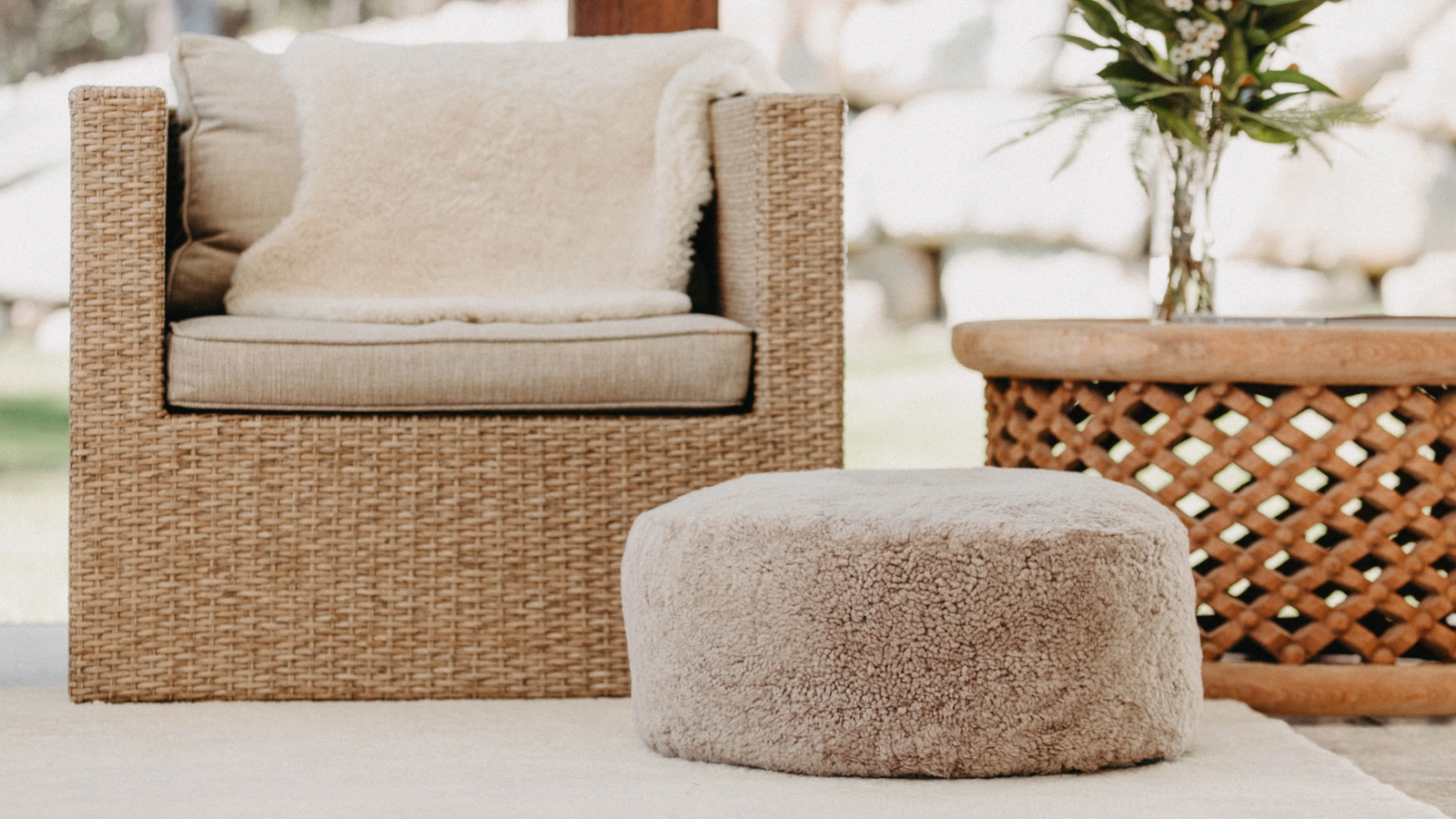
Shearling is trending because it reads cozy and elevated. But shearling ottoman wholesale is where I see quality drift show up fastest:
pile direction varies unit to unit,
seams wander on corners,
texture mats or looks uneven under store lighting.
Buyers don’t need perfection. We need repeatability—the thing that makes 1 sample become 1,000 units without surprises.
Where Amazon changes the supplier standard (and why “China Amazonproduct” comes up)
Even if you sell to brick-and-mortar, your competitors are thinking like marketplace sellers. Amazon itself says independent sellers account for more than 60% of sales in Amazon’s store.
That ecosystem creates a specific kind of request from resellers and brand builders:
fast product development,
ship-ready packaging,
and “listing-friendly” features that photograph well.
In those conversations, you’ll sometimes hear internal shorthand like “China Amazonproduct”—meaning a China-made SKU built to win a listing with tight specs, consistent photos, and predictable replenishment. The buyer takeaway is simple: marketplace-driven programs reward suppliers who can run a disciplined process, not just produce a one-off sample.
Why European American designers matter (even for a basic storage ottoman)
This is where strong suppliers separate themselves: they don’t just manufacture—they translate style into sellable proportion.
When a supplier works with European American designers, the output is usually more retail-ready:
better scale (especially for U.S. entryways and apartments),
cleaner silhouette decisions,
and materials that look premium without becoming fragile.
Design isn’t decoration. It’s how you reduce markdown risk and increase reorder odds.
The short buyer conclusion
If you want to rank for US shoe storage ottoman supplier, don’t pitch “we can make it.”
Pitch proof that you can keep it stable—custom specs, shearling consistency, and wholesale repeatability built for store + ship-to-home.
That’s what gets you from “nice sample” to “approved program.”