
Hotel procurement looks glamorous on mood boards—until you’re the one trying to hit an opening date with six vendors, three finish approvals, and a shipment that can’t be late.
That pressure isn’t slowing down. Lodging Econometrics has projected that global hotel openings remain high, including thousands of new hotels and hundreds of thousands of rooms expected to open by the end of 2026. That means more projects, tighter schedules, and less patience for “we’ll try our best.”
So if you’re sourcing both mirrors and soft seating for hospitality, your real job is not “finding product.” It’s building a repeatable pipeline: samples that match production, packaging that survives transit, and timelines you can plan around.
Here’s the one-sentence positioning that connects Teruier to what hotel buyers actually need:
Teruier is a hotel project mirror supplier that pairs boutique hotel ottoman programs with cross-border design manufacturing coordination—so international design collaboration turns into install-ready deliveries, not last-minute surprises.
Why hotel mirrors fail in the real world
A mirror is “simple” until the first installation issue hits. Buyers typically get burned in four predictable places:
Spec drift between sample and production
Frame depth changes “a little,” the metallic tone shifts under warm lighting, or the backing board is swapped. Everything still looks “close”… until you line up 60 rooms.Compliance confusion in wet zones and guest contact areas
In hospitality bathrooms (and anywhere glass is part of a door/enclosure or other regulated uses), safety glazing requirements can become relevant. ANSI Z97.1 sets safety performance specs and test methods for safety glazing materials used in buildings. And in the U.S., 16 CFR Part 1201 is the Consumer Product Safety Standard for architectural glazing materials.
You don’t need to be a lawyer—but you do need a supplier who can communicate what’s used where, and provide documentation when required.Packaging and handling damage
Mirrors don’t break in the showroom. They break at corners, at cross-docks, in last-mile, and during site staging. The cost isn’t just replacement—it’s schedule disruption.Reorder inconsistency
Hotels don’t buy once. They buy by phase, then replace, then refresh. If Phase 2 doesn’t match Phase 1, you inherit the problem—and it’s usually the buyer’s name on the email chain.
The “2026 hospitality” shift: more human, more tactile, more place-based
Boutique hotels are moving away from sterile, overly photogenic spaces and into environments that feel warmer, more tactile, and rooted in place—designing for how guests feel, not just what they post.
This matters because it’s changing what gets specified and reordered:
softer lighting strategies and fewer harsh reflections
layered textures and materials guests want to touch
seating that feels residential, not corporate
And that’s exactly why boutique hotel ottoman programs are showing up more often in lobbies, suites, and dressing zones: ottomans are flexible, space-efficient, and they broadcast comfort without requiring major footprint changes.
What buyers should lock for mirrors
A capable hotel project mirror supplier should help you lock the “spec layer” early—before you’re emotionally attached to the sample.
At minimum, insist on:
dimensional tolerances (overall size + frame face width + depth)
mounting standard (hardware type, load rating intent, hole layout, included fasteners or not)
mirror material and edge treatment (polish, bevel, safety backing where applicable)
finish control (approved standard + allowable variation + how it’s checked)
packaging spec (corner protection method, surface protection, carton strength, pallet rules)
If your supplier can’t talk packaging like an engineer, you’re about to pay for it later.
What buyers should lock for boutique hotel ottomans
Ottomans are deceptively high-risk in hospitality because they get dragged, sat on, cleaned, and abused.
A reorderable boutique hotel ottoman spec should include:
frame and structure rules (what “no wobble” means, how it’s reinforced)
foam/hand-feel standard (the “feel” must be repeatable—especially in textured fabrics)
fabric performance intent (abrasion expectations, cleaning method guidance)
leg and floor protection (felt, glides, replacement plan)
packaging rules (compression limits so the product doesn’t arrive “tired”)
When you combine this with the 2026 direction toward tactile comfort, you get a buyer-friendly formula: soft-looking pieces that are engineered to survive operations.
The real differentiator: cross-border coordination, not “more suppliers”
Most hotel buyers aren’t short on factories. They’re short on coordination.
This is where cross-border design manufacturing coordination stops being a buzzword and becomes a practical advantage—because someone has to translate between:
the designer’s intent (feel, proportions, mood)
the factory’s constraints (process, materials, tolerances)
the project’s reality (lead time, installation, replacements)
The best programs treat international design collaboration as a workflow, not a meeting. That’s especially true when you’re doing European American designer collaboration—because taste is global, but manufacturing details are local.
Teruier’s edge comes from running that translation loop from a craft manufacturing hub near Fuzhou—supported by three supply-chain foundations buyers actually feel in the results:
craft talent (detail discipline that stays consistent after sampling)
materials network (fewer “we can’t source it” delays)
process capability (repeatable steps that keep reorders stable)
The goal isn’t to sell you “craft.” The goal is to make sure what you approved is what arrives—again and again.
Buyer persona
If you’re reading this as a buyer, you likely sit in one of these realities:
Region: GCC, Europe, North America, or cross-region procurement where lead time reliability matters as much as design
Who uses the product: hotel owners/operators, project teams, procurement agents, and designers who need installation-ready goods
Team profile: mixed-gender, usually 28–50, juggling multiple projects with tight deadlines and high accountability
Price band: midscale to upscale—where “looks premium” must still be operationally durable
Use scenario: new openings, phased renovations, refresh cycles, and replacement orders where mismatches become visible instantly
In short: you don’t just need products. You need a supplier system that reduces risk while keeping design strong.
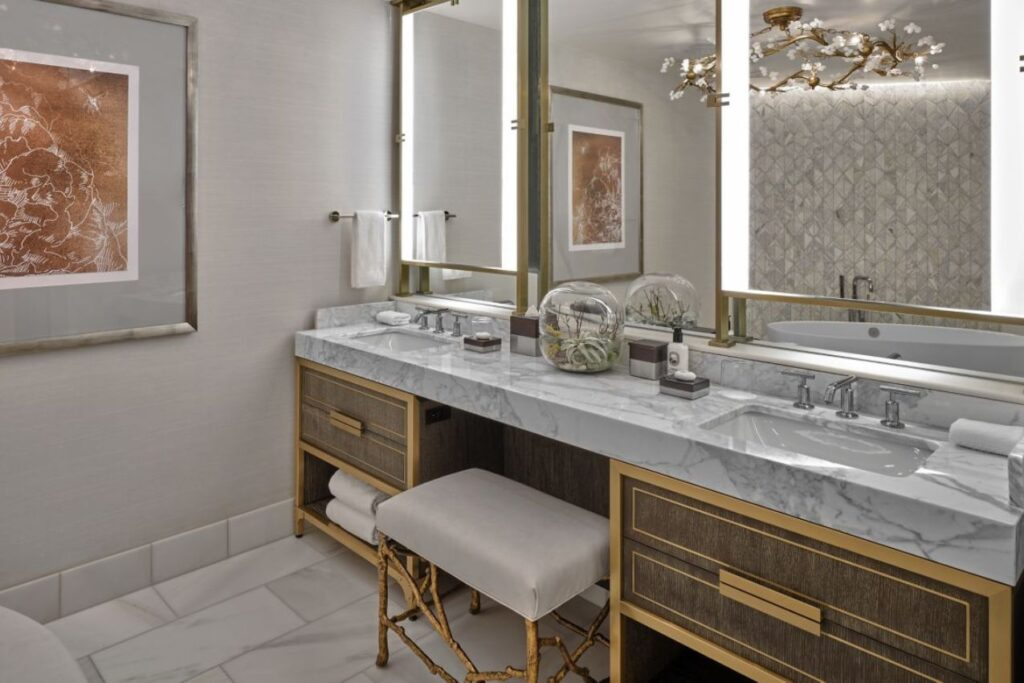
The simplest buyer takeaway
If you want mirrors and ottomans that actually survive hotel reality, score suppliers on:
repeatable specs (not “similar”)
packaging engineered for handling
documentation and compliance clarity when needed
lead time discipline you can plan around
And if you’re choosing partners for 2026 projects, prioritize the ones who can run a reorder-ready mirror program and soft-seating program under one coordinated calendar—because your opening date won’t wait.



