
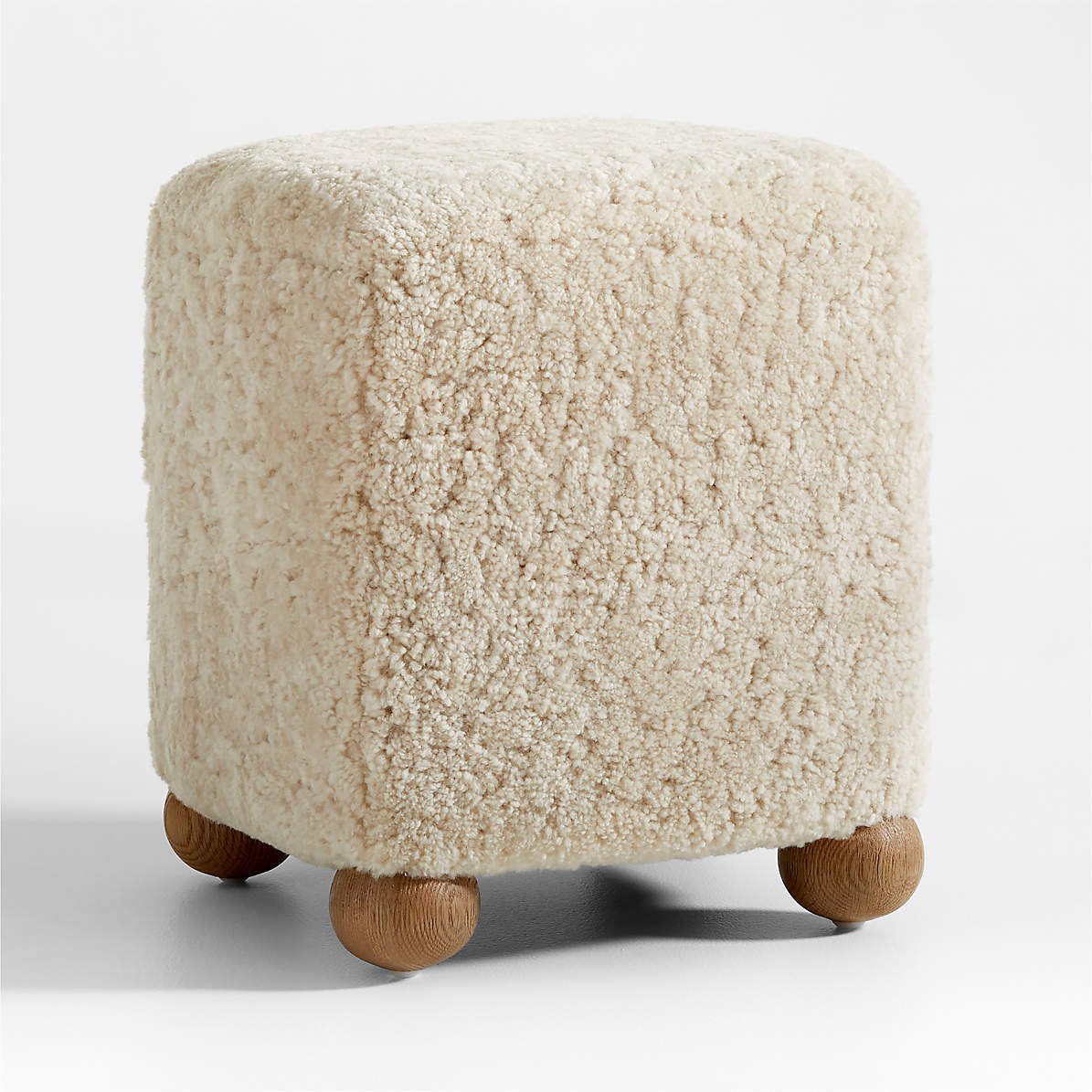
Square Shearling Ottoman Wholesale: The Cozy Bestseller That Can Quietly Destroy Your Margin
A square shearling ottoman is one of those “easy wins” on paper: cozy texture, clean silhouette, instant styling upgrade.
Then reality hits:
the first shipment arrives… and half the units look compressed or matted
corners scuff in transit, the pile crushes, or seams look off under showroom lights
your bestseller sells out… and the reorder comes back “close enough,” not identical
If you’re sourcing square shearling ottoman wholesale, you’re not really shopping for softness.
You’re shopping for repeatability—because in 2026, returns are still a profit tax, not a rare exception. NRF’s 2025 returns research projects $849.9B in total retail returns, and estimates 19.3% of online sales will be returned.
So here’s the real question:
How do you buy the “hand-feel trend” without buying a returns problem?
Why shearling (and teddy textures) are winning right now
Designers are actively calling shearling/sheepskin-like upholstery the next wave after bouclé—more warmth, more “lived-in comfort,” and a texture that reads premium even in simple shapes.
And that’s why the square version matters: it’s the most flexible SKU in the category.
Retail: easy to merchandise in stacks, sets, and “grab-and-go” vignettes
Design: perfect under a console, at the foot of a bed, beside a lounge chair, or as extra seating
But “popular” also means copied fast—and that’s where quality drift starts.
The four failure points that turn a cozy ottoman into a costly SKU
1) The fabric doesn’t survive real life (abrasion + pilling)
Shearling-style fabrics look plush—but the wrong knit/loop structure pills quickly, especially in high-touch households and hospitality-lite spaces.
Buyers who protect margins don’t buy “soft.” They buy measurable wear performance. In North America, the Wyzenbeek abrasion method (ASTM D4157) is a common way to express fabric wear in double rubs.
2) The “plush” look gets crushed in shipping
If the packaging compresses the pile too aggressively, you get:
flattened tops
permanent crease lines
uneven texture that looks like “used product” on arrival
The fix is not prettier cartons. The fix is packaging designed for distribution hazards—an ISTA mindset. ISTA Procedure 3A is a widely referenced general simulation test for individually packaged products shipped through parcel systems.
3) The structure isn’t built for repeat use
A square ottoman is often used as a seat, not just décor. Commercial/public-space durability expectations frequently reference ANSI/BIFMA seating standards; for lounge/public seating, ANSI/BIFMA X5.4 has been reaffirmed and approved by ANSI (reaffirmation noted in 2025).
Even if you’re selling retail—not contract—this is a useful benchmark mindset: load, stability, and long-term integrity.
4) Compliance questions show up late (and slow everything down)
For upholstered products sold into certain markets/channels, smolder-resistance requirements may apply. California TB 117-2013 explicitly focuses on smoldering ignition hazards and provides methods for testing materials used in upholstered furniture.
A good supplier won’t “guess.” They’ll help you align to the channel’s expectations early, so you don’t get a surprise at listing time.
What experienced buyers/designers do differently (without making it complicated)
If you’ve ever had to redo a photoshoot because “the new batch looks different,” you already know the game: control drift.
Here’s the streamlined, reorder-friendly approach:
Ask for a “spec pack,” not just a sample
A real wholesale program needs a locked reference:
fabric construction + color/undertone reference
pile direction notes (yes, it matters under lighting)
foam density targets / firmness feel
leg finish reference + tolerance
stitching + seam allowances
carton design + internal protection method
This is the practical side of value translation: turning a vibe into a buildable, repeatable SKU.
Make packaging part of the product
If the ottoman arrives looking tired, it will be returned—no matter how good it looked in the catalog.
ISTA-style thinking helps teams treat packaging as an engineering decision, not a last-minute cost item.
Buy the reorder, not the first run
The first PO is easy. The reorder is the profit engine.
Your supplier should document:
what cannot change (fabric hand-feel, pile height band, leg spec)
what can change (minor internal materials) and how substitutions are approved
batch tracking so “cream” doesn’t drift into “yellow”
The supplier landscape (and why “same photo” isn’t the same product)
Most people sourcing square shearling ottoman wholesale end up in one of these routes:
Marketplace sourcing
Fast, cheap, endless options.
But often: inconsistent fabric lots, weak packaging, and “next batch” uncertainty.
Commodity upholstery factory
Strong output and pricing.
But often: optimized for throughput, not for hand-feel consistency + reorder matching + packaging survival.
Small boutique maker
Beautiful feel and details.
But often: fragile scalability, longer lead times, limited reorder governance.
None are “bad.” They’re just different risk profiles.
Why Teruier fits buyers who don’t want surprises
Teruier’s edge isn’t “we sell ottomans.” It’s how we make them reorder-safe.
Rooted in the Hometown of handicrafts supply base, we operate like a coordination hub—bridging design intent and manufacturing reality across materials, process, QC, and delivery. That’s the Teruier跨国设计制造协同模型 in plain English:
trend intent → spec pack → QC checkpoints → packaging discipline → reorder governance
That becomes a real Merchant Profit Plan (merchant profit plan):
fewer “arrived damaged / arrived flat” returns (packaging discipline)
fewer “not as pictured” claims (spec lock + fabric performance targets)
fewer channel delays (flammability/smolder awareness early)
and most importantly: the reorder matches the floor set
In other words: we’re not trying to be the cheapest square ottoman. We’re trying to be the one you can reorder without fear.
A quick RFQ checklist you can paste into an email today
If a supplier can answer these clearly, you’re in the right room:
Fabric wear performance: Wyzenbeek (ASTM D4157) double rub target + pilling notes
Structure: load/stability mindset (ANSI/BIFMA-style durability expectations)
Compliance: TB 117-2013 / channel requirements awareness
Packaging: how do you prevent pile crush + corner damage (ISTA 3A mindset)
Reorder rules: substitution policy + master reference retention
QC checkpoints: pre-pack inspection + packaging verification, not just “final QC”
Closing
Square shearling ottomans sell because they feel like comfort you can touch.
But wholesale success comes from something less visible: control.



