Product Introduction
For a mall buyer, the problem with accent upholstery is usually very specific: plain ottomans are easy to buy, but they often disappear on the floor. More directional patterned pieces get attention, but they also raise markdown risk.
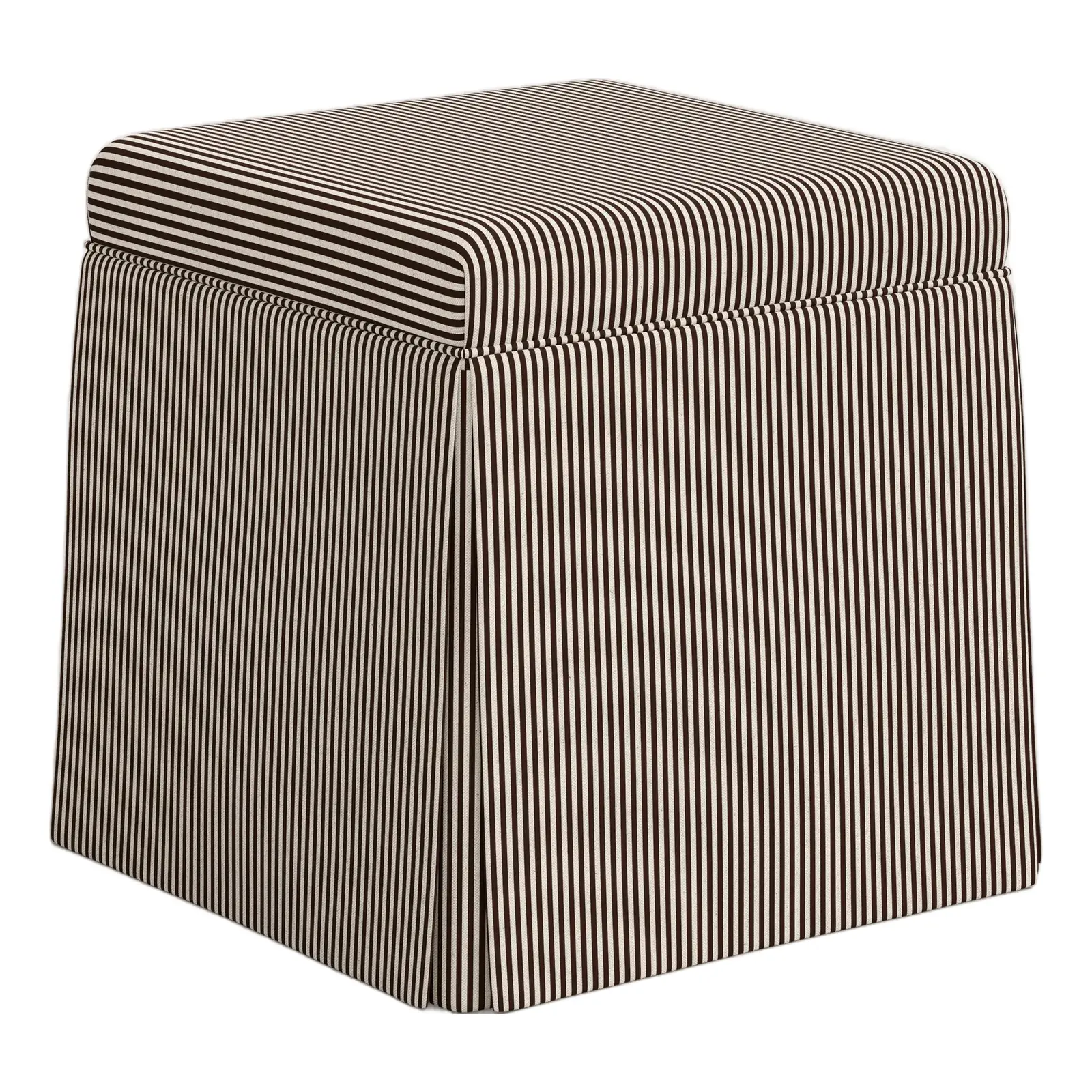
This product lands in the stronger middle ground. The stripe is instantly readable, the square shape keeps it commercially familiar, and the tailored skirt gives the piece a more finished furniture look instead of a basic utility cube. The chocolate tone is also important. It feels warmer, more grounded, and more premium than standard black-and-white ticking, which makes it easier to place into updated traditional, quiet luxury, European-inspired, and warm transitional assortments.
There is also a broader design reason this kind of product performs better than a flat, generic accent piece. Recent academic research from Virginia Tech found that materiality significantly affects how spacious and welcoming interiors are perceived, with more natural and textured material conditions outperforming colder, harder ones. For buyers, that translates into a practical merchandising advantage: upholstered pieces with visible texture and material warmth tend to make a room set feel more layered, more complete, and more livable than simple flat-surface accents.
From a trend standpoint, this ottoman is aligned with where the market has already been moving. ELLE Decor’s 2025 furniture coverage pointed to the return of personality pieces, fresh patterns, and skirted upholstery, while High Point Market’s official Style Spotters highlighted handcrafted skill and tactile beauty as key signals on the floor. That is why this SKU feels commercially current without feeling reckless: it gives buyers pattern and softness, but in a controlled silhouette that still reads easy to place.
It also fits the newer retail environment better than many plain upholstered cubes do. Maison&Objet’s current programming continues to emphasize craftsmanship, materials, and mixed-style interiors, while its retail conference agenda has been increasingly direct about AI’s role in visual identity, customer experience, inventory planning, and merchandising efficiency. That matters because buyers now need products that work in both a styled floor set and a digital thumbnail. This ottoman has that advantage: the stripe creates immediate recognition, and the skirt gives it a stronger price impression in one glance.
For department-store and mall buyers, this solves a familiar pain point. It is decorative enough to help an assortment feel upgraded, but not so fashion-driven that it becomes hard to roll across multiple stores. That is where a product like this becomes useful: it adds identity without sharply increasing risk.
Teruier Buyer Success Case
A North American home retailer was looking for an accent ottoman for its fall floor reset. The buyer’s concern was familiar: solid neutral ottomans were too easy to ignore online, but larger-scale prints felt too risky for a chain-wide program. Teruier recommended this chocolate stripe skirted ottoman because it matched three commercial needs at once: immediate visual recognition, warmer material character, and a tailored silhouette that felt more premium than a standard cube ottoman.
Case results:
- Initial launch: 420 pcs across 18 stores plus online
- First 6-week sell-through: 77%
- Sell-through versus plain neutral cube ottoman in the same price band: 1.8x
- Reorder after pilot: 840 pcs
- Markdown during pilot window: 0%
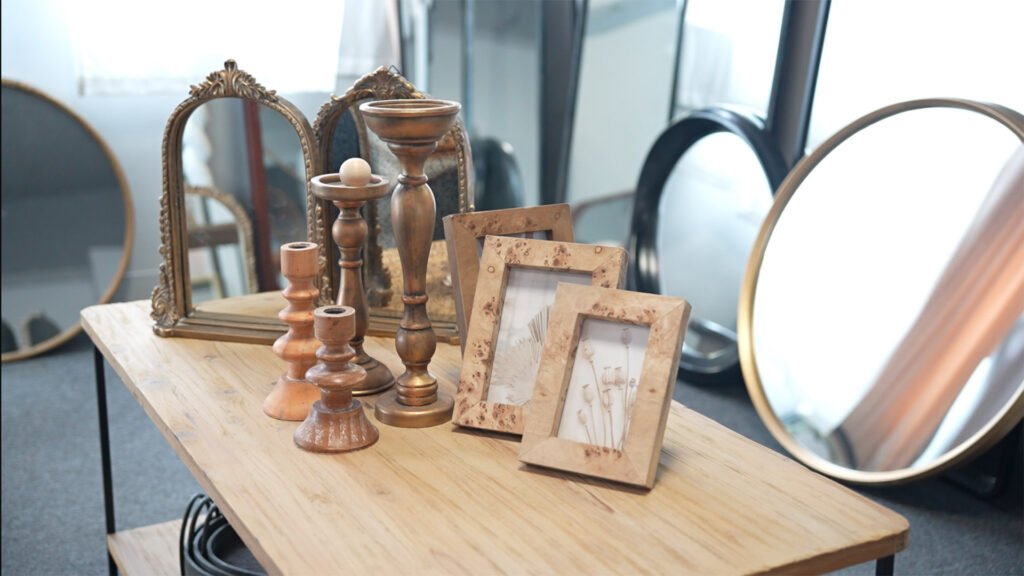
- Average basket lift when paired with mirrors, benches, and accent tables: +16%
Why did it work? Teruier did not present it as “just a striped ottoman.” It was positioned as a low-risk pattern piece: something that could make the floor feel more designed, more layered, and more premium without forcing the buyer into a loud or short-cycle print story. That is usually the real assortment win—not simply adding another ottoman, but adding one that improves both visibility and sell-through.
One-Line Buyer Positioning
A chocolate stripe skirted ottoman that adds pattern, warmth, and stronger price impression without becoming a high-risk fashion buy.