
The show ends. The decision cycle starts.
On the floor, buyers react to what they see.
After the show, they decide what they can confidently launch.
That’s why post-show sample shipping is not a logistics task—it’s a decision system.
A well-designed sample shipment does three things:
controls cost (ship decisions, not inventory)
reduces buyer risk (proof replaces assumptions)
builds trust (packaging + finish consistency signal reorder readiness)
For mirrors—fragile, bulky, and return-sensitive—this is where programs are won or lost.
Capability #1: Control sample cost by shipping “decision samples,” not everything
Mirror samples can burn budget fast. The smartest suppliers don’t ship more—they ship smarter.
A cost-disciplined post-show sample plan looks like this:
One shipment = one decision. (Finish approval? Packaging standard? Size preference?)
Curate the minimum set that proves the buyer’s key concerns.
Bundle proof into the same box: finish reference + one key SKU + packaging notes.
Standardize packaging configurations so every shipment isn’t reinvented.
The goal is simple:
Every sample should move the buyer to a clear next step.
If it doesn’t reduce risk, it’s not worth the freight.
Capability #2: Samples speed decisions because they reduce internal friction
Buyers rarely decide alone. After a show, the buyer must align with:
merchandising (will it win on shelf?)
quality/compliance (is it stable and auditable?)
operations (damage, returns, handling)
finance (margin after breakage and replacements)
A good sample shipment answers their shared questions immediately:
Does the bulk match the approved finish?
Does the packaging survive real handling?
Can this item scale cleanly without drift?
Is it shelf-ready, not just a nice prototype?
That’s why the most effective sample shipments include not only the product, but a decision kit:
labeled finish references
packaging standards in plain language
an option ladder (good/better/best)
a clear next-step CTA
This is how a sample stops being “a box” and becomes a fast approval tool.
Capability #3: Why buyers trust samples—because proof beats promises
In mirrors, the real cost isn’t the carton. It’s what happens when the carton fails:
breakage
replacements
returns
wasted inventory
slow reorders and internal blame
So trust doesn’t come from saying “we can.”
Trust comes from shipping evidence that a buyer can repeat at scale.
That evidence is often packaging discipline and transparency—especially when standards change mid-process.
A real post-show moment: turning a $2.8 eco-packaging update into a positive signal
Here’s a small example that reveals supplier maturity.
An Italian client requested two mirror models. The initial pricing included a packaging add-on.
Then the client updated the eco-packaging requirements, and the packaging spec changed.
The response was immediate and auditable:
previously, one model required +19 RMB, the other +17 RMB for packaging
under the updated eco standard, both became +17 RMB each
we translated the impact clearly: about +$2.8
This is the key point—especially for Europe:
Eco packaging isn’t a “nice-to-have.” It’s a sourcing baseline.
The extra $2.8 isn’t a surcharge. It’s the cost of meeting a standard that keeps the program moving.
And commercially, it often protects margin:
better protection reduces damage
fewer damages reduce returns and replacement shipments
less waste aligns with sustainability expectations
For a buyer, that’s not “more cost.” That’s lower total risk and a more predictable program.
why craft-hometown execution makes samples trustworthy
Teruier is rooted in a craft manufacturing hometown near Fuzhou, shaped by generations of decorative-making culture. People reference heritage crafts like bodiless lacquerware, oil-paper umbrellas, and horn combs—not because we sell them today, but because they reflect a mindset: finish discipline, detail control, and respect for skilled work.
That foundation becomes repeatable execution through three supply chains:
Artisan supply chain: experienced makers who hold finishing consistency
Materials supply chain: stable inputs that keep color/texture repeatable
Process supply chain: disciplined methods that keep sample-to-bulk aligned
We’re not only a supplier—we also manage upstream partners across packaging, components, and specialty workshops. That’s how we translate changing requirements (like eco packaging) into standards that can be repeated—without slowing buyers down.
Because the promise of a sample is not “this looks good.”
It’s “this can run—again and again.”
The simple “post-show sample kit” that moves buyers fast
If you want a clean internal template, this works across most home décor programs:
Decision goal: what must the buyer approve?
Sample scope: one key SKU + finish reference(s)
Packaging proof: protection logic + eco packaging notes
Option ladder: good/better/best aligned to buyer budget
Next-step CTA: confirm finish / confirm packaging / confirm lead time
This turns sample shipping into a repeatable closing system.
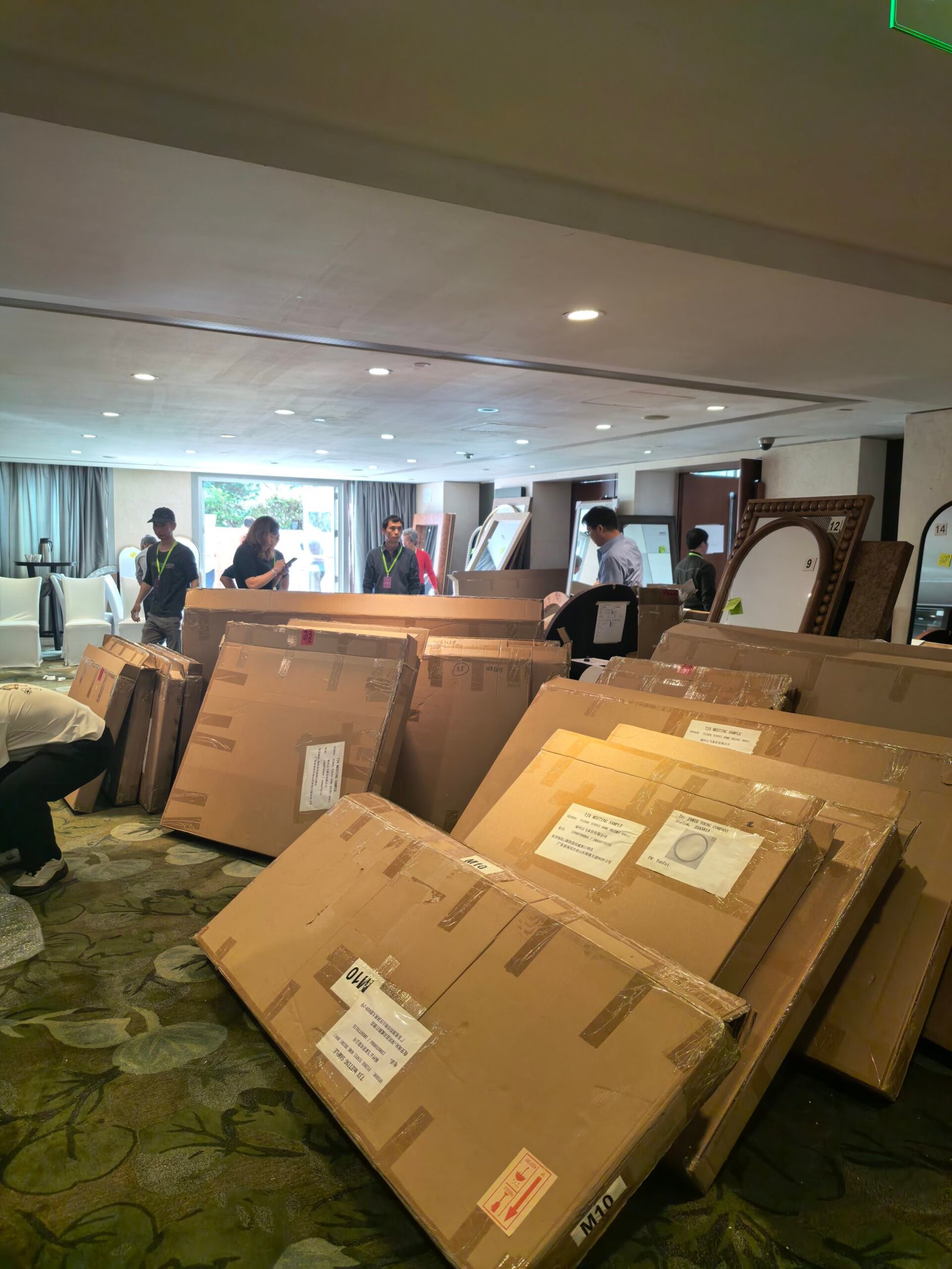
Wrap-up: the best samples sell confidence, not just product
After the show, the winners aren’t the suppliers with the biggest catalog.
They’re the suppliers who can ship confidence:
control cost by shipping “decision samples”
help buyers commit by removing internal friction
earn trust through transparent, eco-compliant, damage-reducing packaging standards



