
Why Small Space Products Need Serious Packaging
Small space home décor sounds easy.
A compact ottoman.
A slim mirror.
A decorative storage box for the living room.
A small ceramic tray.
A narrow bench.
A neat little item that promises order, calm, and “yes, your apartment can still look intentional.”
Lovely.
But German buyers know the truth: small products do not automatically mean small problems.
In fact, small space products often create more packaging and shipping questions because buyers expect them to be affordable, compact, practical, easy to display, easy to explain, and easy to reorder.
That is a lot to ask from one little storage box.
For Teruier’s Germany Buyer Desk, packaging and shipping are not treated as an afterthought. They are part of the buying decision. Especially when a product is designed for small homes, small apartments, urban living rooms, entryways, rental spaces, and compact retail assortments.
A small item still needs to arrive clean, complete, stable, labelled, and sellable.
Otherwise, it is not a small home solution.
It is a small home problem in a carton.
What Does Packaging and Shipping Mean for Small Space Home Décor?
Packaging and shipping means the full system used to protect, organise, label, and deliver products from supplier to buyer.
It includes:
Product protection
Inner packaging
Outer carton strength
Surface protection
Moisture control
Carton marks
Barcode labels
Packing list accuracy
Container or pallet loading
Pre-shipment inspection
Delivery schedule coordination
Damage and claim control
For small space assortment planning, packaging and shipping also means something more specific:
Can the product move efficiently through the wholesale chain without losing its commercial advantage?
Small space products usually need to be compact, margin-friendly, retail-friendly, and easy to replenish. If the packaging is oversized, weak, unclear, or too expensive, the whole product logic starts to collapse.
A small ottoman that ships like a throne is not clever.
A storage box that arrives with a crushed lid is not practical.
A slim mirror with damaged corners is not “space-saving”. It is just broken in a narrow format.
Why German Buyers Care About Small Space Assortment Planning
Small space assortment planning is not just about making products smaller.
It is about building an assortment for real homes.
German and European customers often live with practical room constraints: apartment entryways, compact living rooms, rental homes, multi-use spaces, narrow hallways, and storage problems that do not disappear because someone bought a nice candle.
So buyers look for products that solve visible problems:
Where do I sit?
Where do I store things?
Where do I check the mirror before leaving?
Where do I put blankets, magazines, shoes, remotes, cables, and all the small objects that somehow multiply overnight?
This is why small home solutions need to be practical and easy to explain.
A product should not require a 12-minute sales speech.
A decorative storage box should clearly store things.
A compact ottoman should clearly offer seating, styling, or hidden storage.
A slim mirror should clearly make a small room feel more open.
A ceramic tray should clearly organise a surface.
If the product’s use is clear, the buyer can sell it faster.
But if the packaging is poor, none of this matters. The product will not reach the customer in the condition needed to do its job.
Decorative Storage for Living Rooms: Pretty, Useful, and Very Easy to Damage
Decorative storage for living rooms is one of the strongest small space categories because it solves a real problem.
People want storage, but they do not want their living room to look like a utility cupboard had a nervous breakdown.
So buyers like:
Decorative boxes
Lidded baskets
Storage ottomans
Small cabinets
Trays with raised edges
Fabric-covered storage
Woven storage pieces
Nesting boxes
Small accent tables with storage
These products work because they combine function and decoration.
But that also makes packaging more demanding.
A decorative storage item must arrive with:
Clean surface
Stable shape
Working lid
No crushed corners
No scratched hardware
No stained fabric
No bent woven structure
No loose handle
No unpleasant warehouse smell
Yes, smell matters. Nobody wants “industrial container” as a living room fragrance.
For German buyers, decorative storage must look like something a customer wants to place in a real home. If it arrives dented, dusty, or warped, it loses its reason to exist.
Ottoman Upholstery Materials: The Fabric Is Not Just Fabric
Ottomans are useful small home solutions because they can be seating, footrest, accent piece, storage, or visual softness in a room.
But ottoman upholstery materials need proper packaging.
Different fabrics behave differently during transport:
Bouclé can flatten or catch dust.
Velvet can show pressure marks.
Linen-look fabric can crease.
Woven fabric can rub.
Light neutral fabric can stain.
Textured fabric can lose surface appeal.
Performance fabric can still collect dirt if packed badly.
A German buyer should never treat an ottoman as “soft, therefore safe”.
Soft products can still arrive looking tired.
An ottoman with poor packaging may show:
Fabric rubbing
Compression marks
Dust exposure
Moisture marks
Bent legs
Loose seams
Deformed corners
Colour transfer from packaging material
The most painful part? The product may not be technically broken. It may simply look unsellable.
And unsellable is a very expensive word.
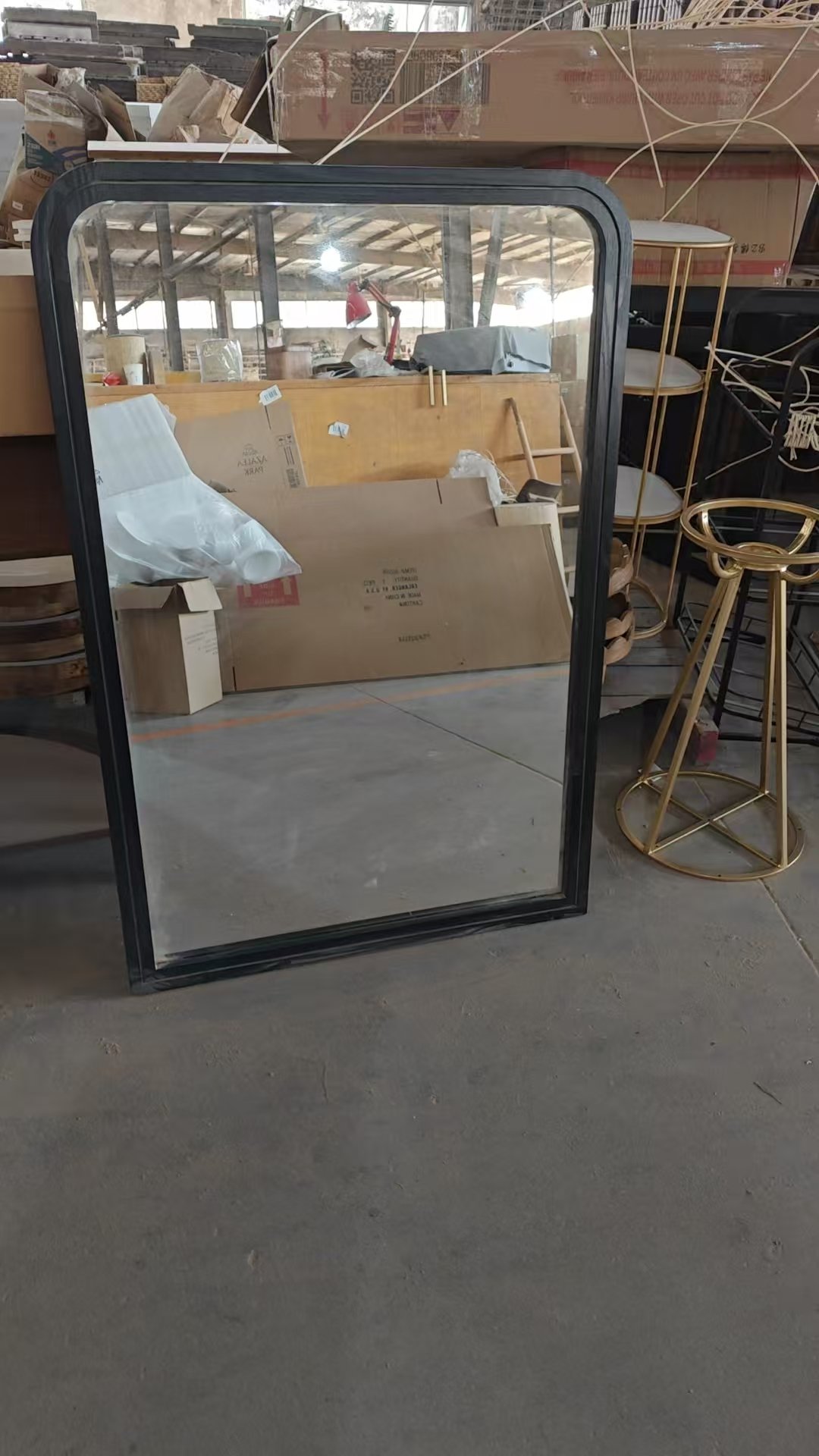
Small Mirrors: Slim Does Not Mean Simple
Small mirrors and slim mirrors are excellent for small home solutions.
They work in:
Entryways
Bathrooms
Bedrooms
Rental apartments
Small dressing corners
Narrow corridors
Retail display walls
But small mirrors still need proper packaging and shipping logic.
A slim mirror may be easier to place in the home, but it can still suffer from:
Glass breakage
Corner damage
Frame scratches
Backing board problems
Hardware movement
Poor edge protection
Carton bending
Surface rubbing
A small mirror is often bought because it looks clean and easy. If the frame arrives scratched or the corner is damaged, the whole product loses its quiet charm.
A broken oversized mirror is dramatic.
A damaged small mirror is just annoying.
Neither is good business.
What Interior Designers Should Ask Before Requesting a Custom Size or Finish
Customisation is where many packaging problems quietly begin.
Interior designers often request:
A smaller mirror size for a narrow hallway
A custom ottoman fabric for a project scheme
A special finish for decorative storage
A different ceramic tone for a coordinated room
A compact bench size for apartment living
A custom colour that works better with existing materials
All reasonable.
But before requesting a custom size or finish, designers should ask practical questions.
| Designer Request | Hidden Packaging Question | Why It Matters |
|---|---|---|
| Custom mirror size | Does the carton size and corner protection change? | Size changes can increase breakage risk |
| Custom ottoman fabric | Does the fabric need different wrapping? | Upholstery materials react differently to rubbing and dust |
| Custom storage finish | Is the surface easy to scratch or mark? | Decorative storage must arrive clean and presentable |
| Custom ceramic colour | Does the glaze show rubbing or chips more clearly? | Quiet colours often expose defects |
| Compact product size | Can the product still be packed efficiently? | Small size should not create inefficient shipping |
| Project order grouping | Can cartons be labelled by room or phase? | Site handling becomes easier |
The key question is not only:
Can we customise it?
The better question is:
What changes in packaging and shipping when we customise it?
Less exciting, yes. But much better than discovering after production that the charming custom finish behaves like a diva in transport.
Standard Small Product Packaging vs Buyer-Ready Packaging
| Packaging Type | What It Usually Means | Best For | Main Risk |
|---|---|---|---|
| Basic factory packaging | Simple wrapping and carton | Low-risk local movement | Often weak for export retail |
| Export packaging | Stronger carton and better protection | Wholesale shipping | May not support retail labels |
| Retail-ready packaging | Protection plus barcode and carton mark logic | Retailers and distributors | Higher cost, but smoother operation |
| Small-space assortment packaging | Compact, protective, efficient, easy to identify | Small furniture, storage, mirrors, ottomans | Needs careful balance of cost and protection |
| Project packaging | Packed by room, phase, or designer plan | Interior design and fit-out projects | Requires early coordination |
For German buyers, the correct packaging level depends on the sales channel.
A decorative storage programme for retail needs clear SKU labelling.
A small mirror collection needs strong edge and corner protection.
A compact ottoman programme needs fabric-safe wrapping.
A designer project needs room-based packing and clear item identification.
One packaging rule for every product is convenient. It is also usually wrong.
Packaging and Shipping as Part of Teruier’s Value Translation
At Teruier, we use the idea of value translation.
This means we help translate buyer needs into product, material, finish, packaging, and delivery decisions.
A German buyer may say:
“We need small home solutions that are easy to sell.”
But behind that sentence are many practical requirements:
The product must be compact.
The use must be clear.
The material must suit the price point.
The packaging must protect the item.
The carton must not waste space.
The labels must support warehouse handling.
The item must be easy to reorder.
The damage risk must not destroy the margin.
That is value translation.
It is not just translating English and German. It is translating commercial expectations into workable product systems.
A small storage item is not only a design object.
A compact ottoman is not only a fabric choice.
A slim mirror is not only a size adjustment.
Each one needs a business-ready delivery logic.
Small Space Products Need Efficient Shipping, Not Just Safe Shipping
Good packaging protects the product.
Better packaging protects the product and supports the business.
For small space assortment planning, efficient packaging matters because these products often depend on:
Good carton quantity
Reasonable freight cost
Easy warehouse handling
Low damage rate
Clear item identification
Fast replenishment
Stable reorder potential
If the product is small but the packaging wastes too much space, the freight cost becomes unattractive.
If the packaging is too weak, damage claims eat the margin.
If the carton marks are unclear, warehouse handling slows down.
If the product is difficult to repack, returns become painful.
This is why packaging and shipping should be reviewed together with the product’s commercial role.
A product that saves space in the home should not waste space in the container.
That sentence should honestly be printed on a wall somewhere.
Comparison: Small Home Solution vs Small Home Problem
| Feature | Small Home Solution | Small Home Problem |
|---|---|---|
| Product use | Clear and easy to explain | Needs too much explanation |
| Size | Compact and practical | Small but awkward |
| Packaging | Protective and space-efficient | Oversized, weak, or unclear |
| Materials | Suitable for daily use | Too delicate for the channel |
| Delivery | Easy to receive and sort | Creates warehouse confusion |
| Reorder | Stable and repeatable | Too many hidden issues |
| Buyer value | Saves space, reduces friction | Saves nothing, causes emails |
German buyers do not need more “cute little items”.
They need small products that work commercially.
That means the design, material, packaging, and delivery all need to make sense together.
What German Buyers Should Ask Before Confirming Small Space Products
Before confirming a small space home décor order, buyers should ask:
Is the product easy to explain to customers?
Does the packaging protect the main material or finish?
Is the carton size efficient?
Can the product be stacked or loaded safely?
Does the item need moisture protection?
How are upholstery materials protected?
How are mirror corners protected?
How are decorative storage lids protected?
Can carton marks and barcodes follow our requirements?
Can packing photos be provided before shipment?
Can custom size or finish changes be tested with packaging?
Is the packaging cost included in the quotation?
Does the supplier understand the sales channel?
These questions may not sound glamorous.
But neither does writing claims because a compact ottoman arrived with a dirty fabric corner.
FAQ: Packaging and Shipping for Small Space Home Décor
What does packaging and shipping mean for small space home décor?
It means the full protection, labelling, carton, loading, and delivery system behind compact home décor products such as small mirrors, ottomans, decorative storage, ceramic accessories, and small furniture.
Why is packaging important for small space assortment planning?
Small space assortment planning depends on products being compact, easy to explain, affordable to ship, and reliable to reorder. Poor packaging can damage the product, raise freight cost, and reduce margin.
What should interior designers ask before requesting a custom size or finish?
They should ask how the custom size or finish affects carton size, surface protection, shipping cost, lead time, material risk, and damage control. Customisation should be checked together with packaging.
Why does decorative storage for living rooms need careful packaging?
Because it must be both functional and decorative. Lids, corners, surfaces, handles, woven parts, and fabric details must arrive clean, stable, and usable.
Are ottoman upholstery materials difficult to ship?
Some are sensitive. Bouclé, velvet, linen-look fabric, woven texture, and light neutral fabrics can show dust, rubbing, compression, or pressure marks. Packaging should protect both fabric surface and product shape.
What makes a product a good small home solution?
A good small home solution is compact, useful, easy to explain, easy to display, easy to ship, and easy to reorder. It solves a real room problem without creating a supply chain problem.
Is stronger packaging always better for small products?
Not always. Stronger packaging can increase cost and waste. The best packaging is protective, compact, efficient, and suitable for the product’s material and sales channel.
Should packaging be discussed during sample development?
Yes. Packaging should be discussed early, especially for custom size, custom finish, soft upholstery, fragile mirrors, decorative storage, and project orders.
Final Thought: Small Products Still Need Big Discipline
Small space home décor is a good category because customers understand the problem quickly.
Not enough storage.
Not enough seating.
Not enough wall function.
Not enough room for bulky furniture.
Not enough patience for products that need a long explanation.
But for German buyers, the product must do more than look clever.
It must ship well.
It must arrive clean.
It must be easy to identify.
It must protect the finish.
It must fit the warehouse flow.
It must support reorder.
That is where packaging and shipping become part of the product’s value.
A decorative storage box that arrives crushed is not storage.
A compact ottoman with dirty upholstery is not cosy.
A slim mirror with damaged corners is not elegant.
A custom finish that scratches in the carton is not premium.
At Teruier, we believe small home solutions should solve problems all the way from factory to living room.
Because if a product saves space in the customer’s home but creates chaos in the buyer’s warehouse, it has not solved enough.



