
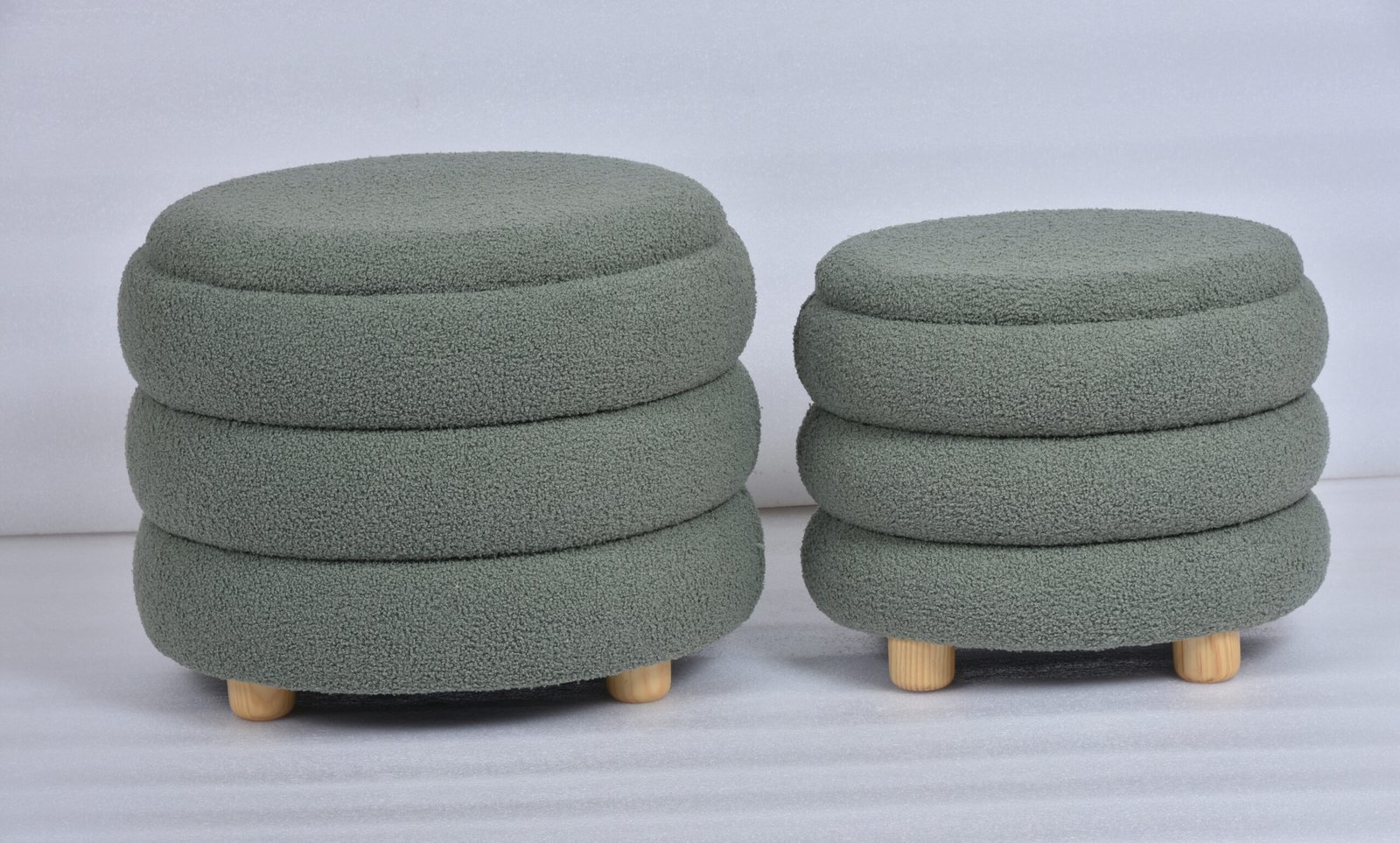
Ottomans & Benches: Small Furniture with a Surprisingly Large Job
An ottoman may be used as a seat, a footrest, a side table or, in many German homes, the place where somebody puts clothes that are “not quite ready for the laundry”.
A bench has an equally complicated life. It may sit in an entrance hall, at the end of a bed, beside a dining table or in a retail display where it must look stylish without frightening the customer with its price.
This is why the Teruier Ottomans & Benches section does not treat these products as decorative afterthoughts. It examines how compact furniture can add function, character and commercial value to a home collection.
The section is written for German and European buyers, furniture retailers, home décor merchants, importers and interior designers who need products that look convincing, sell sensibly and do not create unnecessary drama after the order is placed.
What Are Ottomans and Benches?
An ottoman is a compact upholstered or structured furniture piece that may function as additional seating, a footrest, a decorative accent, a low table or hidden storage.
A bench is an elongated seating piece designed for one or more users. It may be upholstered, wooden, metal-framed or made from mixed materials.
The categories overlap, but they are not identical.
| Feature | Ottoman | Bench |
|---|---|---|
| Typical form | Compact, round, square or irregular | Long and horizontal |
| Main use | Footrest, occasional seating, storage | Seating, display or space definition |
| Common placement | Living room, bedroom, dressing area | Hallway, bedroom, dining area |
| Assortment role | Accent piece or add-on purchase | Functional furniture statement |
| Shipping concern | Volume and shape efficiency | Length, frame strength and packaging |
In simple terms, an ottoman fills a small gap. A bench often defines the whole space.
Naturally, both can become expensive places to leave a handbag.
What Is the Ottomans & Benches Section About?
This section explores the commercial and design logic behind small upholstered furniture.
It covers topics such as:
- Shapes, proportions and upholstery directions
- Bouclé, velvet, woven fabrics and textured materials
- Storage ottomans and multifunctional seating
- Entryway, bedroom and living-room applications
- Colour development for German and European interiors
- Frame construction, comfort and production consistency
- Packaging, container efficiency and reorder potential
The objective is not to announce that curved furniture is “having a moment” every six months. The internet already does that with admirable enthusiasm.
The purpose is to explain which ideas have enough practical and commercial strength to become real products.
Why These Products Matter to Buyers
Ottomans and benches sit between furniture and decoration.
This makes them useful for buyers because they can introduce colour, texture and shape without requiring the customer to replace an entire sofa or dining set.
A mirror changes the visual space. An ottoman changes how the space is used. A bench can do both while quietly suggesting that the hallway has finally become organised.
For retailers, these products offer several advantages:
- They support coordinated room collections.
- They create additional selling points around sofas, beds and mirrors.
- They can work across several interior styles.
- They often require less customer commitment than large furniture.
- They can provide useful margin opportunities when design and price are balanced properly.
The challenge is that “small furniture” does not mean “simple furniture”.
A badly proportioned ottoman looks like a cushion that has lost its sofa. A poorly constructed bench may look elegant until somebody actually sits on it.
From Product Description to Commercial Value
Teruier applies value translation to product development and sourcing.
A manufacturer may describe an ottoman as having a plywood frame, foam filling, polyester fabric and metal legs. All technically correct. Also rather effective at putting a buyer to sleep.
Value translation explains what those decisions mean commercially.
For example:
- Does the height work beside common European sofa proportions?
- Does the fabric create enough visual value for the intended retail price?
- Can the colour coordinate with existing mirrors, lighting and accessories?
- Is the frame appropriate for the product’s real use?
- Can the design be packed efficiently without making freight the most expensive material in the product?
- Can the same construction support several colours or sizes?
This is where a product becomes more than a specification sheet.
It becomes part of a workable assortment.
Ottomans Versus Benches: Which Category Does What?
Ottomans are particularly effective as flexible accent products. They can introduce seasonal colour, soft texture or compact storage. Round and softly curved models suit relaxed interiors, while structured cubes work well in cleaner, more architectural settings.
Benches usually have a stronger spatial role. They can anchor an entrance hall, complete a bedroom arrangement or create informal seating in hospitality and retail environments.
For buyers, the choice depends on the intended commercial function.
Choose an ottoman when the collection needs flexibility, colour or an accessible add-on item.
Choose a bench when the collection needs a more substantial furniture statement without moving into full-size seating.
Choose both when the assortment has a clear design language.
Choose twelve unrelated versions when you would like your showroom to resemble a furniture argument.
What Makes a Commercially Strong Product?
A strong ottoman or bench usually combines four elements.
Clear visual identity
The silhouette, fabric and details should be recognisable without becoming unnecessarily theatrical.
Believable function
Storage should be usable. Seating should feel stable. A decorative handle should not pretend to be structural.
Assortment compatibility
The product should coordinate with sofas, mirrors, lighting, side tables or bedroom furniture already in the collection.
Repeatable production
Fabric colour, stitching, foam shape, frame stability and leg finish must remain consistent across production.
The first sample may be charming. The real test is whether the 500th piece still has the same personality.
Why German Buyers Need More Than a Trend Photo
German buyers generally appreciate design, but they also appreciate answers.
A useful product proposal should explain:
- Why the shape is relevant
- Which customer or room it suits
- How it differs from existing products
- Whether the dimensions are commercially practical
- What determines its perceived value
- How the design can be extended into a collection
The Ottomans & Benches section therefore connects trend observation with product decisions.
It looks at not only what appears attractive, but also what can be ordered, presented, sold and reordered with reasonable confidence.
That last part is less glamorous than styling photography, but considerably more useful when invoices are involved.
Frequently Asked Questions
Does the section cover both upholstered and non-upholstered benches?
Yes. It may include upholstered benches, wooden benches, metal-framed designs and mixed-material products, depending on their relevance to home décor and small furniture assortments.
Are storage ottomans included?
Yes. Storage ottomans are an important part of the category because they combine decoration, seating and organisation. The storage capacity, lid construction and opening method must, however, be genuinely useful.
Which rooms are most suitable for these products?
Ottomans commonly work in living rooms, bedrooms, dressing areas and children’s spaces. Benches are often used in hallways, bedrooms, dining spaces and hospitality interiors.
Can ottomans and benches coordinate with other Teruier categories?
Yes. Upholstery colours, metal finishes, wood tones and silhouettes can be coordinated with mirrors, lighting, boxes and decorative accessories to create a more complete collection.
Does a fashionable fabric automatically make a good product?
No. A fashionable fabric placed on an awkward shape remains an awkward product, only now with bouclé.
Fabric choice must support the silhouette, target price, durability requirement and intended customer.
Will the section discuss production and sourcing?
Yes, but from a buyer-facing perspective. Production details are included when they help explain quality, cost, consistency or commercial potential.
Small Furniture Should Earn Its Space
Ottomans and benches are compact, but they carry a surprising amount of responsibility.
They must provide function without looking purely functional. They must create visual interest without overpowering the room. They must feel current without becoming obsolete before the container reaches Hamburg.
The Teruier Ottomans & Benches section is designed to help buyers judge that balance.
Because the best small furniture does not merely occupy an empty corner.
It gives the corner a reason to exist.



