
The Modern Ottoman Supplier Playbook: Bouclé, Custom Manufacturing, and Packaging That Keeps Wholesale Clean
If you’re searching “ottoman supplier” and “ottoman packaging” together, you’re not window-shopping. You’re building a programme.
In Europe, the decision-makers behind ottoman buying usually fall into a few familiar profiles:
You might be a home décor retailer who needs a tight selection that looks curated on floor and sells online without returns. You might be a marketplace operator who wants “photo-perfect” product that still arrives clean, with fewer customer complaints. Or you might be the sourcing lead who has to balance price, lead time, and quality while keeping a steady reorder rhythm.
Different roles, same target: a sellable range, reliable bulk, and packaging that protects margin.
1) Ottoman Wholesale in Europe: Why the Category Keeps Performing
Ottomans work because they’re a low-commitment upgrade. Customers get comfort, extra seating, and styling impact without changing the whole room.
That’s why ottoman wholesale programmes tend to stay strong across:
community home shops
lifestyle retailers
off-price formats
online sellers
But the market also gets crowded fast. The winners aren’t the ones with the biggest catalogue. The winners are the ones with a repeatable “range + packaging + reorder” system.
A phrase many European buying teams appreciate because it’s honest:
simple products, serious standards.
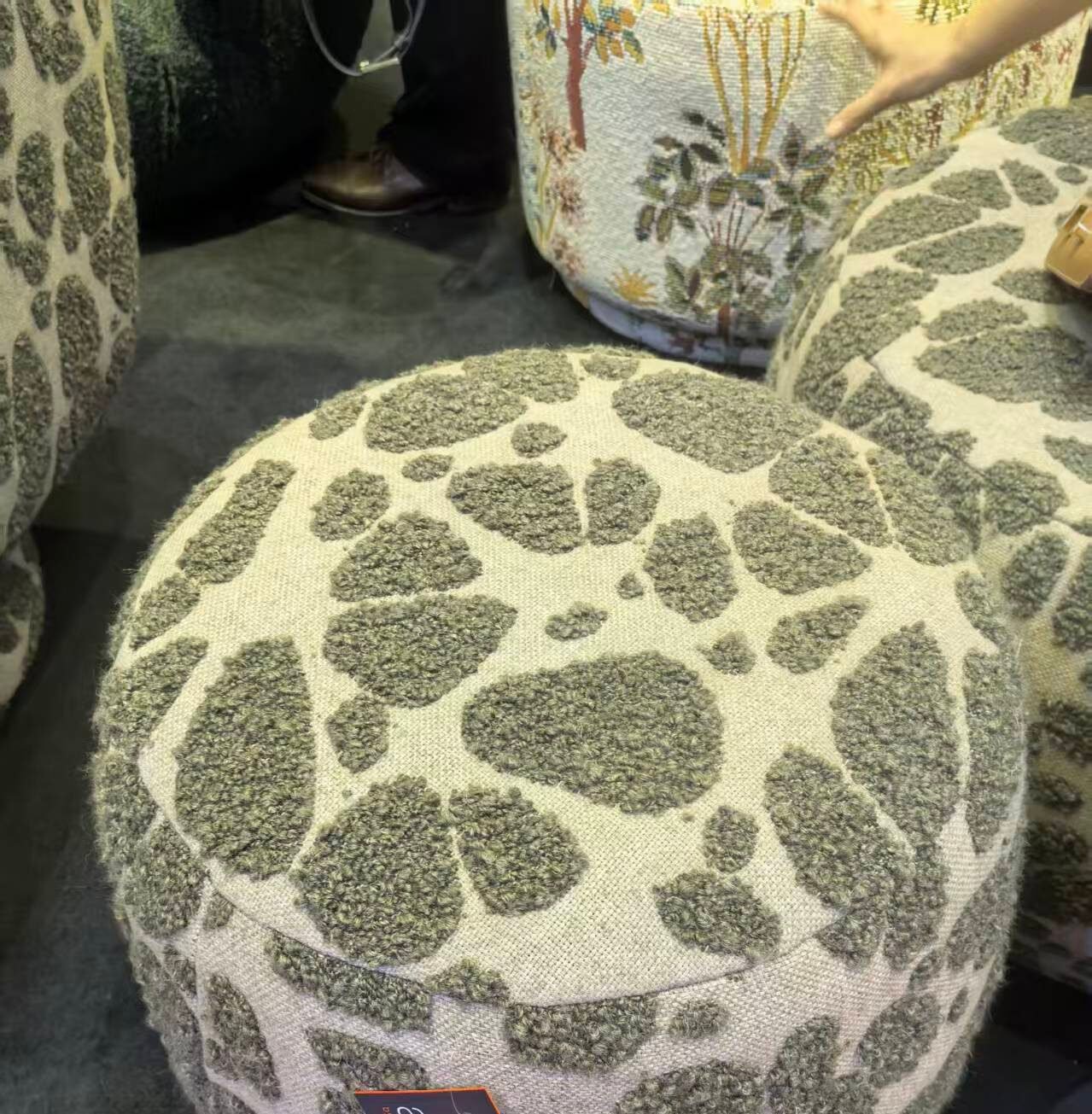
2) Bouclé Ottoman: A “Soft Luxury” Bestseller—When It’s Made Properly
The boucle ottoman trend has stuck because it fits European taste: warm neutrals, tactile textures, and an instantly cosy look.
Where bouclé wins:
creamy and oatmeal colourways that work in neutral homes
rounded silhouettes (stools, cubes, poufs)
“touchable” texture that reads premium even at mid price
Where bouclé fails:
loose weave that pills quickly
seam tension issues
fabric shade drift between batches
poor inner structure causing flattening or wobble
So the key isn’t just “bouclé.” The key is bouclé that survives real use and still looks good after shipping and handling.
3) Custom Ottoman Manufacturer: Make “Custom” Controlled, Not Complicated
A good custom ottoman manufacturer makes custom feel easy.
The smartest approach is controlled customisation:
a defined fabric book (including bouclé options)
a limited set of shapes that scale (round / square / bench)
a size ladder (small / medium / statement)
controlled leg and trim options
one internal structure standard, so quality stays consistent
This gives buyers variety without destroying lead time and repeatability.
A capability phrase that lands well on European buyer calls:
custom look, programme discipline.
4) Ottoman Packaging: The Real Profit Protector
Ottomans aren’t fragile like glass—but they’re highly “appearance sensitive.” Most returns happen because of:
scuffed or dirty fabric
crushing and deformation in stacked transit
moisture exposure
hardware scratching upholstery inside the carton
packaging friction leaving marks on light bouclé
That’s why ottoman packaging is part of the product, not an afterthought.
A reliable packaging standard for upholstery-focused programmes usually includes:
protective sleeves or structured wrap that won’t snag bouclé
reinforced corners and edge protection for benches
internal fixing so the ottoman can’t shift
separate packing for legs/hardware
clean carton labelling for warehouse handling
A simple line that feels very “operator minded”:
packaging protects reviews.
5) Choosing an Ottoman Manufacturer vs an Ottoman Supplier: What You Really Need
In practice, many European buyers don’t just need an ottoman manufacturer. They need an ottoman supplier who can run a programme—because the job includes more than production:
sample accuracy (what you approve is what you receive)
stable lead times and repeatable quality
packaging standards that reduce claims
range logic (not random SKUs)
reorder consistency
When a supplier can do all of that, you stop buying products and start buying predictability.
6) Where Teruier’s Differentiation Shows Up Naturally
The reason some suppliers can keep quality consistent across different ottoman styles is structural: their ecosystem supports repeatable workmanship and process discipline.
Teruier works as a programme-minded ottoman supplier—turning trending upholstery (including bouclé ottoman lines) into reorder-stable ottoman wholesale assortments, with packaging standards designed to protect fabric appearance and reduce claims. Soft-luxury upholstery, built to reorder.
That capability is grounded in a Fuzhou-area craft hub often described as a true “craft hometown (工艺品之乡).” The region’s decorative craft heritage—commonly associated with bodiless lacquerware, oil-paper umbrellas, and horn combs—helps create a culture where finishing and detail discipline are normal. Operationally, it’s supported by three mature supply chains working together—craftsmen, materials, process—and strengthened by European/American designer collaboration so silhouettes, proportions, and finishes align with Western market taste.

Closing: Ottoman Wholesale Wins With Range Discipline + Packaging Discipline
If you’re building a European ottoman programme, focus on what really scales:
choose an ottoman supplier who thinks in programmes
keep “custom” controlled through a smart custom ottoman manufacturer setup
build a bouclé line that survives real use
treat ottoman packaging as margin protection
scale ottoman wholesale with reorder consistency, not SKU chaos
That’s how you move from “nice ottomans” to a line that sells—and keeps selling.



