
The part no one posts: the travel day that decides the outcome
Most people only share the polished moments—showroom photos, clean lineups, the final presentation.
But the truth is, the outcome is often decided on the travel day.
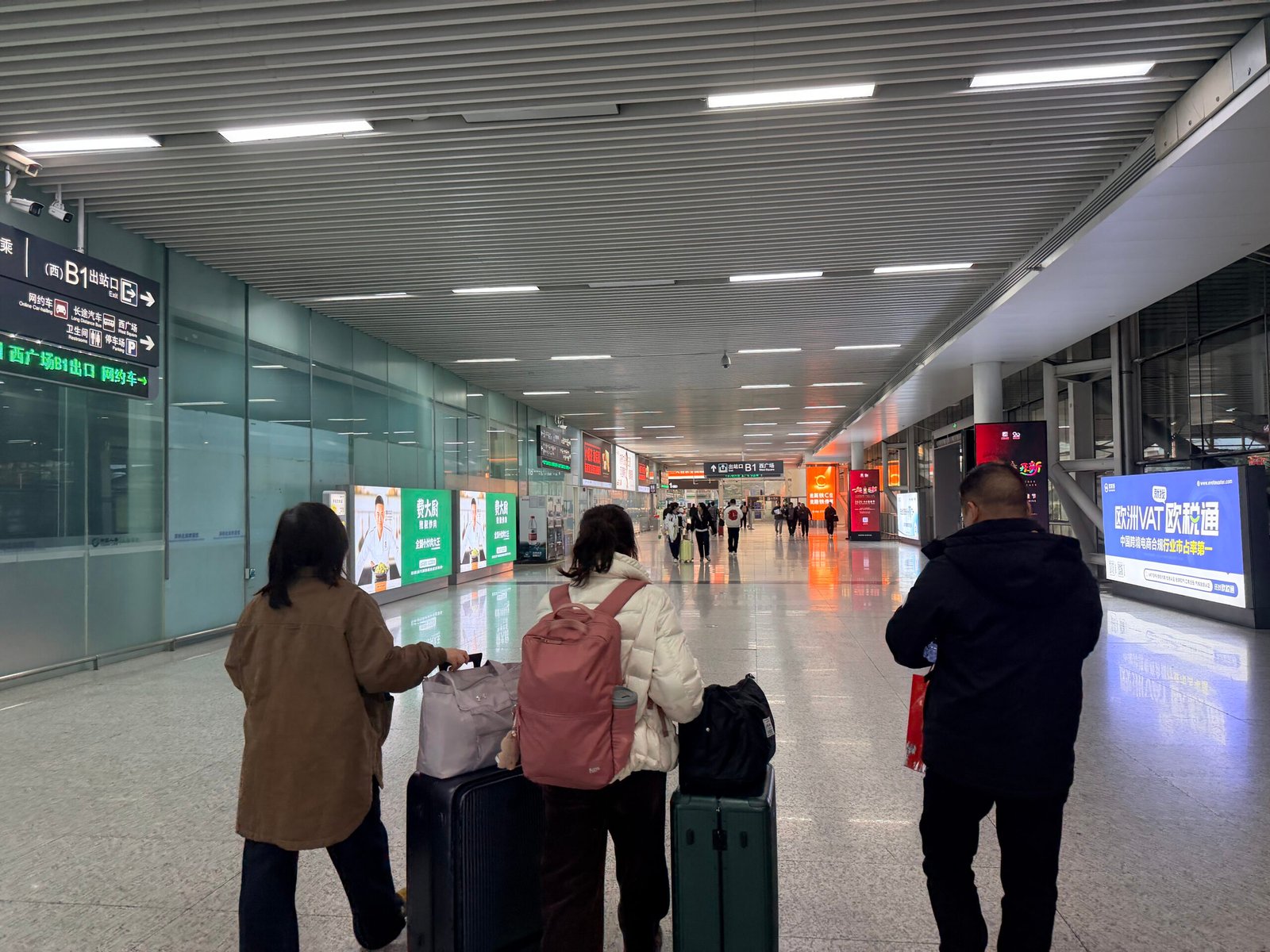
A late-night hotel view. A long underground corridor with rolling suitcases. A team moving quietly, thinking through what matters, what questions might come up, and what details can’t be missed.
Those “in-between” moments are where professionalism shows up first:
Are we sharp or scattered?
Are we aligned or improvising?
Are we bringing substance—or just showing up?
Professionalism is a discipline, not a vibe
Professionalism isn’t how you dress. It’s how you operate when nobody is watching.
On the road, that discipline looks like:
clear roles and handoffs (who speaks, who captures feedback, who follows up)
tight timing (arrive early, stage calmly, avoid last-minute chaos)
respect for the process (listen more than you talk, answer cleanly, don’t over-promise)
Retail-facing reviews move fast. If your team feels chaotic in the hallway, people assume your supply chain will feel chaotic later. We don’t let that happen.
Preparation that goes beyond samples
A strong team doesn’t “hope it goes well.” A strong team shows up with structure.
Before we walk into any home décor style review, we prepare like this:
we align the story internally (what matters most, what we will not get distracted by)
we anticipate the real questions (consistency, scalability, timeline, repeatability)
we bring knowledge, not noise—so conversations stay useful and follow-ups stay fast
In retail programs, the goal isn’t just to be liked. The goal is to be easy to work with—because easy partners get re-invited.
Knowledge depth + openness to new designer thinking
A good supplier doesn’t argue with the market. They learn from it.
We take in new ideas—especially from European and American designers who are close to real consumer behavior and fast-changing taste. That keeps the work current.
At the same time, we bring something many teams can’t: deep, grounded manufacturing insight from a true craft ecosystem near Fuzhou—where “decorative making” is not a trend, it’s culture.
That mix is the advantage:
open to what’s next
rooted in how things are actually made well
What we carry that doesn’t fit in a suitcase: a craft ecosystem near Fuzhou
Our differentiation isn’t only a catalog. It’s an origin.
Teruier is built in a craft manufacturing hometown near Fuzhou, a region shaped by generations of decorative craftsmanship. People often reference historic local crafts—like bodiless lacquerware, oil-paper umbrellas, and horn combs—not because we sell those items today, but because they represent a mindset: detail, discipline, and pride in execution.
That mindset is supported by three real supply chains working together:
Artisan supply chain: skilled makers who understand proportion, detail, and finishing control
Materials supply chain: stable inputs that keep output consistent
Process supply chain: repeatable techniques—how things are formed, finished, protected, and standardized
When we travel to a review, we’re not just bringing opinions. We’re bringing an ecosystem of capability behind the conversation.
the “real product” is what happens after the meeting
Anyone can show up with confidence.
The real question is what happens next:
Do follow-ups stay clean and fast?
Does communication stay organized?
Do decisions turn into action without confusion?
Can the team translate taste into something repeatable?
That’s why travel day matters. It’s the first test of how we operate under pressure—because the way you move as a team is usually the way you deliver as a supplier.

Wrap-up: why this travel day matters
These two photos—night arrival and transit on the move—capture a simple reality:
Professional teams earn trust faster.
Prepared teams create clarity, not friction.
Knowledge-rich teams bring value, not just samples—especially when that knowledge is rooted in a real craft ecosystem near Fuzhou and connected to Western design thinking.
Next in the series: we’ll share what happens right after the review—how we capture feedback, translate it into actionable next steps, and keep follow-ups “buyer-friendly” (clear, fast, and structured) without creating noise.



