
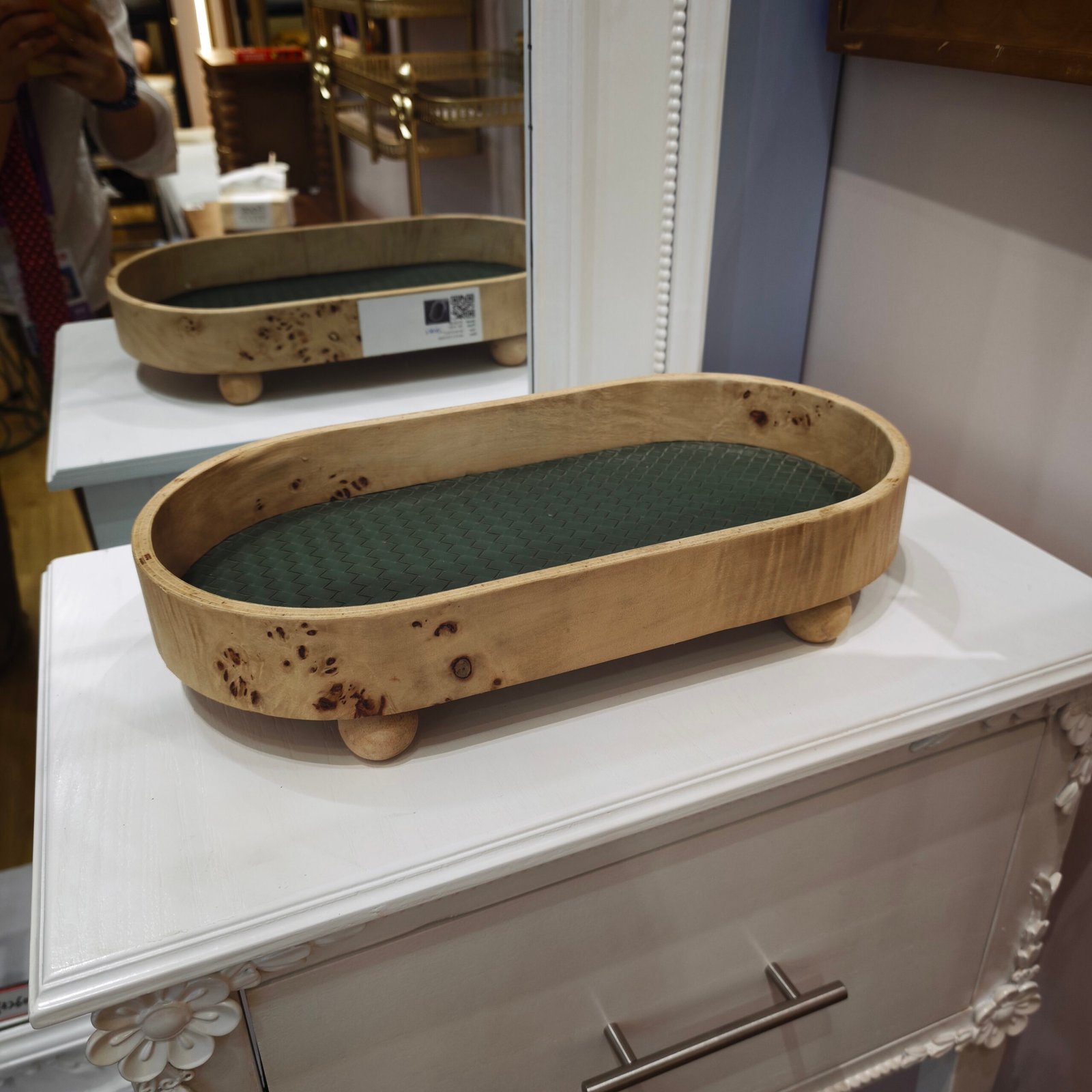
Occasional Furniture: Small Pieces, Serious Commercial Work
Occasional furniture has a rather misleading name.
It sounds as though these products appear only on special occasions, perhaps when important guests arrive or somebody finally decides to tidy the hallway.
In reality, side tables, stools, consoles and compact accent pieces are used every day. They fill awkward spaces, support larger furniture collections and give customers a relatively painless way to update a room.
The Teruier Occasional Furniture section is created for German and European buyers, home furnishing retailers, importers and interior designers looking for compact furniture with clear design value and sensible commercial logic.
Because a small table should solve a spatial problem.
It should not become a new one.
What Is Occasional Furniture?
Occasional furniture refers to smaller, flexible furniture pieces used alongside primary items such as sofas, beds, dining tables and storage units.
The category may include:
- Side and end tables
- Coffee and cocktail tables
- Console tables
- Nesting tables
- Stools and compact seats
- Small benches and ottomans
- Bedside tables
- Decorative pedestals and plant stands
These products often combine function with decoration.
A side table holds a lamp or a drink. A console completes an entrance area. A stool may become a seat, a footrest or an improvised place for a handbag.
Naturally, the customer may use it for all three at once.
What Is the Occasional Furniture Section About?
The section examines how compact furniture can support a commercially coherent home collection.
It covers subjects such as:
- Relevant forms, proportions and silhouettes
- Wood, metal, glass, ceramic and mixed materials
- Colour and finish development
- Coordination with mirrors, lighting and soft furnishings
- Multifunctional and space-conscious designs
- Construction, packaging and transport considerations
- Price positioning and collection potential
This is not a gallery of attractive tables accompanied by the word “timeless”.
It is a buyer-focused resource for understanding why certain products work, where they belong and whether they can justify their space in an assortment.
Why Occasional Furniture Matters
Large furniture defines the basic function of a room. Occasional furniture makes the room usable.
A sofa without a side table may look clean in a photograph, but it leaves the customer holding a coffee cup with nowhere sensible to put it. A hallway mirror without a console can feel visually incomplete. An ottoman without a nearby table may be comfortable, but not especially cooperative.
For retailers, occasional furniture offers several commercial advantages:
- It fits into multiple room settings.
- It can support add-on sales around larger furniture.
- It introduces materials and colours without dominating a collection.
- It requires less customer commitment than major furniture.
- It can help refresh an assortment through compact newness.
The category is particularly relevant where homes are becoming more space-conscious.
Compact does not have to mean insignificant. It simply means every centimetre is expected to earn its keep.
Design and Manufacturing Must Speak to Each Other
Teruier supports this category through its Cross-Border Design and Manufacturing Collaboration Model.
The idea is straightforward: market requirements, design decisions and manufacturing realities should be considered together, rather than introduced to one another after the sample has already gone wrong.
For occasional furniture, this matters because apparently minor details can create major commercial consequences.
A thicker tabletop may improve perceived value but increase weight. A sculptural base may look distinctive but waste container space. A fashionable finish may photograph beautifully but prove difficult to reproduce consistently.
The collaboration model connects:
- European market and assortment requirements
- Product styling and proportion
- Material and construction choices
- Supplier and workshop capabilities
- Cost, packaging and delivery considerations
The aim is not to remove creativity.
It is to stop creativity from becoming an invoice with unusual dimensions.
Occasional Furniture Versus Main Furniture
| Consideration | Occasional Furniture | Main Furniture |
|---|---|---|
| Typical products | Side tables, stools, consoles and small benches | Sofas, beds, dining tables and wardrobes |
| Main role | Complements and connects a room | Defines the room’s primary function |
| Customer commitment | Generally lower | Generally higher |
| Placement flexibility | High | More fixed |
| Trend responsiveness | Easier to update | Usually slower to change |
| Key sourcing concern | Proportion, stability, finish and packing efficiency | Structure, comfort, durability and installation |
The two categories should work together.
Occasional furniture is not meant to compete with the sofa. It is meant to make the sofa area feel complete—and give the customer somewhere to place the television remote before it disappears permanently.
What Makes a Strong Occasional Furniture Product?
A commercially effective product normally combines four qualities.
Useful proportions
The height, width and scale should suit the intended room and neighbouring furniture.
Clear visual character
The product needs enough identity to be noticed, but not so much that it resembles an art-school exercise with legs.
Credible construction
Tables should stand level. Stools should support real users. Drawers should open without requiring negotiation.
Collection compatibility
A good product should coordinate with mirrors, lamps, ottomans, ceramics or other furniture pieces through repeated shapes, colours or finishes.
This allows buyers to build room stories rather than accumulate isolated products.
Why German Buyers Need More Than a Pretty Sample
German buyers usually expect a product to explain itself commercially.
Relevant questions include:
- Which room and customer does it suit?
- How does it coordinate with an existing assortment?
- Is the scale appropriate for European homes?
- Does the material support the intended retail price?
- Can the finish be repeated consistently?
- Is the packaging efficient enough for the product value?
A sample can look excellent in a studio.
The more useful question is whether the production order, packaging test and repeat delivery will look equally convincing.
The Occasional Furniture section helps buyers examine this wider picture.
Frequently Asked Questions
Which products are included in occasional furniture?
The section may cover side tables, coffee tables, consoles, stools, nesting tables, compact benches, bedside tables and decorative stands.
Are ottomans considered occasional furniture?
They can be. Ottomans often sit between upholstered furniture, soft furnishings and occasional furniture because they may provide seating, storage, a footrest or low-table functionality.
How does occasional furniture coordinate with mirrors?
A console and mirror can create a complete hallway or dressing-area arrangement. Repeated curves, metal finishes or wood tones help the products feel intentionally connected.
Does small furniture always mean easy shipping?
No. A small product with an awkward shape, heavy material or inefficient base can be surprisingly expensive to transport. Small is a measurement, not a logistics strategy.
Are multifunctional products always better?
Not necessarily. Additional functions are useful only when they work properly. A stool that is also a table and storage unit may be clever. A stool that performs all three badly is simply ambitious.
Does this section include outdoor occasional furniture?
Outdoor-compatible pieces may be discussed where relevant, but material suitability, finish performance and intended placement must be clearly defined.
Small Furniture Should Have a Clear Reason to Exist
Occasional furniture may occupy less floor space than a sofa or dining table, but it often determines whether an interior feels considered or merely furnished.
For buyers, its value lies in flexibility, coordination and accessible design impact.
The Teruier Occasional Furniture section focuses on products that connect visual interest with practical function, production realism and commercial potential.
Because the best small furniture does not simply fill an empty space.
It makes the space more valuable.



