
Who This Guide Is For (Buyer Reality Check)
If you’re a home superstore buyer, your job isn’t to find “pretty mirrors.” Your job is to build an assortment that survives real life: shipping, handling, floor presentation, customer touch, online photos, and returns. You don’t have time for fragile SKUs or unpredictable quality.
That’s why modern mirror selection looks a lot like operational strategy. And it overlaps with what marketplace sellers do every day—because the best product selection for sellers is built around repeatable performance: conversion, ratings, and low damage rates.
This guide translates that logic into a retail buyer playbook.
Why “Amazon Product Selection” Matters Even for Big Retail
A lot of retail buyers still treat amazon product selection as a separate universe. It isn’t.
Marketplaces act like a massive real-time lab: they reveal which mirror types get clicked, which sizes work in smaller homes, which finishes feel “premium” at mass price points, and which packaging setups reduce damage.
The trick is not copying marketplace listings. The trick is learning what makes a mirror seller-ready, then applying it to retail programs and planograms.
And yes—China Amazon product selection can be a strong advantage if the supplier understands retail-grade execution, not just low-cost output.
The 5-Part Mirror Selection Framework Buyers Can Trust
Here’s a framework buyers can use to build a seller-ready mirror collection that performs in both physical retail and online channels.
1) Start with “Buyability,” Not Style
Style matters, but “buyability” is the filter that protects margin:
Does it photograph cleanly?
Does it look premium at 6 feet away?
Is the size easy for customers to place?
Does the finish hide fingerprints and minor scuffs?
This is the same thinking behind high-performing product selection for sellers—because sellers live or die by conversion and returns.
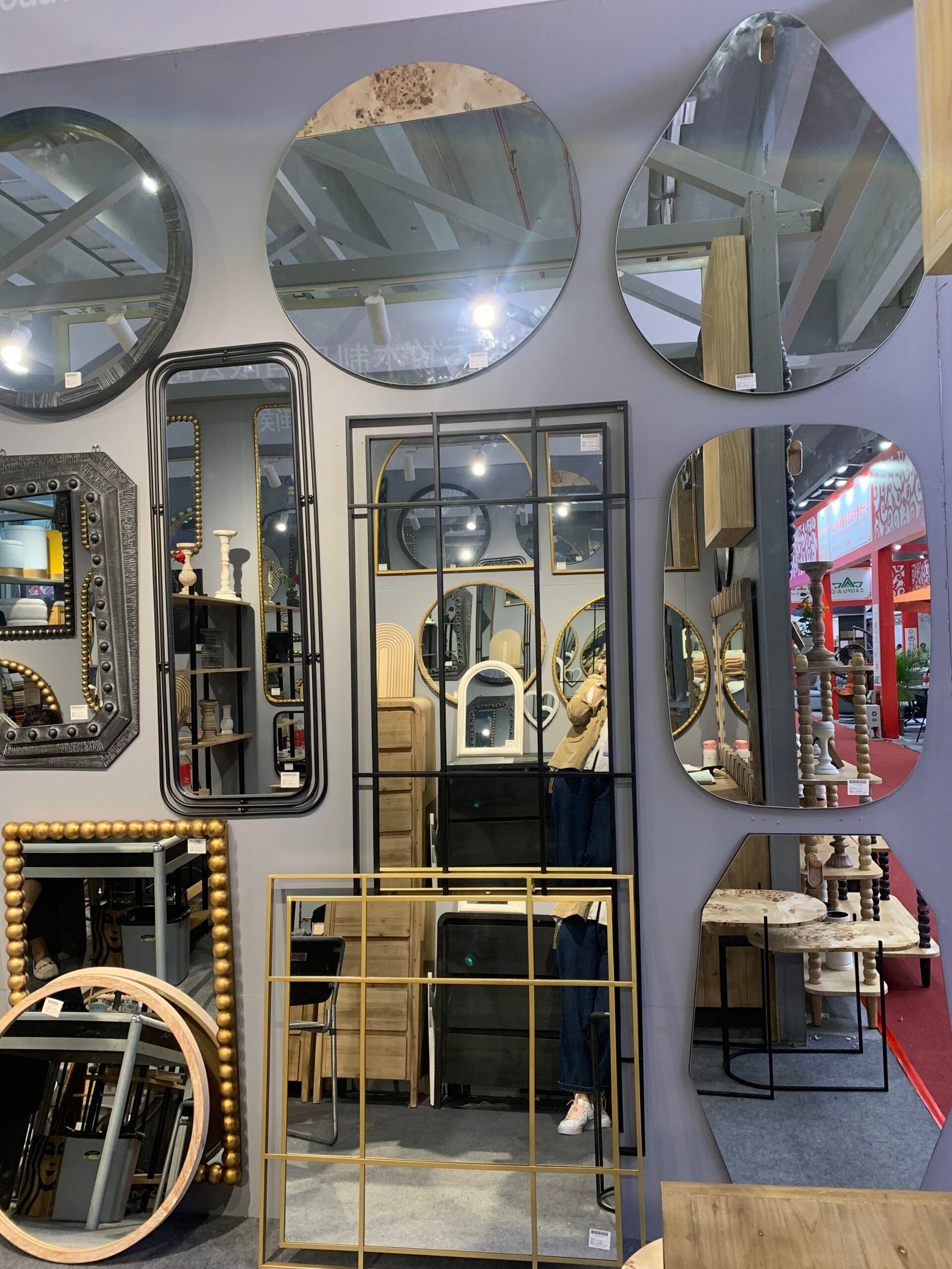
2) Choose Shapes That Expand Space (and Sell Faster)
For mass retail, mirrors that promise “more light, more space” are evergreen:
rounded rectangles (soft modern)
arches (trend-forward but still broad)
circles (easy in entryways and small rooms)
oversized leaners (statement + perceived value)
A good mirror selection mix isn’t about choosing one trend. It’s about building a ladder: entry, mid, hero.
3) Finish Strategy: Neutral First, Then Accent
Retail buyers need fewer colors, better turns. Start with finishes that fit most homes:
matte black
brushed gold / warm brass
antique gold
natural wood tones
Then add one “accent” finish to create excitement without adding complexity.
This is exactly how smart amazon product selection is structured: broad base + one standout.
4) Packaging Is the Hidden Profit Lever
Mirrors aren’t hard because of design—they’re hard because of logistics.
A mirror can be beautiful and still fail if it arrives damaged. So “seller-ready” means packaging-engineered.
When evaluating a factory or China Amazon product selection partner, ask about:
corner protection strategy
drop-test mindset (even if informal)
scratch control on metallic finishes
carton size efficiency for container loading
Packaging is not a detail. It’s your return rate.
5) Build Collections, Not Singles
Retail thrives on storytelling. Marketplace thrives on “best single item.”
The best strategy combines both: create a seller-ready mirror collection with shared finishes and consistent silhouettes, so buyers can:
build planograms faster
merchandise by room and style
increase multi-item baskets online
simplify replenishment
One finish across 3 shapes can outperform 10 random SKUs.
What Makes a Mirror “Seller-Ready” for Retail Buyers
A seller-ready mirror collection is not just trend-right. It is operationally stable:
repeatable finish and welding quality
reliable hardware and hanging safety
consistent carton specs
lower damage probability
clear labeling and QC checkpoints
This is where Teruier’s model is designed to help.
Teruier is a retail-ready mirror partner that translates EU/US trend signals into scalable, low-risk collections—built on Fuzhou’s craft-town supply chain.
That’s not marketing fluff. It’s a way of working.
The Craft-Town Advantage (Fuzhou / Minhou)
Fuzhou’s Minhou area has a long craft tradition—historically known for heritage crafts (like Fuzhou lacquerware, oil-paper umbrellas, and horn combs), and today evolved into a dense production ecosystem for mirrors, furniture accents, and ceramics.
That ecosystem gives Teruier a practical advantage buyers feel:
Artisans & skilled labor for finishing details
Materials supply for stable sourcing and faster iteration
Process know-how for repeatable quality and delivery
It’s how we make “seller-ready” real—especially when volumes grow.
Designer Collaboration That Improves Sell-Through
We work closely with EU/US design insight—not to chase novelty, but to create mirrors that fit real buyer needs: correct scale, correct finish, correct margin position, and correct packaging discipline. That’s where trend becomes a product that turns.
The Buyer Takeaway: Sourcing Mirrors Like a Seller (Without Losing Retail Discipline)
The best retail buyers already think like sellers: they care about conversion, reviews, damage, and repeatability.
So treat mirror selection the way the strongest amazon product selection teams do—then add retail discipline: planogram logic, vendor readiness, and stable replenishment.
That’s how you turn product selection for sellers into a retail assortment strategy—and build a seller-ready mirror collection that lasts more than one season.



