
Middle Eastern buyers don’t just buy a mirror—they buy a presence: warmth, craft, and architectural detail. The fastest way to build a strong lineup is to curate by style families.
Family 1: Mashrabiya mirror (architectural rhythm)
Mashrabiya-inspired frames work best when:
pattern depth is controlled (not too fragile)
surface protection prevents rub marks
finish tone stays stable across sizes
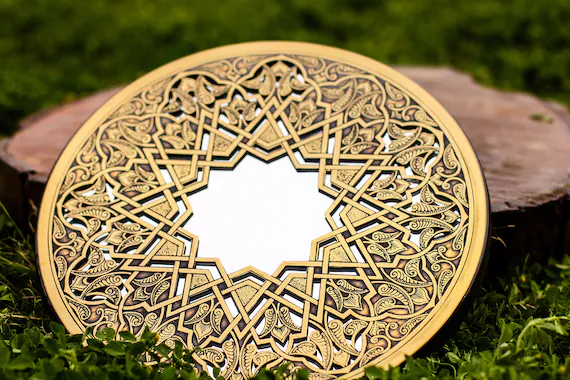
Family 2: Islamic geometric mirror (structure and symmetry)
Geometric pieces are “precision craft.” Winning details:
clean alignment
consistent edges
repeatable motif geometry across production batches
Family 3: Gold leaf mirror (lux warmth, statement value)
Gold leaf sells in premium settings, but needs:
consistent tone and sheen
packaging that prevents abrasion
defined “acceptable variation” range
Family 4: Organic Mirrors (modern softness)
Organic shapes feel contemporary and upscale, but require:
stable frame structure
careful edge finishing
consistent curvature
Teruier’s curation approach is cross-border: style understanding + manufacturability discipline. The Fuzhou craft hub supply chain makes it easier to execute complex finishes and motifs while keeping batch consistency inside a retail program.
Next: read “Mirror Supplier USA: What U.S. Buyers Expect (Retail Fit, Packaging, QC, ODM/OEM).”



