
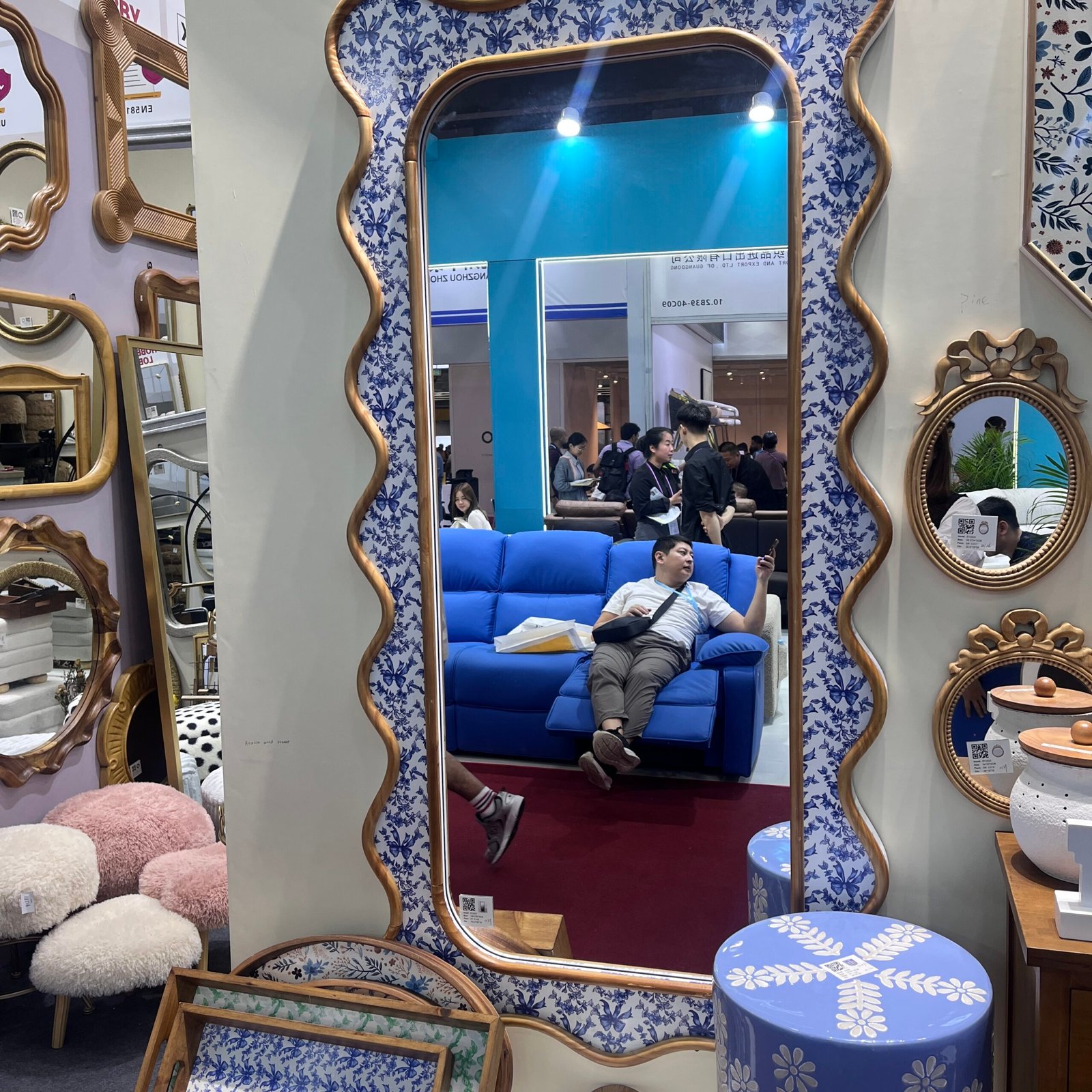
In the UAE, Mirrors Don’t Win on “Looks” — They Win on Packaging, Lighting, and Retail Readiness
If you’re sourcing mirrors in the UAE, here’s the uncomfortable buyer truth
I buy home décor for a mall channel in the Middle East, with stores that serve Dubai-style apartments, Abu Dhabi villas, and a steady stream of hospitality refresh projects. When shoppers search “mirrors UAE”, they’re not asking for art. They’re asking for a fast decision that won’t backfire: the mirror must look premium under strong lighting, arrive intact, and feel “worth it” at first glance.
And the region’s demand engine keeps spinning. Dubai’s tourism numbers hit another record in 2025, which usually tracks with more refurb cycles and faster sell-through for bathroom and entryway categories.
So let’s talk like buyers, not like mood boards: the mirror category is profitable only when it is retail-ready home decor—meaning: engineered, documented, and easy to reorder.
Mirrors sell because they change space perception — and that’s not just a vibe
In our market, mirrors are a “space tool.” People buy them to make rooms feel larger, brighter, and more put-together in one move.
Environmental psychology research shows that perceived spaciousness can be influenced by visual design elements in interior settings (studied with screen-based and VR evaluations). Mirrors are one of the most direct “visual intervention” products a retailer can stock.
There’s also classic perception research specifically investigating how size and depth are perceived in mirrors, which is exactly why shoppers intuitively trust mirrors as a spatial trick.
Buyer translation: if your mirror programme isn’t built around “space impact + clean reflection + stable finish,” you’ll get compliments… and slow reorders.
What Europe is signalling right now (and why UAE shoppers copy fast)
Europe still sets the tone for what our customers screenshot and request.
Lighting becomes the headline: Maison&Objet 2026 coverage frames lighting as a top priority in interiors—this directly boosts demand for better bathroom and vanity solutions.
Playful form + softer silhouettes keep rising out of Milan Design Week 2025 trend coverage—think curves, asymmetry, and sculptural outlines that feel modern without being loud.
Mirror-like metallics are back (silver-toned, chrome-y reflections), which makes wall mirrors and frames look more “high voltage premium” in store lighting.
And designers are increasingly calling out harsh, dated lighting choices for 2026 renovations—pushing the market toward softer, more flattering illumination (important for LED mirrors).
That’s why “basic mirror” is not enough anymore. The winners are mirrors that harmonise with light—especially in bathrooms.
The UAE assortment that actually sells: build it like a collection, not a catalog
If you want mirrors UAE to rank well and convert B2B leads, your content (and your product line) should look like a buyer-approved system.
1) Wholesale wall mirror (your volume engine)
This is where most sales happen: entryways, living rooms, corridors.
What I reorder: clean shapes, stable frame finishes, easy hardware, and consistent size tolerances.
2) Decorative mirrors wholesale (your margin builder)
Decorative doesn’t mean fragile gimmicks. It means: statement shape, premium edgework, and frames that match 2026 direction (soft geometry + reflective metals).
3) LED bathroom mirror (your modern necessity)
In the Middle East, bathrooms are not hidden corners—many are part of the “luxury impression.”
Buyer rule: don’t sell “cold hospital light.” Sell flattering, soft illumination—aligned with the 2026 shift away from harsh, trendy-but-tiring lighting.
4) Retail-ready home decor (the thing suppliers forget to package)
Retail-ready means the supplier hands me: SKU logic, carton labels, barcodes if needed, consistent photography angles, and spec sheets that staff can explain in 10 seconds.
The silent profit killer: mirror packaging breakage prevention
Let’s be honest—glass breakage is the tax you pay when a supplier treats packaging like an afterthought.
A serious approach starts with real shipping hazards: drops and shocks happen in parcel and logistics systems, and packaging has to be designed around measured hazard levels and product fragility.
This is exactly why third-party test frameworks like ISTA exist: they provide structured procedures for drops, vibration, compression, etc., so packaging is engineered, not guessed.
What I expect from “mirror packaging breakage prevention” (buyer checklist):
Corner protection that actually holds alignment after impact
Cushioning design matched to mirror size/weight (not “one foam fits all”)
Frame-to-glass clearance controlled (rattle = cracks later)
Clear carton markings + consistent internal structure across batches
A packaging spec you can show me, not just promise
If a supplier can’t explain packaging with this level of clarity, I don’t scale them—because breakage kills margin and reputation in one season.
If you’re sourcing wholesale wall mirror, decorative mirrors wholesale, or LED bathroom mirror for the UAE, confirm these before PO:
Dimensions + tolerance (mm)
Frame material + finish reference (one approved sample)
Mounting hardware included + hanging guide
Edgework + safety backing options
LED mirror: light temperature options + moisture considerations
Packaging: corner protection + cushioning spec + drop/shock test plan (ISTA-aligned)
This is what makes a collection “retail-ready,” not just “nice.”
Where Teruier fits (what I want to hear as a Middle East buyer)
For UAE buyers, the best pitch is not “we have many designs.” It’s:
“We build a retail-ready home decor mirror collection (wall + decorative + LED bathroom) with clear SKU logic.”
“We treat mirror packaging breakage prevention as engineering, using structured test thinking (drop/vibration/compression), not trial-and-error.”
“We translate European trend signals into reorderable SKUs fast—through Teruier’s cross-border design–manufacturing collaboration model, grounded in a mature craft hub supply chain (craftspeople, materials, techniques) and disciplined QC.”
That’s the combination that wins both: search visibility and repeat orders.



