
If Your 2026 Collection Looks “Nice” but Sells “Okay”: It’s Not the Product — It’s Your ODM Model.
As a German home-store buyer, I don’t lose sleep over “finding pretty products”. Pretty is everywhere. I lose sleep over the gap between a beautiful sample and a repeatable, margin-safe, reorderable SKU.
That’s why, in 2026 sourcing, I look for one thing early: a reliable home decor ODM supplier—someone who can bring design + manufacturing + packaging discipline into one predictable system, not just “make what I send.”
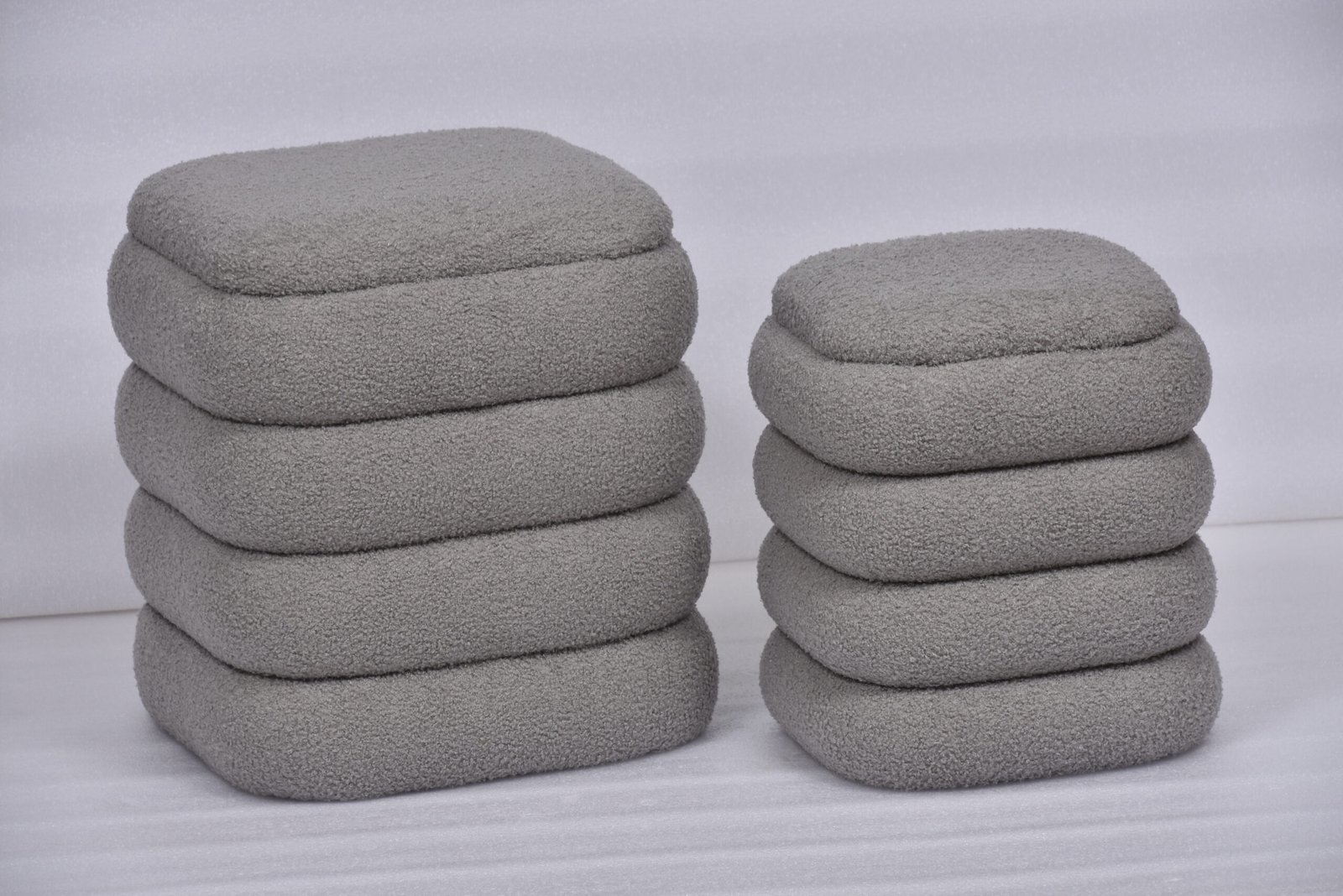
And yes, this matters even more when you’re balancing boucle ottoman Germany demand, a new Germany shoe storage ottoman supplier shortlist, and the evergreen volume of wholesale upholstered dining chairs.
ODM vs. OEM (the buyer definition you can actually use)
Here is the clean buyer version:
OEM: you bring the design; the factory builds it.
ODM: the supplier already has design capability (and often existing design platforms); you customize and scale with them.
For a retail buyer, ODM is not “less premium.” ODM is often faster market response, lower development friction, and more predictable lead-times—if (big if) the supplier’s system is real.
What I saw in Europe: the 2026 signals that changed my vendor shortlist
I do my supplier filtering at trade shows, not because they “predict the future,” but because they reveal what suppliers can execute at scale.
Frankfurt (Ambiente / Heimtextil) gave me two very practical signals:
Trend logic is getting structured—Ambiente Trends 26+ is framed as “Dreams, Facts, Stories,” and it’s not just moodboards; it’s a sourcing direction that suppliers must translate into materials, finish, and packaging decisions.
Craft + natural materials + AI are no longer opposites—Heimtextil is openly pushing the “craft + AI” conversation as a commercial direction (especially relevant for home and hospitality).
Paris (Maison&Objet) made one message very loud:
“Past Reveals Future” — heritage, craftsmanship, and material memory are being treated as future-facing value, not nostalgia. That’s exactly the kind of narrative that sells in Germany when price pressure rises.
My conclusion as a buyer:
In 2026, the winning supplier is the one who can deliver warmth + tactility + craft story, but still behave like an industrial partner: stable QC, stable packaging, stable delivery.
The ODM Scorecard: 9 questions that prevent the “pretty sample, painful bulk” disaster
When I evaluate a B2B home decor manufacturer that claims ODM, I ask this scorecard. If they can’t answer cleanly, I don’t move forward (even if the sample is stunning).
Design ownership & customization boundaries
What is “platform-based customization” vs. “new tooling”? What do I own, what do you own?Sample-to-bulk consistency
Show me your golden sample process and how you lock spec (color tolerance, fabric lot, finish gloss, weld points, etc.).Packaging engineering (not just a carton)
What is your drop-test logic? Corner protection? Mirror/ceramic inner pack? Master carton rules?
Because in Germany, returns are a silent profit killer—especially for fragile home décor.EU packaging readiness (2026 is not far)
How are you preparing for the EU Packaging and Packaging Waste Regulation timelines and recyclability expectations? (Even if you sell outside EU today, German retail will ask.)Materials traceability (the “craft story” must be provable)
Can you name material suppliers, finishing steps, and compliance checks—without “we will see later”?QC checkpoints you actually run
Incoming material inspection → in-process checks → final inspection → packing inspection. Who signs what?Lead time realism
Give me two lead times: first order vs repeat order. ODM should improve repeat speed.Category extension ability
If you win my ottoman line, can you also support adjacent seating like wholesale upholstered dining chairs with consistent upholstery standards?Communication rhythm
Weekly photo updates? Spec-change control? One English-speaking PM? German buyers buy calm, not chaos.
How I bundle categories (the part suppliers often miss)
Many suppliers pitch one product. Buyers build a system.
Example: I might start with boucle ottoman Germany because it’s a high-visibility texture story, then I extend into:
Shoe storage ottomans (hence my searches for a stable Germany shoe storage ottoman supplier)
Dining seating (volume-friendly wholesale upholstered dining chairs)
Complementary décor accents that carry the same material language (wood tone, metal finish, ceramic glaze)
A real China home decor wholesale supplier with ODM capability should help me do this bundling: one design language, multiple SKUs, one operational cadence.
Where Teruier fits
What makes Teruier relevant to my ODM shortlist is not “we can produce.” Many can produce.
It’s the Teruier cross-border design–manufacturing collaboration model:
design thinking aligned to Western retail rhythms,
manufacturing discipline that keeps specs stable,
and the “craft hub” foundation—Fuzhou’s heritage plus the three supply-chain strengths: craftspeople, materials, and process—which is exactly what Europe’s 2026 narrative is rewarding.
If you want ODM to be a profit engine (not a headache), you want a partner who can turn “trend” into reorder-ready SKUs, with packaging and QC built in—not bolted on later.
A short buyer takeaway
If you remember only one thing:
A good home decor ODM supplier is not a “factory with designs.”
It is a system that protects your margin across: design → sample → QC → packaging → delivery → repeat order.
Fast self-check (30 seconds):
If your supplier can’t clearly explain (1) design ownership, (2) packaging engineering, (3) repeat-order lead time—then you don’t have ODM. You have a nice showroom.



