
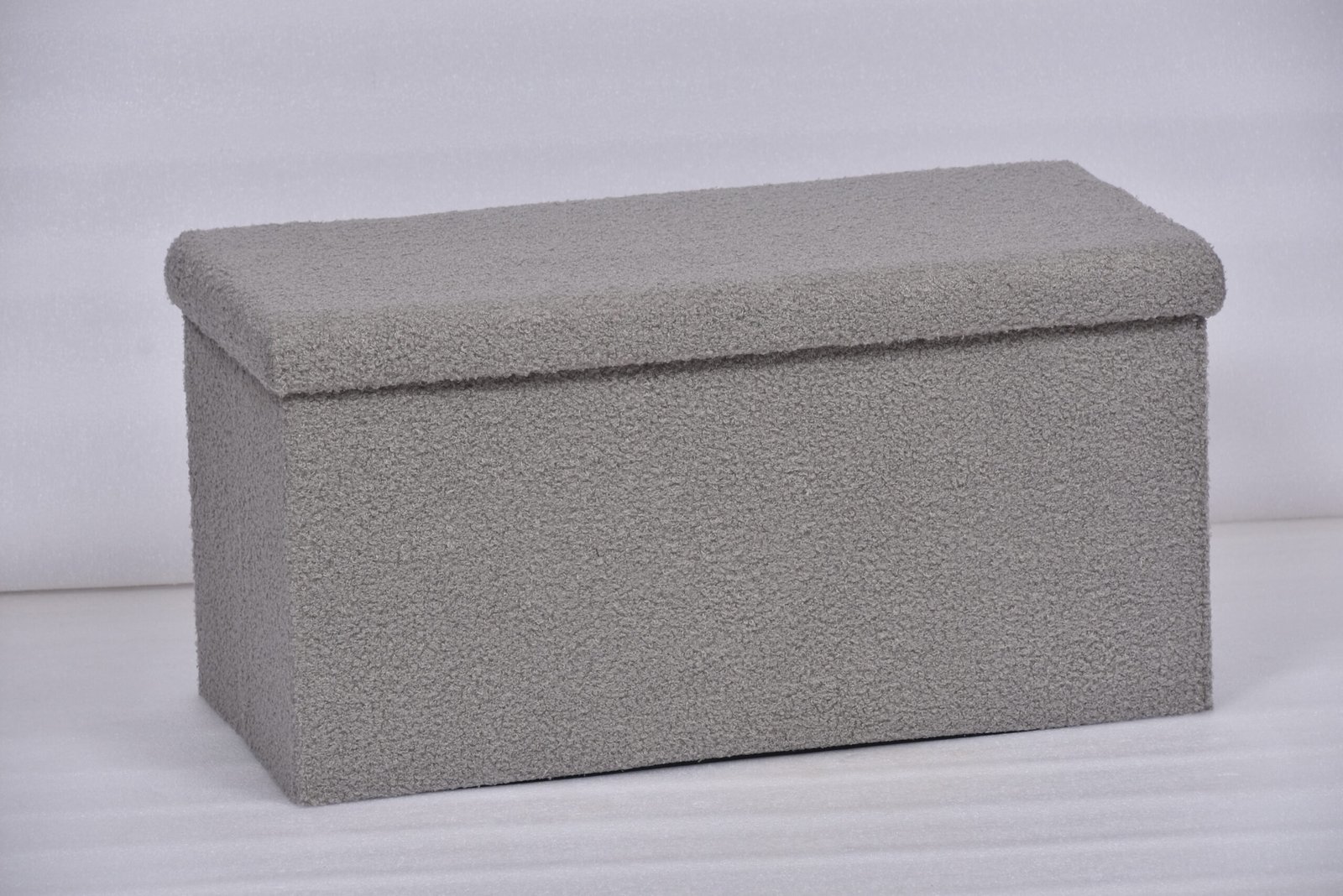
If the Second Shipment Isn’t Identical, the First Shipment Was Not a Success
In Germany, we like beautiful homes—but we love order. The entrance is not “a nice area.” It is a system: shoes, bags, keys, routines. If the system breaks, the product fails.
That’s why I keep searching for a Germany shoe storage ottoman supplier who understands one simple retail truth:
A shoe storage ottoman is not a trend piece. It’s a repeat programme.
And yes, our homes have more space than many people assume—Germany’s average living space per person reached 49.2 m² in 2024, according to DIW.
Still, even with space, entryways collect chaos. The solution that sells is compact, stable, and quietly “German”: a storage bench that does the job every day without drama.
2026 design direction: “neutral, tactile, and calm” is not going away
If you want a product that sits comfortably in German retail, follow the European fair signals—not influencer noise.
Ambiente Trends 26+ (Ambiente 2026 in Frankfurt, 6–10 February 2026) frames three style worlds: brave, light, solid. In buyer language, that means: one accent hero, clean neutrals, and reassuring forms you can live with for years.
Maison&Objet’s January 2026 theme, “Past Reveals Future,” leans into meaningful design and craftsmanship after years of sameness—exactly the emotional layer that makes small furniture feel “worth it.”
So the winning direction for Germany is clear: neutral home decor with tactile surfaces, but built like a disciplined SKU system.
Bouclé ottoman Germany: texture sells—specs keep it selling
Yes, a boucle ottoman Germany story can win on the shop floor: it photographs well, feels premium, and signals comfort instantly.
But texture is also where suppliers get exposed. Bouclé (and bouclé-look fabrics) can drift between batches: hand-feel, density, pilling behaviour, colour temperature under LED lighting. Your first delivery looks perfect. Your reorder looks “almost the same.” And “almost” is how returns start.
If you want bouclé to be a programme, your supplier must lock:
fabric ID + acceptable colour tolerance
stitch density rules on corners (where the eye goes first)
foam feel and lid alignment tolerances (where the body decides)
In other words: bouclé is the hook. The spec is the profit.
China Amazon product selection: why listing rules are now factory rules
Here is the modern sourcing reality: even if you sell through German chains, Amazon-style clarity has become the customer’s baseline expectation.
This is why China Amazon product selection thinking matters: selection is not only “what looks good,” but “what can be listed cleanly and consistently.” Amazon’s Seller Central guidance states product images should be 1,000 pixels or larger on the longest side to enable zoom.
Buyer translation:
If your supplier cannot support repeatable dimensions, consistent materials, and clean photo-ready finishing, your listing quality drops.
When listing quality drops, conversion drops.
When conversion drops, the entire programme becomes a negotiation.
So I evaluate suppliers with a simple question:
Can you build a storage bench that stays identical through photography, fulfilment handling, customer use, and reorder?
The retail-ready spec pack I ask for before I approve a programme
A serious Germany shoe storage ottoman supplier should not wait for problems. They prevent them with a retail-ready spec pack.
My minimum pack is short, but strict:
Spec sheet: finished dimensions + tolerances (especially lid fit), materials list, foam density/feel target, hardware method
QC checkpoints: lid alignment, wobble test, corner seams, fabric inspection under raking light, carton protection for corners and texture
Packaging spec: how you prevent compression marks on light neutrals and textured upholstery
Asset inputs: carton size/weight, clear assembly notes (even if minimal), care guidance for textured fabrics
Reorder rules: what is fixed (frame/foam/hardware) vs what can rotate seasonally (colourways)
No romance. Just control.
Where Teruier fits (for buyers who want “calm reorders”)
If you’re building a Germany-facing programme (neutral, tactile, retail-disciplined), Teruier’s role is coordination: translating fair-driven direction into locked specs, running prototype-to-production with clear checkpoints, and keeping reorders boring—in the best possible way.
Because in German retail, the highest compliment is simple:
“It sells, it lasts, and the reorder is easy.”



