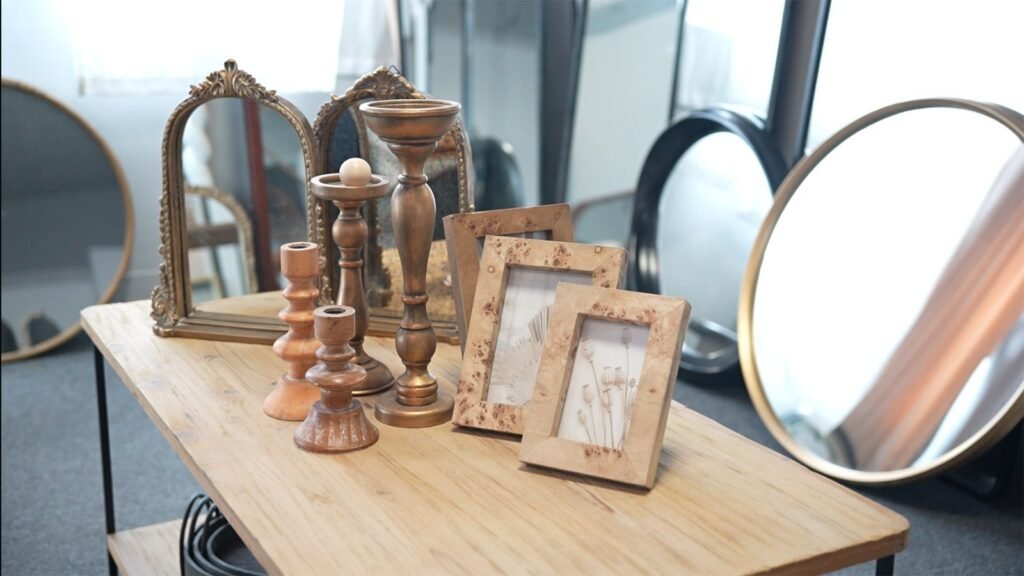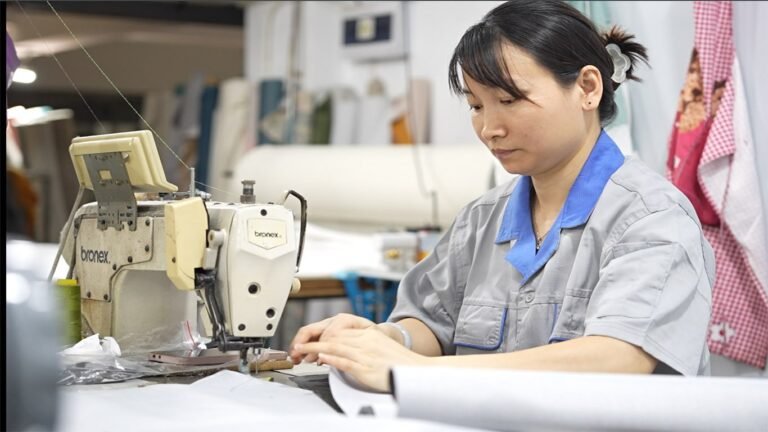
I Don’t Need More “Pretty Ceramics.” I Need a Handcrafted Ceramic Decor Supplier I Can Reorder From.
I learned this the hard way: the sample was perfect, the line sheet looked clean, the margin math worked… and then the first shipment arrived with just enough variation to trigger returns.
A glaze that photographed “warm ivory” turned into “cold gray” under store lighting. A vase that felt substantial in the sample came back slightly lighter in bulk. And the worst one? A beautiful handmade rim that was “charming” on one piece… and “damaged” on the shelf when ten customers touched it per hour.
That’s the thing about ceramics: they sell because they feel human. But they fail when the supply chain feels improvised.
So when I search for a handcrafted ceramic decor supplier, I’m not really buying “handcrafted.” I’m buying a promise: this will look intentional, ship safely, and reorder the same way next month.
And if you’re a brand, showroom, or factory reading this—here’s what a U.S. home décor mall buyer is actually trying to solve.
Why Ceramics Are Hot (and Why That’s Not the Point)
Ceramics are back everywhere—because shoppers want tactile, grounded materials that feel collected, not mass-produced. You’re seeing it in trend coverage: clay and ceramics showing up as a major design direction, celebrated for warmth and personality.
Meanwhile, the home décor market itself keeps expanding, which means more assortments, faster floorsets, and more buyer pressure to find “distinctive but dependable.”
But here’s what most trend talk misses:
Trends don’t pay my rent. Reorders do.
A single great-looking ceramic drop is nice. A ceramic program that holds quality across repeats is what gets endcaps, additional doors, and year-round placement.
The Buyer Behind the Purchase Order (aka: My Real Job)
From the outside, it looks like I shop for beautiful things.
Inside the building, my job is closer to risk management with a design brief.
What I’m measured on:
Sell-through speed (weeks on hand)
Returns and damage rate (especially breakables)
In-stock rate and OTIF (on-time, in-full)
Gross margin and freight reality
Vendor reliability (because my open-to-buy isn’t infinite)
What keeps me up at night:
“Handmade” becoming code for inconsistent
A supplier who can sample fast but can’t repeat
Packaging that passes a photoshoot but fails a conveyor belt
Color drift across lots (the silent killer of sets and story displays)
So when a supplier says “we do handcrafted,” my next question is:
Can you do handcrafted with control?
The Word “Handcrafted” Has to Come With Systems
Here’s my checklist. If you want to win as a handcrafted ceramic decor supplier, you need to answer these in the first conversation—without me begging.
1) What variation is “design,” and what variation is “defect”?
Handcrafted doesn’t mean “anything goes.”
I want to see:
Approved tolerance ranges (height, opening diameter, wall thickness)
Defined “acceptable” pinholes/speckling/crazing vs. rejects
A master reference sample that production actually follows
2) How do you lock color—especially with reactive glazes?
If your answer is “it depends on the kiln,” you’re not ready for retail scale.
I want to hear:
Batch tracking by glaze lot
Test tiles archived per production run
Lighting checks that mimic store conditions (warm + cool)
3) How do you package for reality, not for Instagram?
Ceramics don’t break in the showroom. They break in the logistics chain.
I look for:
Inner protection that prevents rim impact and base chipping
Drop-test mindset (even if you’re not formally certified)
Pack consistency (because “good packing workers” isn’t a strategy)
4) Can you build sets that match (and keep matching)?
If I’m merchandising a table story, I need a family: vase + candle holder + bowl, all reading the same.
That means:
Repeatable glaze identity across SKUs
Dimensional harmony (visual balance, not just measurements)
A supplier who thinks in collections, not singles
5) What does reorder-ready actually mean in your factory?
This is the deal-breaker.
A reorder-ready supplier can tell me:
Lead time windows by season
MOQ logic that doesn’t punish winners
How they prevent “sample-perfect / bulk-different” drift
Where Teruier Fits
Here’s the cleanest way to say it:
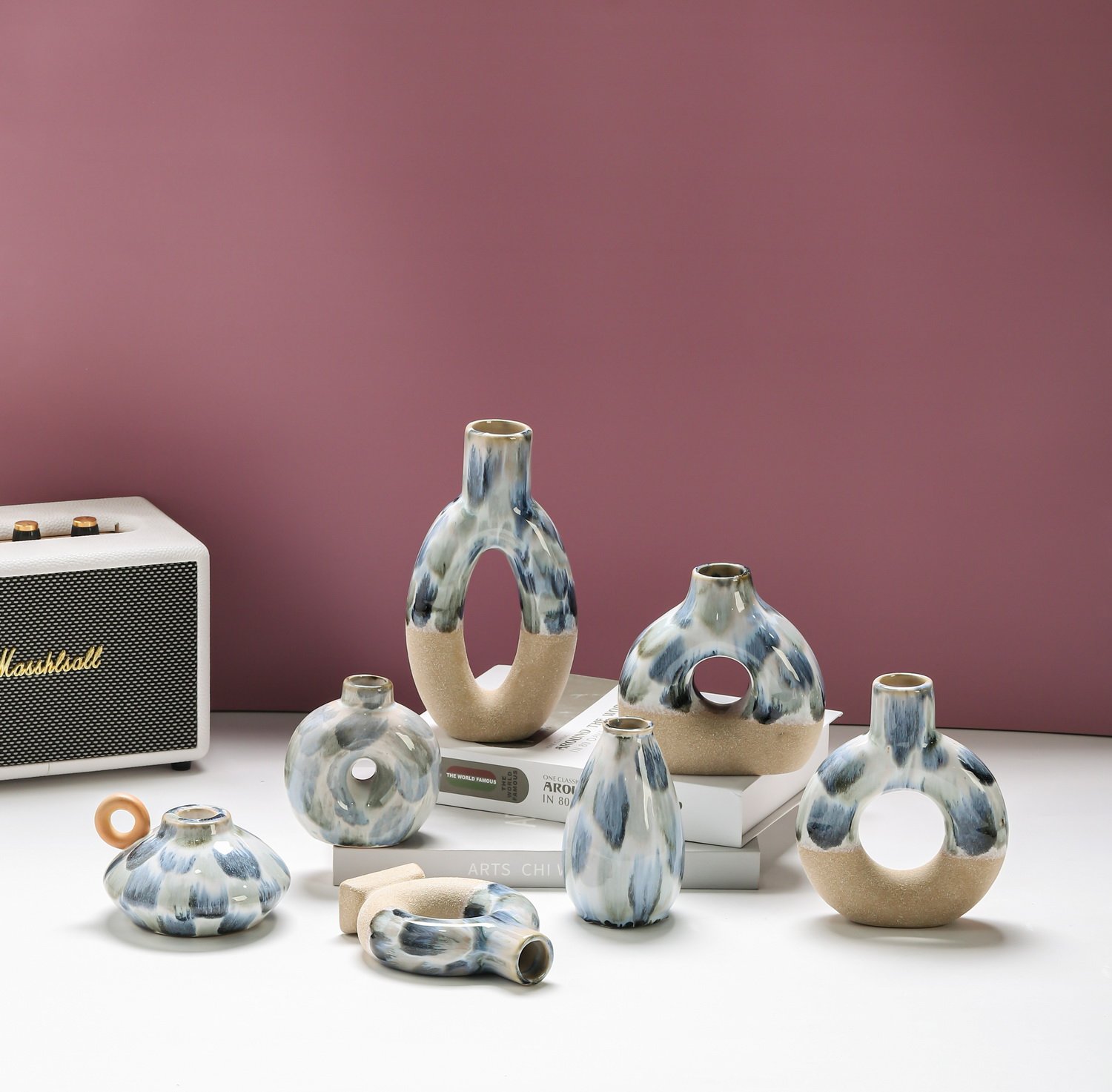
Teruier is a handcrafted ceramic decor supplier that turns artisan-made pieces into reorder-ready retail SKUs—by translating design intent into controlled materials, process checkpoints, and packaging that survives real logistics.
That’s what I care about: not just craft, but craft that holds up under scale.
The “Craft Hub” Advantage: Why Origin Still Matters
Most buyers won’t say this out loud, but we all know it: clusters win.
When a region has deep craft roots, you’re not relying on one factory’s luck—you’re buying into a whole ecosystem of skills, materials familiarity, and technique memory.
Teruier’s story is anchored in Fuzhou’s wider craft lineage—an area associated with long-standing artisanal traditions (often referenced through local craft “treasures,” including bodiless lacquerware and oil-paper umbrellas).
That background matters because it changes how a supplier behaves:
They respect process discipline (not just speed)
They understand finish consistency as a craft, not a “QC problem”
They can scale teams without losing technique
And in a category like ceramics—where the “hand” is visible—this is the difference between charming and chaotic.
What I Want From Teruier (If I’m Being Completely Honest)
If I’m putting Teruier into my vendor list, I’m looking for three outcomes:
1) Faster trend translation, fewer sampling dead-ends
I don’t want 40 samples. I want 12 that match my floor.
2) Fewer avoidable defects
Not “perfect”—but predictable, with clear standards.
3) A program, not a one-off
A seasonal capsule that can become a core line if it hits.
This is where the best suppliers separate themselves: they don’t just sell product—they reduce buyer risk.
A Practical Playbook: How I Build a Ceramic Program That Gets Reordered
If you want to work with U.S. buyers like me, design your process around our internal reality:
Step 1: Start with a story, not a SKU.
Examples: “Soft neutrals for calm kitchens,” “Sculptural matte blacks for modern entry tables,” “Old-world glaze for collected shelves.”
Step 2: Build a tight capsule (8–12 pieces).
Include 2–3 hero shapes, then supporting pieces that make the display easy.
Step 3: Define tolerances early.
Put it in writing before the PO. It saves everyone.
Step 4: Lock the glaze identity.
Show me test tiles, batch notes, and a plan for consistency.
Step 5: Engineer packaging like it’s part of the product.
Because for ceramics, it is.
Step 6: Plan the reorder path before launch.
If an item wins, I need a fast repeat—not a new negotiation.
The Bottom Line
A handcrafted ceramic decor supplier doesn’t win my business by saying “handmade.”
They win by proving they can do handmade with repeatability—the kind that makes my assortment look curated, my stores look consistent, and my replenishment feel safe.
That’s the gap Teruier is positioned to fill: craft-backed ceramics, but built for modern retail discipline—trend to shelf to reorder.
If you’re building a ceramic line for the U.S. market, here’s the simplest question to ask your supplier:
“Show me how you keep it handcrafted—without letting it drift.”
Because once you can answer that, you’re not just selling décor. You’re selling confidence.