
I Don’t Need “Another Factory.” I Need a Reorder-Ready Supplier.
I buy home décor for a living. And here’s the truth no one says out loud in vendor meetings:
The first shipment is the audition. The second shipment is the business.
If you’re a B2B home decor manufacturer, you can win my first PO with a great sample, a sharp price, and a clean pitch deck. But you’ll only win my reorder if you can ship the same SKU again—on time, consistent, compliant, and truly shelf-ready—without me babysitting every step.
That’s what I mean by a reorder-ready supplier.
Global sourcing isn’t “cheap sourcing” anymore. It’s risk management.
In global sourcing home decor, the biggest killer of margin is not your unit cost—it’s everything that happens when the supply chain gets unpredictable:
late arrivals that miss a floor set
inconsistent finishes that trigger returns
packaging failures that turn “value” into damage claims
unclear responsibilities that turn freight into finger-pointing
Retail leaders have been blunt about how volatile inventory has become: demand swings, rising operating costs, and stockouts/overstocks are now daily realities that pressure both sales and margin.
And supply chain teams are actively building “disruption playbooks” and pushing for more transparency with sourcing partners—because surprises are what hurt.
So when a supplier tells me, “We can do anything,” my first thought is: Great. But can you do it twice, under pressure, with proof?
“Retail-ready home decor” is not a vibe. It’s a spec.
Retail-ready is operational. It means my stores can receive, identify, open, stock, and sell the product fast—with minimal labor and minimal mess.
Walmart’s well-known “five easies” framework for shelf-ready / retail-ready packaging is still one of the clearest ways to judge whether packaging actually works in-store: easy to identify, open, stock, shop, and dispose.
So if you want me to call your product retail-ready home decor, show me this in your packaging plan:
Carton labeling that store teams can spot instantly (SKU, color, qty, orientation marks)
Open-without-drama design (clean tear, no shredded cardboard confetti)
Shelf/display logic (inner packs, protective corners, consistent case counts)
Damage-prevention engineered into packaging, not “handled carefully” requests
If I have to redesign your packaging after the PO, you’re not retail-ready—you’re “almost ready.”
The reorder test: can your factory perform without heroics?
Every buyer has lived this movie:
PO #1: perfect.
PO #2: raw materials changed, finish drifted, cartons got weaker, lead time moved, and suddenly the product isn’t the product.
A real reorder-ready supplier has discipline, not luck. Here’s what I look for:
1) A “same-SKU repeatability” file
BOM locked, finish standards documented, tolerance range defined
Control sample archived (and actually used)
Photos + measurement points + pass/fail notes
2) QC checkpoints that match retail reality
Not just “final inspection.” I want in-process checkpoints that prevent batch drift, because that’s what causes returns later.
3) A realistic lead time window—plus what breaks it
If a supplier can explain what would cause a delay (materials, hardware, peak season, port congestion) and how they buffer it, I trust them more than the supplier who says “no problem” to everything.
Even major logistics players have noted how retailers plan for disruptions and inventory pressures, including demand swings and warehousing constraints—so I don’t expect perfection, but I do expect preparedness.
Compliance and contracts: boring until it’s expensive
If you sell into serious retail, social compliance can stop a program faster than any quality issue.
For example, amfori BSCI audits use 81 questions across 13 performance areas, producing an overall rating from A to E—that’s the level of structure buyers increasingly rely on to benchmark social compliance.
And on the commercial side, global sourcing fails all the time because responsibilities aren’t explicit. That’s why Incoterms matter: they define who handles shipping, insurance, documents, customs clearance, and risk at each stage.
If a supplier can’t clearly explain which Incoterm they’re quoting and what it includes, I assume the landing cost will surprise me later.
My 10-minute buyer scorecard for any B2B home decor manufacturer
If you want to win a long-term line review (not just a one-off PO), answer these cleanly:
Can you show retail-ready packaging aligned to the “five easies”?
Can you prove repeatability (control sample + tolerance + BOM lock)?
Do you have inspection checkpoints that prevent batch drift (not just catch it at the end)?
Do you have audit-ready compliance documentation (e.g., amfori BSCI or equivalent proof)?
Can you quote with clear Incoterms responsibilities (no fuzzy “we handle shipping” language)?
Can you explain lead times with a real risk map (peak season, materials, ports) rather than promises?
If you hit these, you’re no longer “a vendor.” You’re a supply chain advantage.
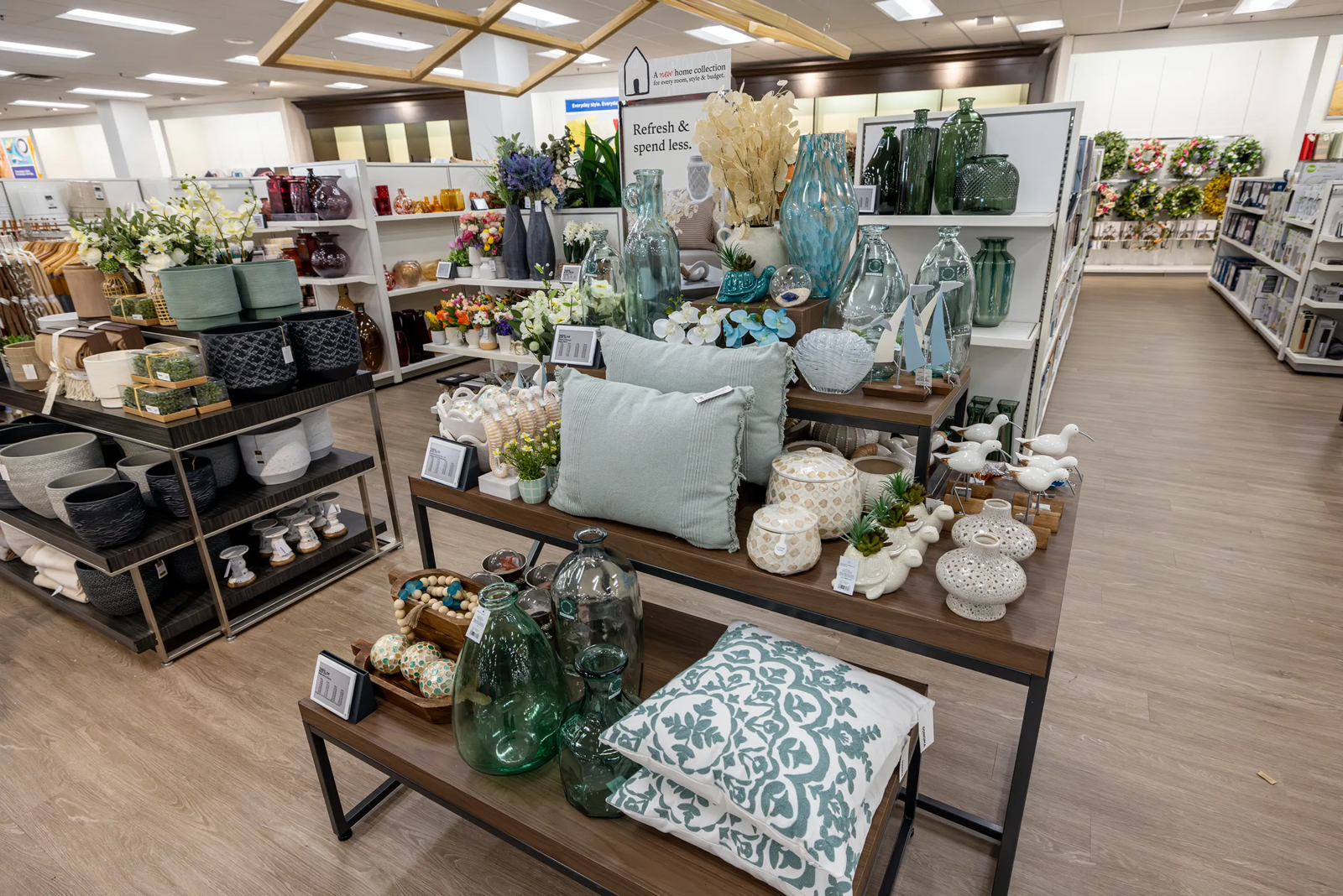
The bottom line (from a buyer who has to live with the outcome)
I can source beautiful products anywhere. What I can’t afford is uncertainty.
So when I’m doing global sourcing home decor, I’m not hunting for the lowest quote. I’m hunting for a reorder-ready supplier that can deliver retail-ready home decor with consistency, clarity, and compliance—because that’s what protects margin, protects brand reputation, and keeps the category plan intact.



