
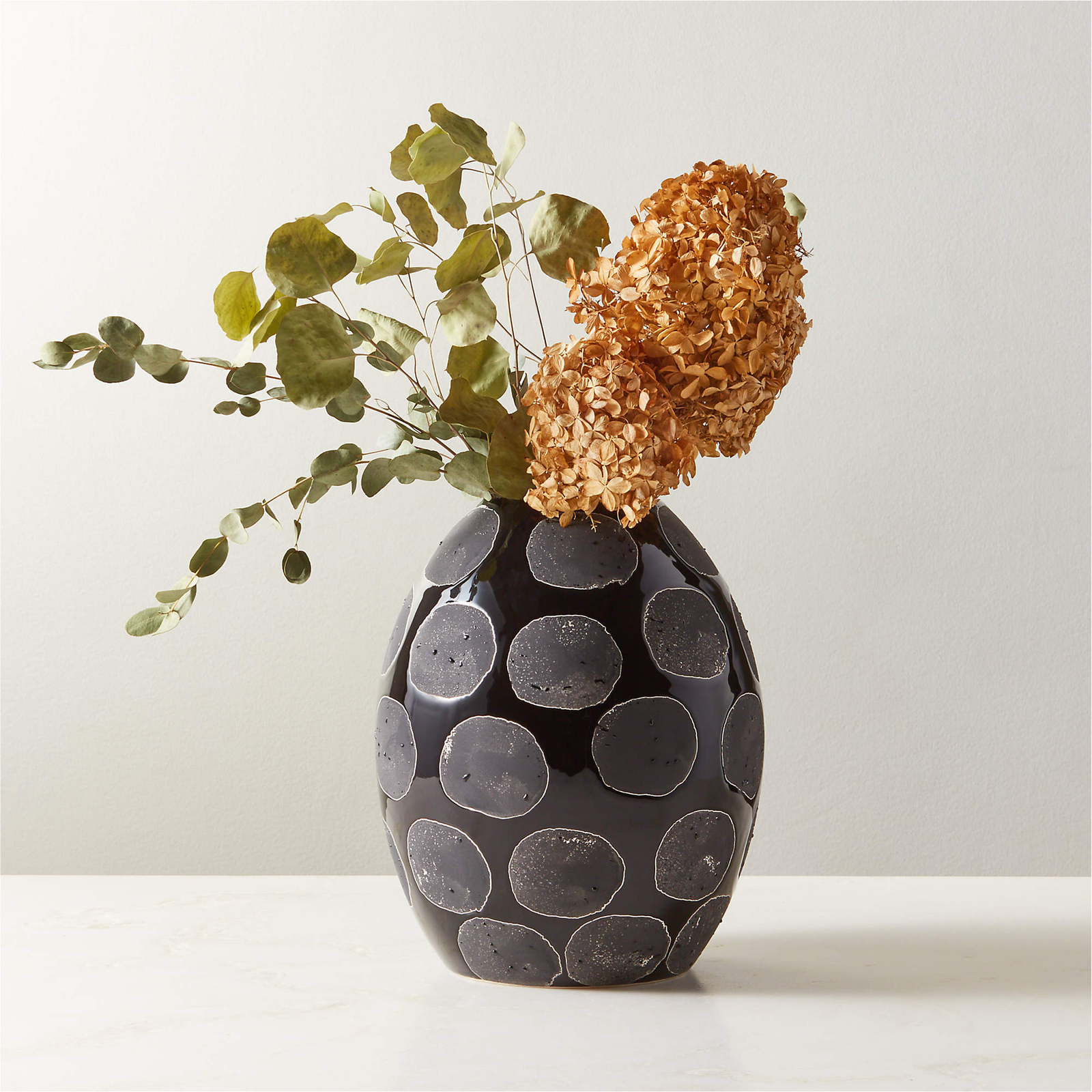
Let’s begin with a mildly offensive truth: most suppliers think buyers compare them by taste.
They imagine a buyer staring at three product lines, admiring the curves of a vase, noticing a fashionable glaze, appreciating the mood board energy, and then whispering, “This one has soul.”
Cute.
In real life, how buyers compare wholesale suppliers is much less poetic. Buyers are not comparing who has the prettiest sample. They are comparing who is least likely to turn a charming ceramic program into a slow-moving, chip-prone, carton-confusing exercise in regret.
That is especially true in ceramics. A ceramic line can look magical in a showroom and still fail in reality for reasons that are painfully unglamorous:
- inconsistent glaze
- odd case packs
- broken corners
- unclear drainage-hole options
- unstable lead times
- samples that have absolutely no relationship with production
- the classic “We thought you meant matte, warm, reactive, hand-feel ivory” disaster
Which is why buyers do not compare ceramic suppliers the way suppliers hope they do.
They compare them the way accountants, warehouse managers, merchandisers, and slightly battle-worn sourcing teams do.
The buyer reading this is not just shopping for style
This article is really for a specific kind of American buyer: the home décor buyer, import buyer, or category manager who is sourcing ceramics not as one-offs, but as a commercial program.
That buyer might be sourcing a seasonal tabletop story, a ceramic ornament assortment, a planter program, a sculptural vase drop, or a broader décor capsule where one hero item like a tomato vase gets attention, but the rest of the assortment still has to ship, price, stack, replenish, and survive retail life. Las Vegas Market’s Winter 2025 recap makes that broader context clear—buyers came not only for product discovery, but for business insight, trend education, and cross-category sourcing. High Point’s current programming adds another layer: supply-chain resilience, cash flow discipline, freight risk, and last-mile execution are now central conversations, not optional side quests.
At the same time, the product direction is clearly shifting toward individuality, tactility, and artisanal character. ASID’s 2025 outlook emphasizes joy, authenticity, and timeless craftsmanship. Houzz’s High Point Spring 2025 coverage notes that interiors with individuality, personality, and soul are “enjoying a moment,” and specifically calls out handmade ceramics as central to that story. In other words, buyers are being pushed toward more expressive ceramic products—but with no reduction in operational responsibility. If anything, the opposite.
First: buyers compare whether your sample is honest
This is where ceramic suppliers get sorted very quickly.
A weak supplier shows a gorgeous sample. A strong supplier shows a gorgeous sample that can actually be repeated.
That difference matters because ceramics live and die by variation. Some variation is beautiful. Too much variation is just poor control wearing an “artisan” hat.
Buyers compare:
- does the sample represent production?
- is the color stable enough across batches?
- is the shape intentional or just loose?
- does the “handmade” story feel curated or accidental?
- if this is pitched as a wabi sabi ceramic vase, is the irregularity controlled and desirable, or just what happened that Tuesday?
This is where glaze consistency QC becomes a real buying standard, not a technical footnote. Buyers are not asking for factory perfection on artisan-looking ceramics. They are asking for controlled variation. That is a very different thing.
Second: buyers compare the spec discipline behind the beauty
Ceramic buyers may be drawn in by form, but they stay cautious because they know how quickly form becomes operational nonsense without structure.
NIST’s work on product design specifications is useful here because it cuts straight through the marketing fog: a proper specification describes intended function, the environment of use, and requirements connected to safety, shipping, and manufacturing. NIST also makes the obvious but often inconvenient point that conformance only means something when the criteria are clearly specified. If the supplier cannot define the standard, they cannot seriously claim they are meeting it.
So buyers compare suppliers by asking who can clearly answer questions like:
- Is this decorative only, or functional?
- Is the drainage hole fixed, optional, or absent?
- What is the case pack?
- What are the tolerance ranges?
- Is the base protected?
- How are glaze defects classified?
- What is acceptable crazing, pinholing, or shade drift?
That is why ceramic plant pots drainage hole options case pack may look like an ugly keyword phrase, but in real buying it is incredibly useful. Because that phrase contains half the reasons a ceramic program works or fails.
Third: buyers compare packaging harder than most ceramic suppliers expect
Ceramics are fragile, yes. That is not news. What is surprising is how many suppliers still behave as if “fragile” is a personality trait rather than an engineering problem.
ISTA is very clear that pre-shipment testing and simulation-based procedures help decision-makers understand packaged-product performance and damage risk in transit. That means wholesale quality control process and packaging logic are part of the product offer itself, not support material to be sent later “if needed.”
For ceramics, buyers compare suppliers on questions such as:
- Is inner protection actually designed for ceramic forms?
- Does the case pack make sense for warehouse handling?
- Is the pack-out efficient or just cheap?
- Are labels and carton marks clear?
- Are breakage assumptions realistic?
- Does the carton serve retail logistics, or only factory convenience?
Because a clever tomato vase is not so clever once it reaches the buyer looking like tomato salsa.
Fourth: buyers compare whether the supplier understands the type of ceramic trend they are selling
This is subtler than it sounds.
Right now, ceramics are benefiting from a broader North American shift toward personality, tactile surfaces, handmade character, and emotionally warmer interiors. Houzz explicitly notes that handmade ceramics are central to the current appetite for individuality and soul, while ASID ties current design interest to authenticity and craftsmanship. That means buyers are absolutely open to more expressive products—ceramic ornaments, sculptural vessels, character-rich planters, and even playful items that blur décor and conversation piece.
But here is the catch: buyers still compare suppliers based on whether they understand commercial use cases.
A supplier offering a wabi sabi ceramic vase should understand why the buyer wants restraint in silhouette and depth in texture.
A supplier offering a tomato vase should understand why the buyer wants novelty with enough polish to avoid looking like a clearance-bin joke.
A ceramic vase wholesale supplier should understand the difference between an editorial statement piece and a repeatable retail program.
If the supplier only understands style but not sell-through logic, buyers notice.
Fifth: buyers compare cheapness against repeatability
Ceramics may be lower-priced than mirrors or upholstered pieces, but that does not make supplier comparison less serious. In some ways it makes it more serious, because margin can quietly disappear through breakage, repacks, and inconsistency across larger unit volumes.
So buyers compare:
- who gives the lower first price
- who gives the cleaner total program
- who can repeat
- who can support assortments
- who can adjust MOQ without wrecking the logic
- who understands replenishment
Research on MOQ is relevant here because it shows that MOQ structures may simplify supplier-side decision-making, but rigid MOQ can also reduce retailer flexibility and efficiency. In ceramics, where assortment logic and case-pack logic are often tightly linked, suppliers that treat MOQ as a blunt instrument tend to lose points with serious buyers.
Sixth: buyers compare who can translate between design and manufacturing
This is where the strongest suppliers pull away.
The buyer speaks in one language: trend fit, assortment balance, shelf story, open-to-buy, retail psychology.
The factory speaks in another: kiln variability, glaze tolerance, pack-out, unit economics, lead time, breakage risk.
Buyers compare suppliers based on who can translate between those two languages without forcing the buyer to do all the work.
That is where cross-border design manufacturing becomes more than a phrase. In practice, it means the supplier can take a design idea and convert it into a commercially stable supply proposition. This is what Teruier can reasonably claim when it talks about value translation: not just making product, but translating creative intent into specification, pack-out, QC, and repeatable production logic.
That matters because the buyer does not need more inspiration alone.
They need fewer blind spots.
The real answer
So, how buyers compare wholesale suppliers in ceramics?
Not by which sample gets the most compliments at first glance.
Not by who says “handmade” the loudest.
Not by who sends the most flattering lifestyle photography.
Buyers compare suppliers by asking:
Who gives me a believable ceramic program?
Who controls variation without killing charm?
Who understands glaze consistency?
Who gets the case pack right?
Who writes cleaner specs?
Who protects margin through packaging and QC?
Who can scale a good idea without mutating it?
Because in ceramics, the best supplier is not the one who makes the prettiest promise.
It is the one who makes the same promise twice.



