
Hotel Mirrors Don’t Fail in the Bathroom—They Fail in the Carton.
I run a community home store in Germany. Small team, serious customers. Many of them are boutique hotels, serviced apartments, and local project renovators who need one thing from me: reliable mirrors—not drama.
And every time someone asks me for hotel mirror suppliers, I hear the same hidden requirement:
“Can we roll this out room after room—without returns, breakage, or ‘the second delivery looks different’?”
So let me put this plainly, in buyer language: hotel mirrors are a program business. If you can’t run a mirror program, you’re not a supplier—you’re a one-time shipment.
Below is the sourcing checklist I use—built for Germany and the wider EU market, and aligned with what we are seeing at recent European fairs (materials, lighting tech, and the craft-meets-innovation mood).
1) “Mirror Program Readiness” Is the Real Product
When I say mirror program readiness, I mean the supplier can deliver—consistently—across multiple hotel rooms, timelines, and installers:
Same reflection + same finish across batches
Documented spec control (dimensions, tolerances, edgework, hardware)
Clear compliance story for building use mirrors
Packaging for mirrors that survives handling and freight
Reorder discipline (lead time windows, batch tracking, stable BOM)
This matters even more right now because the direction from European fairs is pushing toward meaningful materials, craft, and “soul,” but executed with modern systems. Maison&Objet’s January 2026 theme explicitly framed heritage + innovation as a business opportunity, not just aesthetics.
2) The Two Standards That Stop Most Hotel Mirror Problems
If you sell into hotels, you don’t get to be vague about safety and quality.
EN 1036 (Mirrors for building use)
EN 1036-2 is a harmonised standard under the Construction Products Regulation (EU) 305/2011 for silver-coated float glass mirrors used internally in buildings—covering conformity evaluation and factory production control.
EN 12600 (Impact test + classification for flat glass)
EN 12600 defines a pendulum impact test method and classification for flat glass used in buildings—classifying performance under impact and mode of breakage.
Buyer translation: if a supplier can’t speak clearly about EN 1036 and EN 12600 basics (what applies, what documents exist, what the product is designed to meet), I assume the risk lands on me.
3) LED Mirror Germany: Don’t Guess the Bathroom Rules
Hotels love LED mirrors because they sell “clean, premium, modern” instantly. But LED adds a sourcing trap: electrical safety + moisture exposure + installation zones.
In Germany, bathroom installation zones are defined in DIN VDE 0100-701, and equipment in Area 1 and Area 2 must meet minimum water ingress protection (commonly referenced as IPX4 in those areas).
And the IP code itself is defined under IEC 60529 / DIN EN 60529 (that’s the logic behind “IP44 / IP65” you see in specs).
Also, if your LED mirror includes a light source/control gear placed on the EU market, ecodesign requirements are part of the reality—Commission Regulation (EU) 2019/2020 sets ecodesign requirements for light sources and separate control gears.
Buyer translation: LED mirror Germany is not just “add a light strip.” It’s “bring the right IP + documentation mindset so the installer doesn’t fight us.”
4) Wholesale Floor Mirrors: Lobby Wins and Room Upsells
Most people search “hotel mirror suppliers” thinking bathrooms. In practice, hotels buy more than that:
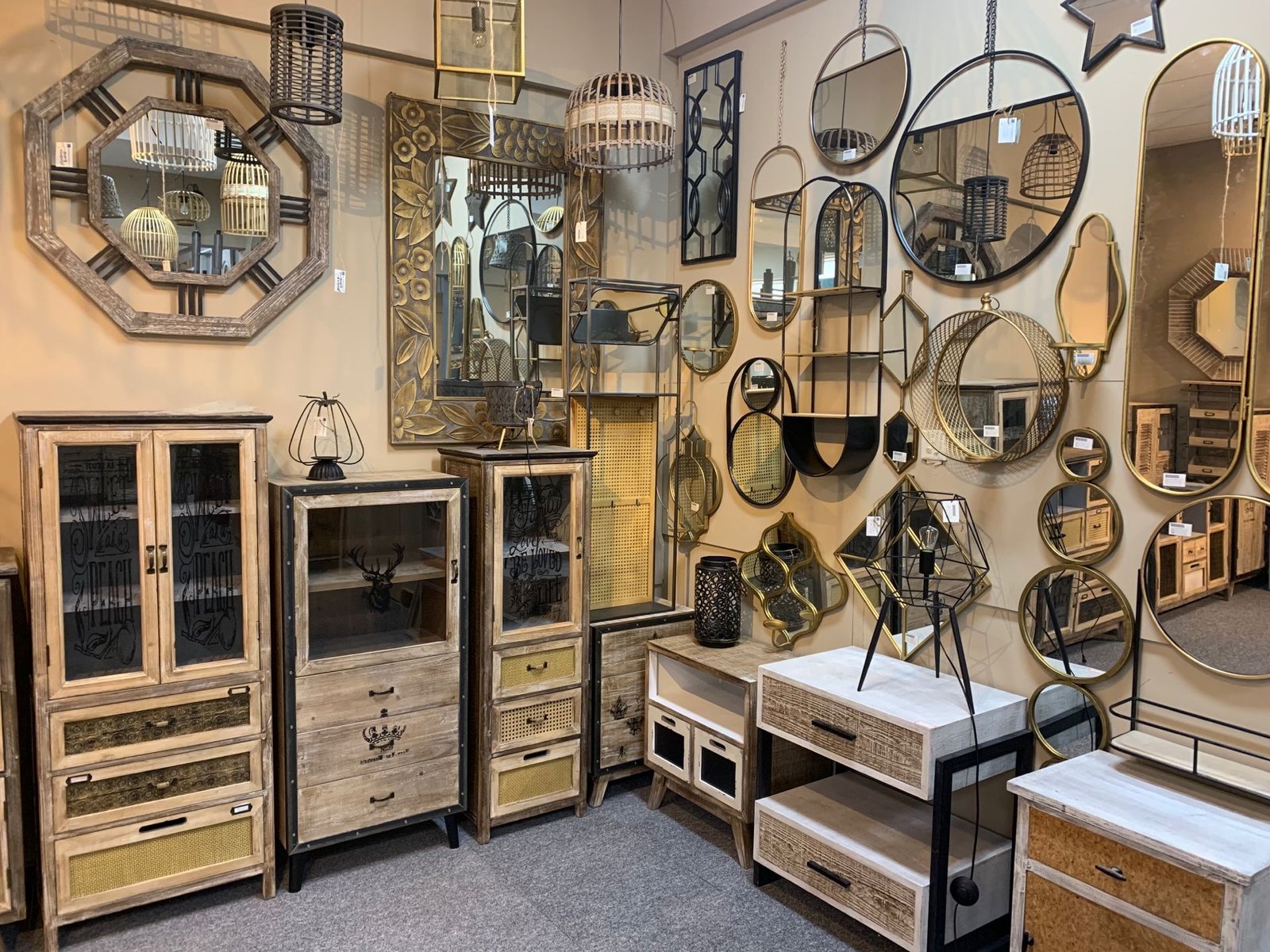
Wholesale floor mirrors for lobbies, corridors, and suites
Full-length mirrors that reduce “room is small” perception and improve guest photos
Statement frames that become the “design signature” of the property
This aligns with what fairs are showing: at Ambiente Trends 26+ (Frankfurt, Feb 6–10, 2026), the official trend framing (“brave, light, solid”) points toward tactile materials, calmer palettes, and durable design choices—perfect conditions for mirrors to act as architectural décor, not just function.
5) Packaging for Mirrors: The KPI That Decides Reorders
Here’s the uncomfortable truth: most mirror “quality issues” are transit issues.
If your packaging can’t survive drops, vibration, compression, and corner impacts, your mirror program will die by:
breakage allowances
delayed installations
angry site managers
reorder freeze
That’s why I like suppliers who design packaging with an ISTA mindset. ISTA 3A, for example, is a general simulation test procedure for individual packaged-products shipped through parcel delivery systems.
More broadly, ISTA Series 3 is about simulating the damage-producing motions, forces, and sequences of transport environments.
Buyer translation: show me corner protection, anti-rub layers, internal blocking, pallet stability, and a repeatable pack-out method. Don’t show me “nice foam” and hope.
6) What I Ask Hotel Mirror Suppliers in the First Call
If you want to win hotel projects (and not just one PO), have crisp answers:
Which mirror standards are you building to (EN 1036 / EN 12600)?
For LED mirror Germany, what IP rating applies by installation zone (DIN VDE 0100-701) and how do you document it?
What is your mirror program readiness process (golden sample, tolerances, batch control)?
How do you prevent reflection distortion and finish drift across reorders?
What ISTA-style thinking is built into your packaging for mirrors?
Can you run a mix: bathroom LED + corridor wall + wholesale floor mirrors in one coordinated program?
If a supplier answers these like a system (not marketing), I can sell them confidently to hotels in mirrors Germany projects.
Closing: The Supplier I Reorder From Makes My Store Look Smart
European fairs are telling us the same story: craft and emotion matter, but systems win the business—especially in project categories like hotel mirrors. Maison&Objet’s “Past Reveals Future” theme is basically saying: heritage is valuable when it’s operationalized.
So yes, I want beautiful mirrors. But more than that, I want boring execution:
safe, spec’d, repeatable
packed like it will be dropped
delivered like schedules matter
That’s what turns a “supplier” into a long-term partner—exactly what Teruierdecor should position for when buyers search hotel mirror suppliers.



