Hospitality Fit-Out: The “Mirror Wall” That Guests Remember (and Owners Reorder)
If you want the fastest way to upgrade a hotel room without touching the footprint, don’t start with furniture. Start with the mirror—because it sits at the intersection of lighting, ritual, and photos.
I’m writing this from the lens of a U.S. home retail buyer who tracks hospitality specs closely. Here’s what I’ve learned the hard way: mirrors don’t fail in a hospitality fit-out because they “look dated.” They fail because they cause guest friction (bad light, fog, awkward scale) or owner friction (damage, mismatched batches, slow replacements).
Why mirrors are turning into “experience hardware”
Hospitality design is moving toward personalization and control. Cornell research highlights that when guests can customize aspects of their room, it increases loyalty and recommendation intent—through a feeling of “psychological ownership.”
A mirror is one of the easiest ways to deliver that “I can control my space” feeling:
lighting that works for morning and night
clarity that photographs well
placement that feels intentional, not leftover
That’s why the mirror line item is suddenly strategic in any hospitality fit-out plan.
The show signals: 2026 is softer, warmer, more functional
At High Point Market (Fall 2025), coverage called out adjustable, ambient, antique-inspired lighting—exactly the direction that makes vanity zones feel premium without adding complexity.
And trend recaps emphasized organic silhouettes and warmer tactile materials across categories—mirrors included.
On the hospitality side, HD Expo + Conference curates “new products” across bath/spa, lighting, and tech—where the practical, spec-ready innovations surface first.
Translation for buyers: the market is rewarding soft geometry + integrated function, not decorative noise.
Bathroom mirror ideas that actually reduce complaints
If you’re spec’ing bathrooms at scale, here are bathroom mirror ideas that consistently perform (and why):
Curved bathroom mirror (round, pill, arch): Curves soften hard tile lines and read calmer and more “spa” in compact baths—one of the clearest 2026 trend notes from design coverage.
Arched LED mirror: It’s the simplest “premium signal” because the light is built in and the silhouette feels architectural. Pair it with consistent CCT options so replacement orders match.
Integrated shelf mirror: This is the underpriced hero in select-service and lifestyle hotels—tiny storage for phones, keys, skincare. It reduces countertop clutter and keeps the vanity looking staged.
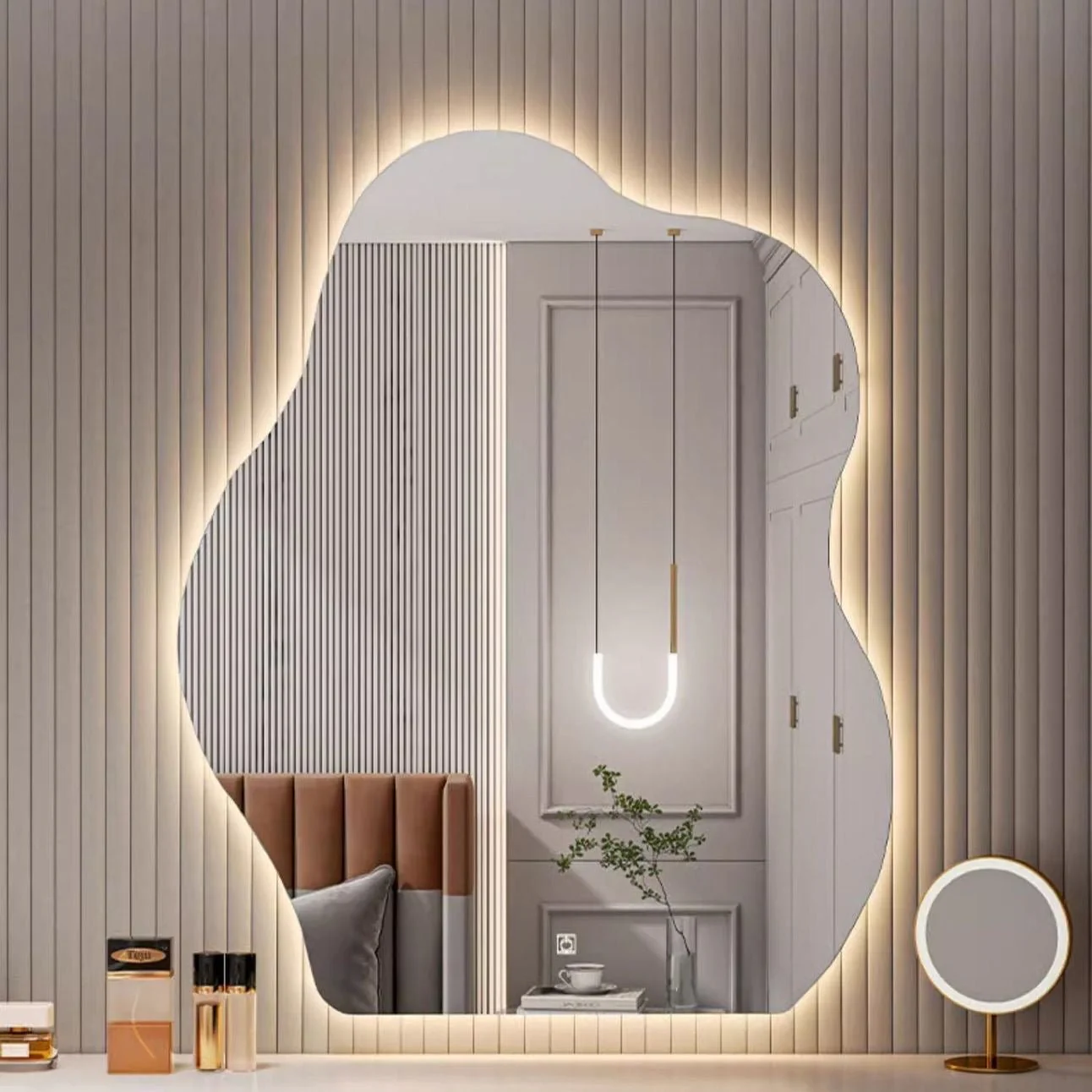
Organic shaped mirror: Use it as an accent in powder rooms or suites where you want design personality without adding furniture. It’s “art without extra SKUs.”
Puddle mirror: In boutique properties, the puddle mirror look (irregular, liquid silhouette) reads like art and makes a small wall feel curated. If you do it, keep it to one “moment” per property—lobby restroom, elevator vestibule, or a photo-heavy corner.
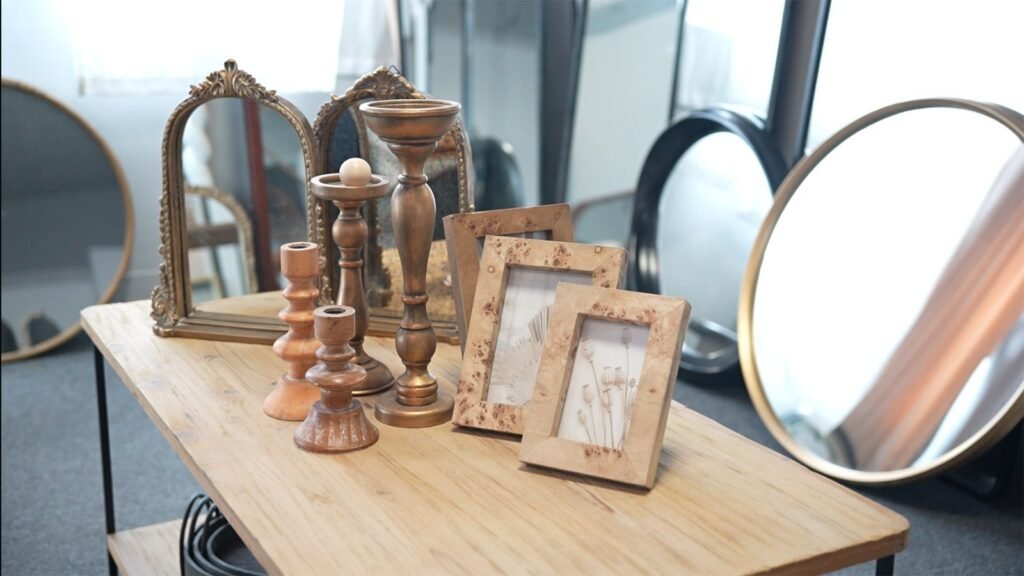
Antiqued mirror: Best used where you want instant depth and “heritage luxury”—bars, lounges, corridors—without a heavy renovation. It hides smudges better than perfectly clear glass and photographs warmer.
The two mirrors that move the needle outside the bathroom
A hospitality fit-out isn’t only bathrooms. Two mirror types routinely lift perceived value:
Oversized leaning mirror (suites, influencer moments, fitness corners): High visual ROI. But it must ship safely and stand stable—this is where damage rates spike if packaging is weak.
Full-height wall or tall vertical mirrors in entry zones: They make rooms feel larger and “more expensive” instantly.
These are also the easiest mirrors to standardize across properties for replacement stock.
What I demand from a China home decor wholesale supplier for hotel mirrors
If you’re sourcing through a China home decor wholesale supplier, you’re not only buying product—you’re buying repeatability.
Here’s the buyer checklist that separates “great sample” from “reorder program”:
One spec sheet per SKU (dimensions, mounting, carton size, finish code, CCT options for LED)
Batch consistency rules (finish tolerance, LED color consistency, same hardware)
Packaging engineering (corner protection + long-format reinforcement + drop-risk thinking)
Replacement cadence plan (what’s stocked, what’s made-to-order, lead times that match hotel ops)
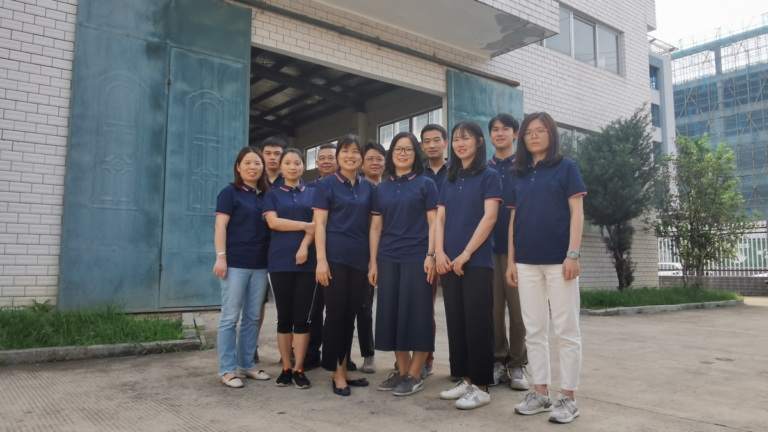
This is where Teruier’s value-translation approach matters: take the show-floor design direction and convert it into reorder-safe SKUs (not just pretty renders), using a cross-border design-to-manufacturing workflow built for consistent production and replacement cycles.
A tight 7-SKU mirror kit for most hospitality fit-outs
If you want a clean, scalable program, start with:
2× arched LED mirror sizes (single + double vanity)
1× curved bathroom mirror (non-LED, budget tier)
1× integrated shelf mirror (select-service hero)
1× organic shaped mirror (suite/powder accent)
1× oversized leaning mirror (premium moment)
1× antiqued mirror (public-space accent)
That kit covers most property needs without turning procurement into a SKU circus.
If you’re building your next hospitality fit-out, here’s the question I’d use in every vendor call: Can you ship the same mirror again in 90 days—same light, same finish, same cartons—without surprises?