Home Accessories Wholesale in 2026: Why Ceramics Win the Floor—If Your Supplier Can Ship Them Like Pros
The buyer truth: ceramics don’t “sell”—they survive (or they don’t)
In the showroom, every ceramic line looks like a bestseller. In real retail, home accessories wholesale lives and dies in the warehouse: chipped rims, scratched glaze, mismatched color batches, and a second PO that doesn’t match the first.
This is exactly why ceramics are having a big moment and why most programs fail to scale.
What the U.S. show circuit is signaling right now is loud and clear: more color, more personality, more tactile detail—and ceramics are the fastest way to deliver that refresh. Atlanta Market coverage specifically highlighted a shift toward colorful home decor, including ceramic vases with bold stripes and visual punch.
Las Vegas Market Winter 2026 wrapped with strong buyer engagement—meaning retailers are actively hunting replenishable “small wins” like accessories that can move fast.
And NY NOW Winter 2026 is positioned as the “curated home” hunting ground—calling out bespoke ceramics and tabletop accessories as key discovery areas.
Good Better Best assortment: the only way ceramics stay profitable at scale
If you want a program that reorders, don’t sell me 40 random pieces. Sell me a good better best assortment that’s easy to merchandise and easy to replenish.
This tiered approach is a proven way to cover different willingness-to-pay levels without confusing the shopper.
Here’s how I structure it for ceramics:
GOOD (volume driver): simple silhouettes, fewer finishes, tight specs
BETTER (margin builder): upgraded glaze, texture, or sculptural handle/detail
BEST (hero attention): statement form or artisan finish—limited, but powerful in displays
That’s how decorative ceramic wholesale stops being “pretty” and starts being an operating system.
The three ceramic categories buyers actually reorder
If you want my PO, build your ceramic program around how stores and listings work—not how a catalog looks.
1) Wholesale ceramic plant pots (reorder machine)
Plant pots work because they’re functional, giftable, and easy to display in stacks. But only if rim chips are controlled and dimensions are consistent (so saucers and inserts still fit).
2) Ceramic figurine (impulse + high defect sensitivity)
A ceramic figurine is emotional merchandising: it sells on expression, paint placement, and tiny details. That also means it needs stricter defect rules—because micro-chips show immediately.
3) Wholesale ceramic home decor (the set strategy)
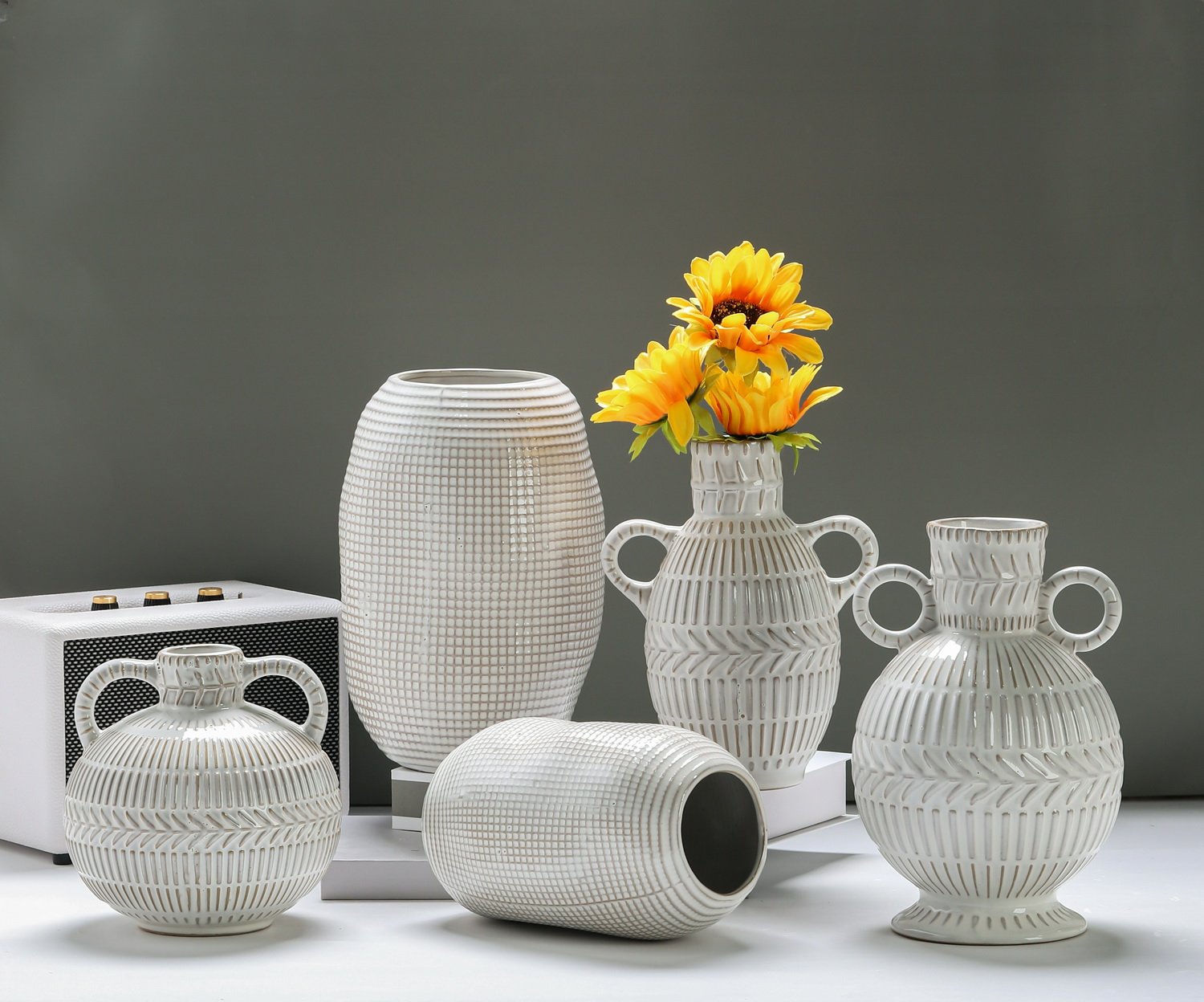
For wholesale ceramic home decor, I buy programs: vase families, candleholders, catchalls—built to match. A set sells faster, photographs cleaner, and reduces “customer confusion” at shelf and online.
The QC rule that prevents “second PO drift”
I’m not asking for perfection. I’m asking for measurable repeatability.
That’s why serious suppliers and buyer teams lean on acceptance sampling logic: ISO 2859-1 describes an acceptance sampling system (AQL-indexed) for inspection by attributes.
Buyer translation: define critical/major/minor defects, sample consistently, and stop arguing on the dock.
Packaging and safety: where ceramics quietly lose money
Ceramics aren’t fragile because they’re weak. They’re fragile because shipping is brutal.
For any accessories program intended to scale, I use a blunt benchmark: packaging must be six-sided and must not easily give way when pressure is applied.
If your packaging can’t survive pressure, it won’t survive distribution.
One more buyer reality: customers use decor in unpredictable ways. FDA guidance notes that some ceramic foodwares have been found to leach significant lead from potential food-contact surfaces. Even if you sell “decor,” a responsible supplier knows how to handle labeling/testing conversations when needed.
Copy-paste buyer checklist (what I ask before I reorder)
Do you offer a good better best assortment (clear tiers, fewer finish families)?
Can you run AQL-style inspection discipline (ISO 2859-1 logic, defined defects)?
Can you ship ceramics in packaging that survives pressure + stacking (six-sided, non-collapsing)?
Can you build a coherent program across wholesale ceramic plant pots, ceramic figurine, and wholesale ceramic home decor (sets, size ladders, finish standards)?
If the supplier can answer those cleanly, I don’t just buy ceramics—I reorder them.