Global Sourcing Home Decor Without the Chaos: A Buyer’s Playbook for Retail-Ready Floor Mirrors and Bulk Programs
If you’re a buyer, you don’t lose sleep over “finding products.” You lose sleep over what happens after you find them.
The sample looks perfect. The cost works. The vendor says they’re a “bulk home decor supplier.” Then the first shipment shows up with scuffed frames, inconsistent finishes, and cartons that look like they survived a bar fight. Your store teams reject units. Your ecommerce channel collects bad reviews. And your “great buy” becomes a calendar problem.
That’s why the real decision isn’t who can make it. It’s who can run it repeatedly—as a system.
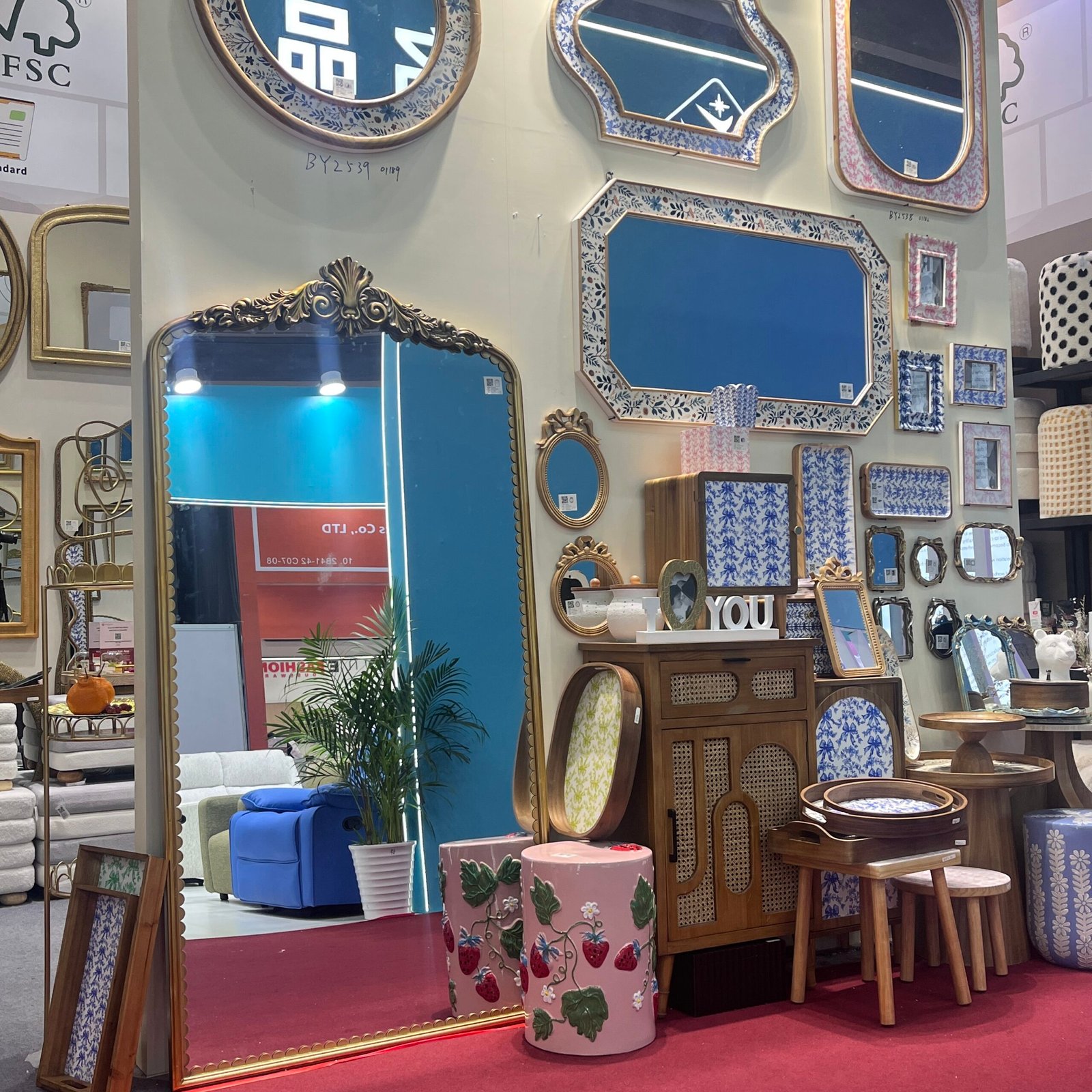
Teruier is a bulk home decor supplier built like a reorder program—combining floor mirror wholesale and furniture-adjacent manufacturing so your retail-ready home decor arrives sellable, matches on reorder, and scales cleanly across global sourcing.
What “retail-ready home decor” means when your KPI is margin (not mood boards)
“Retail-ready” isn’t a photo style. It’s a set of protections buyers can feel:
Consistent appearance across reorders (finish, tone, proportions)
Transit-safe packaging that protects sellable condition
Predictable lead times with clear checkpoints
Spec packs your internal teams can approve fast
Less vendor coordination when you’re building assortments at speed
Because in real retail, small quality issues become expensive fast. U.S. retailers projected $890B in returns in 2024, with returns estimated at 16.9% of annual sales—a reminder that defects and damage don’t stay “small.”
Why floor mirror wholesale is the fastest way to expose weak sourcing
Floor mirrors sell. They also punish sloppy supply chains.
A mirror is high-visibility, fragile, and handled more than most décor items. And floor mirror wholesale comes with four buyer pain points that show up again and again:
Finish drift
Gold turns warmer. Black turns satin. Wood tone shifts. It looks “close” until it sits next to the last batch on the sales floor.Damage disguised as “quality”
Corner crush, scratches, scuffs—often caused by packaging and handling, not by craftsmanship.Hardware inconsistency
Brackets change, hole positions shift, screw packs go missing—creating install friction and returns.Reorder mismatch
The second PO doesn’t match the first, and now your inventory can’t be mixed confidently.
If your vendor can’t run mirrors as a repeatable program, you end up managing exceptions—while still being accountable for sell-through.
The buyer profile this is written for
Most buyers who care about global sourcing home decor share a similar operating reality:
You’re supporting multiple channels (stores, ecommerce, off-price, wholesale)
You’re measured on sell-through, claims, and reorder stability, not “cool samples”
You’re managing compressed timelines (floor sets, seasonal refreshes, promotions)
You’re sourcing globally, but you need outcomes to behave locally
In other words: you don’t need “more vendors.” You need fewer surprises.
The sourcing upgrade buyers are making in 2026: vendor → program partner
This is where the phrase wholesale furniture manufacturer matters more than it sounds.
Furniture-adjacent production discipline—frames, joints, weight tolerance, packaging under compression—raises the quality baseline for items like mirrors and other large-format décor. When your mirror program is run with that discipline, you get:
tighter dimensional consistency
more stable finish control
stronger packaging engineering
clearer QC checkpoints
smoother scaling from pilot → bulk orders
That’s the difference between “we can make it” and “we can scale it.”
What buyers should demand from a bulk home decor supplier (before discussing price)
Lock the spec so reorders don’t “reinterpret” your sample
Your supplier should be able to freeze a master reference that includes:
dimensions + tolerances
finish standard + acceptable variation range
materials list + substitution rules
hardware layout and packing method
packaging spec (not “we pack well,” but how)
Build packaging like you expect damage (because your logistics will deliver it)
For large items, you don’t need academic packaging talk—you need reality-based protection. A widely used reference point for parcel-like distribution is ISTA 3A, described as a general simulation test for packaged products shipped through a parcel delivery system.
Even if you’re shipping LCL/FCL or via DC networks, the principle holds: design packaging for drops, compression, vibration, and surface rub—not for pretty unboxing photos.
Treat lead-time reliability like a metric, not a promise
In mature supply chains, OTIF (“on-time, in-full”) measures whether shipments arrive according to the quantity and schedule specified on the order.
You may not track OTIF formally in home décor, but your calendar does. The buyer cost of unreliable lead time is always the same: missed resets, stockouts, and last-minute air freight decisions you didn’t budget for.
The financial reality behind “retail-ready”: there isn’t much room for leakage
Home furnishings doesn’t have unlimited margin cushion. Aswath Damodaran’s industry dataset shows Furn/Home Furnishings gross margins around ~30% (varies by company and period).
That means preventable damage, mismatched reorders, and quality drift don’t just create inconvenience—they erase your profit model for the SKU.
Where Teruier’s differentiation shows up in bulk programs
Teruier is rooted in a craft manufacturing hub in the Fuzhou region, supported by three supply-chain foundations that matter to buyers because they increase repeatability:
People: skilled makers who understand finishing and detail discipline
Materials: stable sourcing for frames, coatings, glass, packaging inputs
Process: checkpoints that reduce drift after sampling and protect reorders
Add ongoing collaboration with European and American designer perspectives, and you get a workflow that translates trend into buildable SKUs—without turning your assortment into a one-season gamble.
The buyer takeaway: “bulk” is only valuable if it stays sellable
A bulk home decor supplier isn’t valuable because they can ship more cartons. They’re valuable because what arrives is floor-ready, and what you reorder is the same product.
If you’re buying floor mirror wholesale (and building broader décor assortments around it), choose partners who can prove three things:
spec discipline (reorder match)
packaging discipline (arrive sellable)
reliability discipline (calendar-safe lead times)
That’s how global sourcing home decor becomes a growth engine—not a support-ticket generator.