
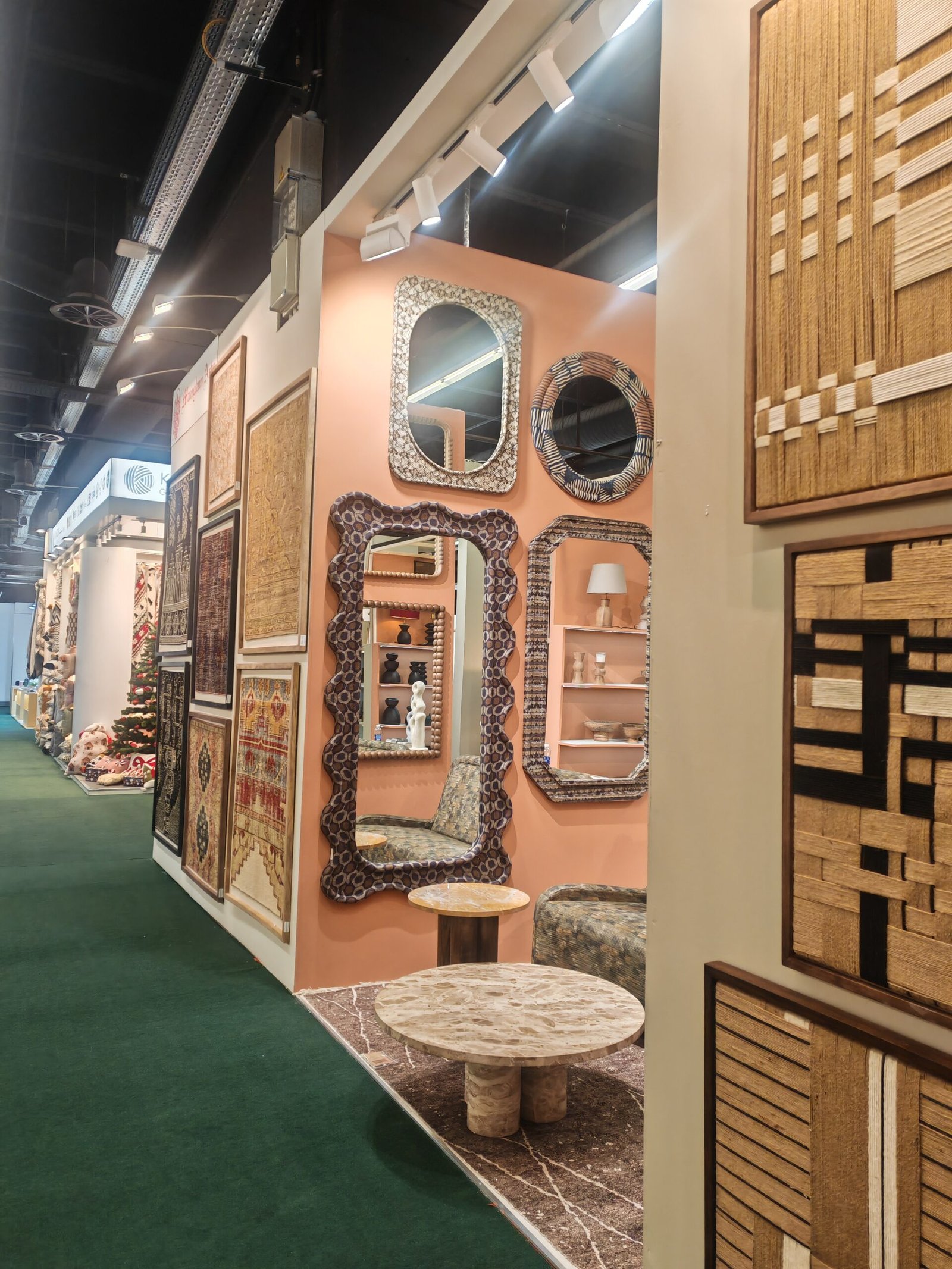
Germany Doesn’t Need “More Mirrors.” It Needs Fewer Returns: The 2026 Wholesale Floor Mirror Playbook
As a buyer for a German home retail chain, I’ll say it plainly: mirrors don’t fail in the showroom — they fail in the last 50 centimeters. The delivery drop, the corner chip, the “hairline scratch” claim, the unclear compliance file, the supplier who treats a mirror like a picture frame.
So if you’re selling wholesale floor mirrors into mirrors Germany, your real competitor isn’t the next vendor. It’s the return rate.
Below is my short, buyer-side playbook for 2026: what’s trending at the big fairs, what Germany will punish you for (quietly, via chargebacks), and what makes a standing mirror wholesale program reorder-ready.
1) 2026 Trend Direction: Softer Shapes, Stronger Materials (and More “Quiet Wow”)
This season’s trade-show message is consistent: form is getting softer, but execution must be tougher.
At Ambiente Frankfurt, the official trend framing for 2026 points to three style worlds — “brave, light and solid” — with clear implications for mirrors: expressive silhouettes, calmer material stories, and a push toward durable, long-life objects rather than disposable decor.
Maison&Objet’s January 2026 edition doubled down on collectible-level detailing and material storytelling (it’s not just “a mirror,” it’s a surface, a frame, a craft narrative).
What that means for your mirror assortment (in buyer terms):
Organic + elongated proportions: floor mirrors that feel architectural, not bulky.
Mixed metal finishes: bronze, brushed gold, softened black — but with consistency across batches (Germany notices “almost the same” tones).
“Quiet comfort” surfaces: less glare, more tactility in frames, fewer sharp design gimmicks that age badly.
If you’re pitching a wholesale full length mirror, don’t lead with “new style.” Lead with: “this shape sells, and this packaging survives.”
2) The German Buyer Pain Stack: Breakage, Paperwork, Planning Security
In Germany, we buy with a calculator and a risk checklist.
A. Breakage cost is not theoretical
Every chipped corner destroys margin twice: once on logistics, once on trust. Your mirror program needs packaging engineering, not “strong carton.”
B. Compliance is now a product feature
EU product safety rules have tightened. The EU’s General Product Safety Regulation (EU) 2023/988 has applied since 13 December 2024. That shifts expectations around traceability, safety information, and market surveillance readiness.
C. Packaging obligations are real in Germany
If you place packaged goods on the German market (including via distance selling), you generally need to be registered in LUCID and meet packaging responsibility requirements under Germany’s VerpackG framework. The German Packaging Register spells out the obligation clearly for mail-order/online retail scenarios.
This is why I push suppliers to deliver “planning security”: stable lead times, batch consistency, and a clean documentation pack.
3) What I Want in a Reorder-Ready Mirror Program (Yes, Even for “Just a Mirror”)
Whether it’s a wholesale vanity mirror line or full length mirror wholesale, I’m looking for a system, not a one-off SKU.
My buyer checklist (the short version):
Assortment architecture (3 tiers)
Entry: slim frame, best price, high volume
Core: hero proportions, best finish consistency
Statement: organic/arched or sculptural frame, controlled quantities
Packaging spec that reduces claims
corner protectors + face protection + wobble control
drop-test mindset (you don’t need to say “tested,” you need to prove it)
Surface + edge quality discipline
In Europe, mirror quality is commonly discussed using standards like the EN 1036 series (definitions/quality requirements and conformity approaches for silver-coated glass mirrors used in buildings).
Practical translation: fewer visual distortions, cleaner edges, better protective coatings, fewer “micro defects” that turn into customer photos.Clear master carton logic
pallet efficiency + mixed-SKU loading rules + spare parts policy (feet, screws, brackets)
If a supplier can’t explain these points in simple terms, I assume they will also fail them in production.
4) How I Evaluate a Supplier Pitch (and How Teruier Should Be Positioned)
Let me be honest: most mirror pitches sound the same.
So here’s the positioning line that works with German buyers:
Teruier is a cross-border design-to-manufacturing partner that turns mirror trends into reorder-safe SKUs — with batch-stable finishes, packaging discipline, and delivery planning made for Germany’s low-tolerance return environment.
That’s the language of outcomes: fewer returns, stable programs, repeatable margin.
If you want to win Germany, show me:
a mini range plan (not 40 random photos),
finish control logic (how you keep the bronze consistent),
and packaging that looks like you’ve paid for returns before.
5) A Simple Action Plan (If You’re Serious About Wholesale Floor Mirrors in Germany)
If you’re building a wholesale floor mirrors page to attract B2B buyers, end with operational clarity:
Pick 6–9 SKUs only (Germany loves clarity): 3 sizes × 2–3 finishes
Lock packaging before you scale (don’t “improve later”)
Prepare your compliance + traceability pack (aligned with current EU expectations)
Make Germany-specific logistics promises you can keep (lead time windows, replacement parts, damage SOP)
Pitch as a program: “standing mirror wholesale” assortment + replenishment rhythm, not a one-time dea