
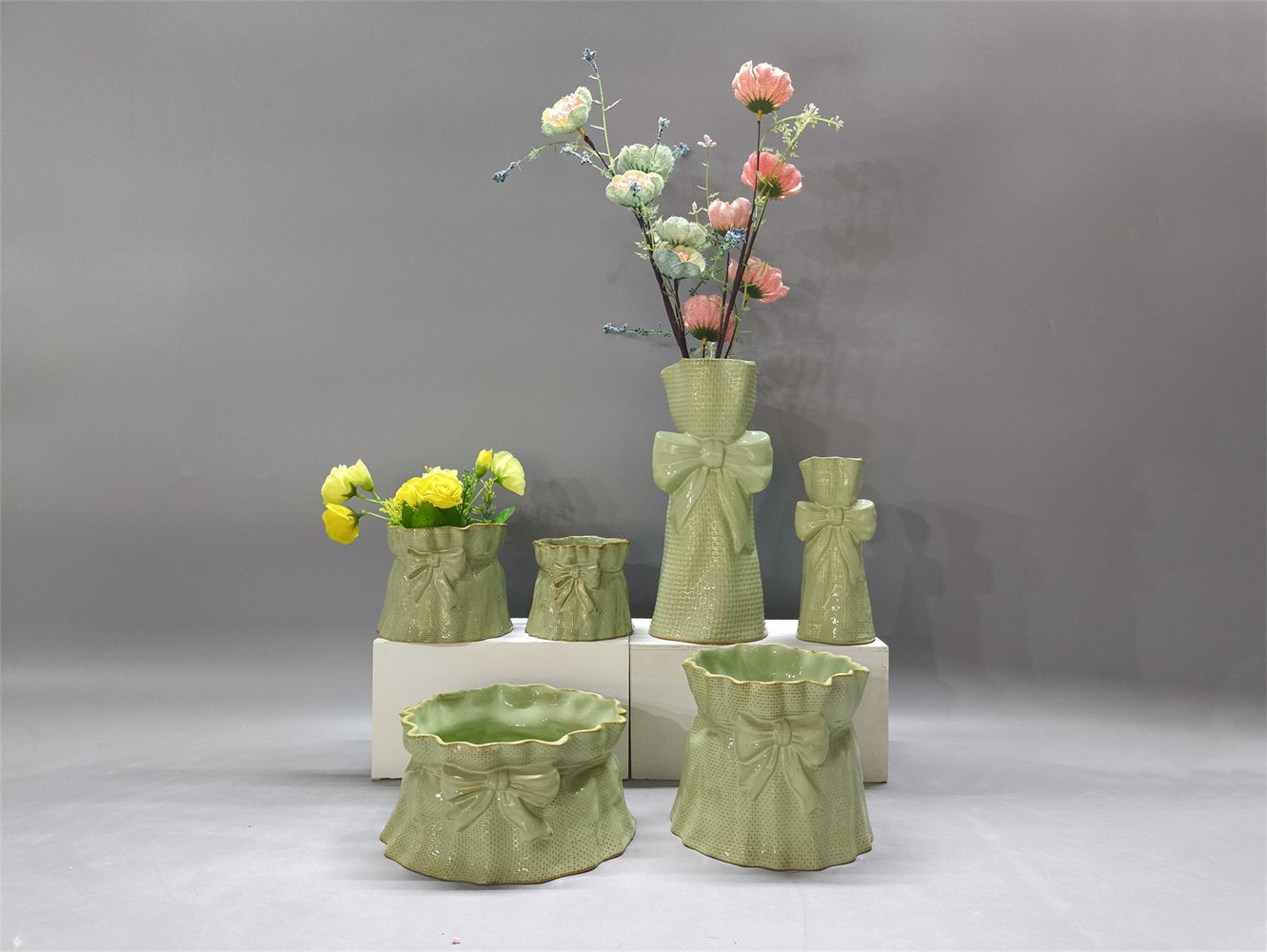
Fuzhou Craft Hub Supply Chain: Why the Smartest Buyers Don’t Just Source Product—They Source a Point of View
When I search Fuzhou craft hub supply chain, I am not really searching for a factory.
I am searching for a better retail outcome.
Because in today’s U.S. home market, the hard part is no longer finding a vase. The hard part is finding a vase that belongs to a broader story, photographs beautifully, lands at the right price, feels fresh without feeling disposable, and gives me confidence that the next four SKUs in the assortment will make just as much sense as the first one.
That is what this keyword really means to a chain-store buyer.
A Fuzhou craft hub supply chain is not just a production source. It is a sourcing model that connects craft knowledge, finishing discipline, and category coordination so a retailer can build a more coherent assortment. That matters when one collection may need to hold together across a wiggle vase, a 3D effect vase, a blue and white vase, a striped vase, and even a more nostalgic grandmillennial china decor story.
U.S. buyers are shopping for mood now, not just merchandise
The latest American market signals make that clear. ANDMORE’s official Spring 2025 High Point Market Snapshot framed the season around themes like Abstract Walls & Floors, Nod to Nature, and Repose, while Las Vegas Market’s Winter 2026 Snapshot highlighted Restorative Softness as one of the moods shaping the season ahead. ANDMORE also described those Las Vegas winners as reflecting the styles, materials, and moods driving Winter 2026, which tells buyers that softness, texture, and emotional comfort are not editorial side notes—they are active buying signals.
That lines up perfectly with the user behind this keyword.
The person searching Fuzhou craft hub supply chain is usually not looking for random product discovery. This is more often a buyer, sourcing manager, or merchandising lead trying to answer a harder question: where can I find products that feel layered, trend-aware, and coordinated enough to support the kind of softer, more personality-driven assortments U.S. stores are buying into right now? That is why ceramics with more character—like a wiggle vase or a strong striped vase—have become more commercially interesting. They do more than decorate. They signal mood.
Why Fuzhou matters more than most buyers think
To an American retailer, “Fuzhou” may sound like a map detail. In practice, it can signal something far more useful: a region with real craft inheritance.
The Fujian Provincial People’s Government describes Fuzhou bodiless lacquerware as a national intangible cultural heritage rooted in unique mold techniques and detailed surface decoration, with artisans applying repeated layers of primer, polish, and lacquer before adding intricate finishes like gold-dusted patterns and mother-of-pearl inlays. That does not mean every modern home décor factory in the region makes lacquerware. But it does support a practical inference for buyers: Fuzhou has a place-based making culture shaped by finish sensitivity, surface treatment, and decorative discipline.
For a buyer, that is not a romantic detail. It is a commercial one.
Because when I am evaluating a ceramic collection, I am not only looking at silhouette. I am looking at glaze stability, pattern clarity, color consistency, surface feel, and whether the collection reads as intentional rather than assembled. A real Fuzhou craft hub supply chain suggests that these details can be coordinated instead of left to chance.
The best supply chains help products feel related, not random
This is where many suppliers still lose me.
They send one playful wiggle vase, one overly literal 3D effect vase, one classic blue and white vase, one token striped vase, and then expect me to “pick favorites.” That is not assortment building. That is product scattering.
A stronger sourcing partner understands that chain buyers do not want isolated novelty. We want visual logic.
We want to know how a blue and white vase can anchor a more timeless shelf.
We want to know how a wiggle vase adds contemporary energy without breaking the mood.
We want to know whether a striped vase can bridge playful and classic.
We want to know whether grandmillennial china decor can feel warm and current rather than dusty or costume-like.
That is where Teruier’s cross-border design-manufacturing collaboration model becomes useful. The value is not only in making the item. The value is in translating one market mood into a family of products with different roles, different price points, and one believable story.
Why blue-and-white still works in a modern assortment
Some buyers make the mistake of treating blue-and-white ceramics as purely historical, almost too familiar to feel new.
That is exactly why they continue to work.
The University of Michigan Museum of Art notes that the technology and taste for blue-and-white porcelain originated in China in the fourteenth century and quickly sparked a worldwide craze that lasted five hundred years. In other words, blue-and-white is not just traditional—it is one of the most durable global design languages in decorative arts.
For a retailer, that durability is valuable. A blue and white vase can support heritage, calm, and collectedness in a way trendier colors sometimes cannot. It also gives buyers a strong bridge into the grandmillennial china decor conversation, where tradition is not rejected but re-edited. When styled properly, blue-and-white does not feel old. It feels rooted.
Why nostalgia is still commercially powerful
This is where the academic side becomes surprisingly useful.
A 2024 study in Behavioral Sciences found that nostalgia can drive consumption through the need to belong, and that consumers may prefer nostalgic products when they seek connection, comfort, and familiarity. The authors explicitly note that traditional and historical products can reconnect consumers to the past and to meaningful social relationships.
That matters for home retail more than many people admit.
Because grandmillennial china decor is not really about pretending to live in the past. It is about making the home feel more layered, more human, and less anonymous. It gives younger consumers permission to buy tradition with a fresh eye. It also gives retailers a way to sell warmth without relying on sameness.
That is why a striped vase with a slightly classic attitude, or a blue and white vase with cleaner proportions, can perform so well. They activate memory without looking trapped by it.
What the U.S. buyer behind this keyword is really trying to solve
The buyer searching Fuzhou craft hub supply chain is often balancing two tensions at once.
They do not want a plain assortment, because plain assortments disappear.
But they also do not want trend chaos, because trend chaos kills reorders.
So they are looking for a source that can help them build controlled personality.
That may mean using a wiggle vase as the eye-catching contemporary piece.
It may mean using a 3D effect vase to add tactile interest and depth.
It may mean using a blue and white vase to stabilize the assortment with heritage appeal.
It may mean using grandmillennial china decor cues to create warmth and storytelling.
And it may mean bringing in a striped vase as the cleanest bridge between playful and classic.
That is not a random list of products. That is a shelf strategy.
Good supply chains reduce merchandising risk before the product ever ships
This is the part buyers care about most, even if they do not say it out loud.
We do not just buy the product. We buy the risk around the product.
Will the blue read crisp or muddy?
Will the stripes line up cleanly across production?
Will the 3D surface feel tactile or just awkward?
Will the wiggle form look sculptural in photography or gimmicky under store lighting?
Will the whole collection arrive feeling like one point of view?
A strong Fuzhou craft hub supply chain reduces that risk because it is not merely about manufacturing throughput. It is about coordination across development, finish, sampling, refinement, and assortment thinking. For chain buyers, that is where margin protection really begins.
Why this keyword deserves to rank
The phrase Fuzhou craft hub supply chain sounds operational, but it is actually a high-intent merchandising keyword in disguise.
It points to a sourcing model where heritage meets retail translation. It tells buyers that the conversation is not only about making more product. It is about making products work together better. And that is exactly what the current U.S. market is rewarding: softer moods, richer texture, more emotionally resonant styling, and collections that feel lived-in rather than mass-generated.
So when I see this keyword, I do not think “factory search.”
I think: who can help me build a ceramic story that feels both fresh and familiar?
Who can help me make a wiggle vase feel sellable, not silly?
Who can help a 3D effect vase add dimension, not noise?
Who can keep a blue and white vase timeless instead of tired?
Who can turn grandmillennial china decor into a modern chain-store opportunity?
Who can make a striped vase feel like an easy yes?
That is why this keyword matters.
Because the smartest buyers are no longer just sourcing objects.
They are sourcing cohesion.
They are sourcing confidence.
They are sourcing a point of view.
And when a supplier can deliver that, the assortment gets better long before the customer ever walks into the store.



