
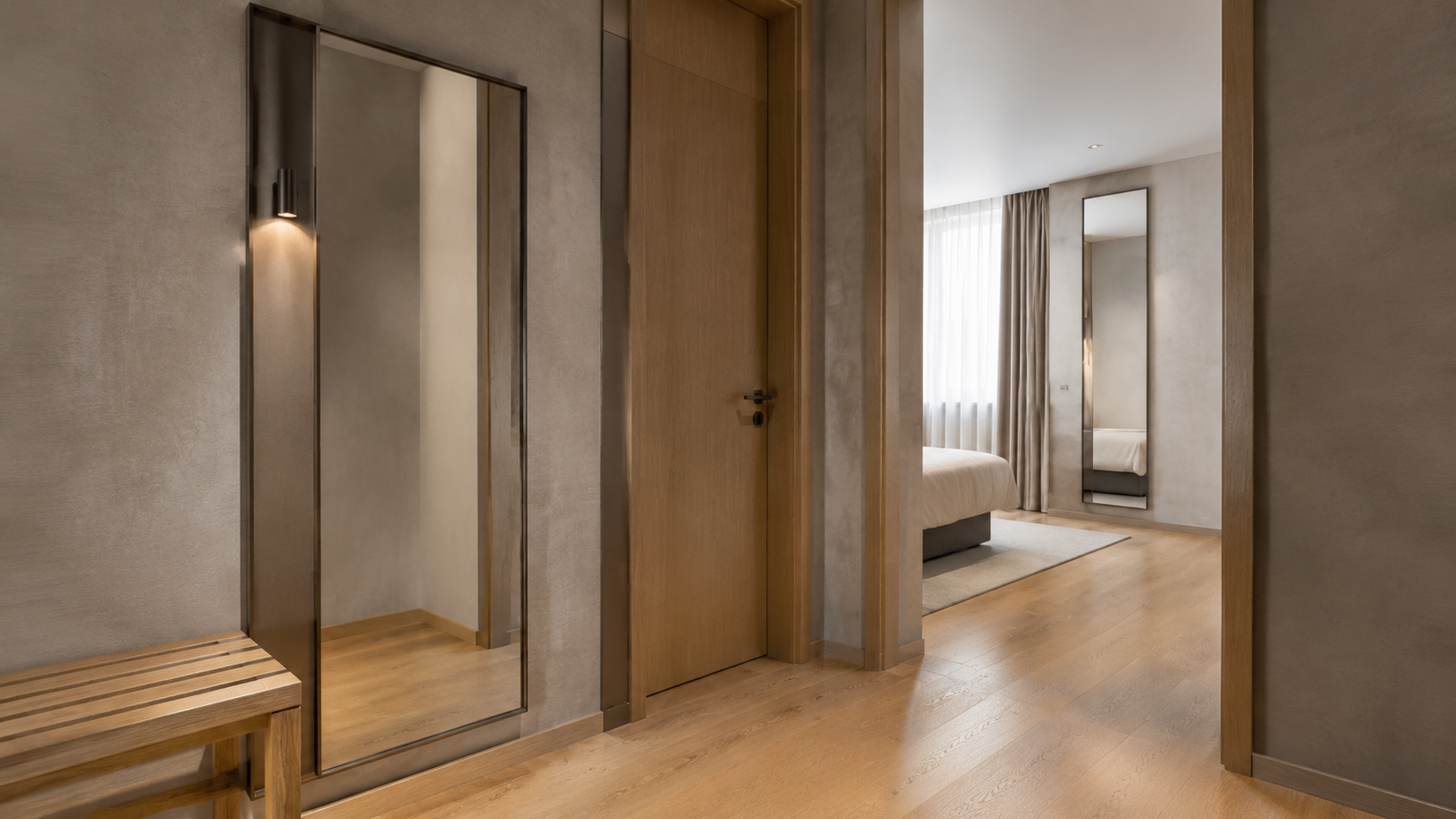
For a German project buyer, the most expensive problem is not a product that costs slightly more. It is a product that arrives late, differs from the approved sample or cannot be installed when the site is ready.
This is why project sourcing and delivery must be planned as one process. A hotel project mirror supplier is not chosen only for design capability; the supplier must support specification, sample approval, production control and phased delivery for fit-out projects.
Start With the Delivery Sequence
In a hotel, serviced apartment or multi-room interior project, not every space becomes ready at the same time. Wall finishes, joinery, lighting and final cleaning usually move in stages.
A practical project supply plan therefore defines:
- which rooms or zones are ready first;
- when installation measurements are confirmed;
- which mirror models and finishes are frozen;
- how cartons are labelled by room, floor or delivery phase;
- where replacements or spare units are required.
This makes phased delivery for fit-out projects a control tool, not a logistical complication. The right delivery sequence helps the contractor install faster and helps the project buyer avoid storing fragile products on an unfinished site.
Standard Mirror vs. Custom Project Mirror
| Standard product | Project-developed product |
|---|---|
| Faster sample and production decision | Exact dimensions, finish or mounting logic |
| Proven packing and construction | Better fit with architecture and joinery |
| Best for straightforward rooms | Best for repeated room types or signature spaces |
| Limited variation | Requires a clear freeze point before production |
The key is to customise only what matters. A frame finish, size adjustment or mounting detail may add strong project value. Reopening the design after approval will usually cost more than it adds.
How to Customise Without Slowing Down the Project
A supplier can support customisation efficiently when the brief is decided in stages.
First, confirm the project role: bathroom vanity mirror, guest-room full-length mirror, corridor mirror or lobby feature piece. Then freeze the dimensions, material reference and mounting method. Only after this should the final sample be approved for production.
For project supply mirrors, the buyer should receive a concise approval pack:
- product drawing with visible dimensions;
- finish and material reference;
- mirror type and safety requirement;
- backing, hanging method and wall-clearance detail;
- individual and master-carton data;
- production lead time and phased delivery plan.
This makes the product easier to review internally and gives the factory a clear production boundary.
What European Project Signals Mean for Procurement
European fairs are increasingly connecting furniture and décor with hospitality, contract furnishing and international project business. Ambiente Projects combines Interior Looks, hospitality formats and a dedicated Interior Design & Architecture Hub for architects, planners and project professionals. Ambiente Projects
The relevant signal for procurement teams is clear: project potential comes from coordinated, calm interiors with reliable material language—not from isolated statement products. For mirrors, this means a more disciplined mix of warm wood, mineral surfaces, subtle metal frames and repeatable architectural proportions.
Project Sourcing Questions to Ask Early
Before placing an order, confirm the questions that affect site delivery:
- Are final wall conditions and installation dimensions approved?
- Can the supplier produce a control sample before mass production?
- Is the finish variation acceptable and documented?
- Can delivery be split by room block, floor or installation date?
- Are cartons marked clearly for receiving and installation teams?
- What is the procedure for damage, shortage or replacement units?
These are not administrative details. They determine whether a mirror is installed smoothly or becomes a late-stage site problem.
FAQ
When should a project use a custom mirror instead of a standard model?
Use a custom mirror when a repeated room type, architectural dimension, required finish or mounting detail cannot be achieved reliably with a standard product.
Can phased delivery reduce project risk?
Yes. It reduces site storage, protects fragile products from unfinished areas and lets installation follow the actual readiness of each zone.
Build a More Reliable Project Supply Plan
The best project supplier helps the buyer translate design intent into an installable product and a realistic delivery sequence. Share your room schedule, mirror specification, target quantity and required delivery phases, and we can help prepare a clearer project sourcing and delivery plan.



