
Chicago Shoe Storage Ottoman: The Buying Guide I Use Before I Approve a New Vendor
Chicago is the city that exposes weak product decisions fast.
One wet week of boots, salt, and rushing out the door—and anything “cute but flimsy” becomes a return. So when I’m doing retail buyer sourcing for a Chicago shoe storage ottoman, I’m not thinking like a stylist first. I’m thinking like an operator: Will this survive real life, ship cleanly, and stay out of my returns report?
Returns are not a rounding error in U.S. retail. Industry reporting from NRF and Appriss Retail estimated $743B in merchandise returns in 2023 (a 14.5% return rate). That number is why buyers obsess over specs, packaging, and documentation—not just looks.
Below is the short, repeatable checklist I use—written for any home décor buyer who wants to move fast without making preventable mistakes.
Start with buyer review prep: define the “entryway job”
Before samples, I do buyer review prep with one question:
What problem is the customer hiring this ottoman to solve in a Chicago home?
Usually it’s one of these:
Small entryway, big clutter: hide shoes instantly without looking like storage.
Sit + stash: a stable seat for tying laces, with storage that opens easily.
Apartment-friendly scale: narrow depth, clean silhouette, neutral color that doesn’t fight the rug.
If your vendor pitch can’t map the product to one of these jobs, you’ll struggle in line review—even if the photos are beautiful.
The 60-second spec screen I run before I approve samples
When a supplier sends a “new ottoman,” I scan for a few deal-breakers first:
Footprint logic: Does depth work for tight entryways without making the lid awkward?
Structure confidence: Does it feel like a seat (not a hollow box)?
Hinge experience: Smooth open/close, controlled drop, no scary slam.
Storage reality: Can it actually hold adult footwear, not just sandals?
Material practicality: Will the front edge show scuffs fast (the #1 wear zone)?
This is the moment where “pretty” turns into “reorderable.”
Retail-ready spec pack: the documents that keep you in the assortment
Most vendors lose not because the product is bad—but because the paperwork is vague.
If you want to be treated like a serious supplier, you need a retail-ready spec pack that answers compliance and execution questions without back-and-forth.
At minimum, for upholstered furniture sold in the U.S., buyers will look for clarity around the federal flammability standard and labeling. CPSC guidance highlights a required permanent label statement for upholstered furniture flammability compliance, and the federal standard (16 CFR Part 1640) adopts California TB 117-2013 as the test baseline.
What I ask to see inside a retail-ready spec pack:
Product spec sheet (dims, materials, hardware, finish options)
Carton spec (inner/outer protection, corner protection, drop-risk zones)
Labeling readiness (what statement label, where it’s placed, how it’s made permanent)
QC checkpoints (hinge function, upholstery defects, stability, carton inspection)
If a supplier can hand me that pack on Day 1, they instantly move up my shortlist.
Packaging is part of the product: my ottoman packaging reality check
For a Chicago shoe storage ottoman, ottoman packaging isn’t “a box.” It’s the difference between margin and markdowns.
In real retail distribution, a packaged product gets handled repeatedly—often as part of mixed pallets moving from DC to stores. ISTA publishes test procedures that simulate these distribution patterns (for example, Procedure 3F is specifically framed around distribution center to retail outlet shipments for packaged products within certain weight limits).
So I ask suppliers to show they’ve designed packaging for:
Corner and edge impacts (where damage actually happens)
Hardware isolation (legs/feet/hardware protected so they don’t puncture or scratch)
Hinge-zone reinforcement (so the lid mechanism doesn’t loosen in transit)
Carton consistency (same strength across production, not just the first sample)
If your packaging strategy is “we’ll add more foam,” that’s not a strategy. Show me intent.
Chicago assortment strategy: how I avoid slow movers
Here’s a simple way I build the Chicago entryway story without over-inventoring:
Good: clean silhouette, durable base fabric, simplest color (fastest turns)
Better: texture upgrade (bouclé / woven), upgraded hinge feel
Best: elevated detail (tufting, leg finish, special shape) but still neutral enough to reorder
The trap is ordering “too designed” too early. In Chicago, the winner is usually the piece that looks elevated and behaves like a workhorse.
The questions I send every storage ottoman supplier
If you’re evaluating a new storage ottoman supplier, copy/paste this into your email:
Can you provide a retail-ready spec pack (product + carton + QC checkpoints)?
What hinge options do you offer, and how do you prevent lid slamming?
What packaging method do you use to protect corners/edges and hardware?
What’s your defect definition and replacement parts policy?
Can you support consistent reorder colors/fabrics for 6–12 months?
How do you handle labeling readiness for U.S. upholstered furniture compliance?
Suppliers who answer cleanly are the ones you can scale with.
Where Teruier fits
If you’re sourcing a Chicago shoe storage ottoman and you care about repeatability, Teruier’s approach is simple:
We treat the ottoman as a retail program—built with a retail-ready spec pack mindset, with packaging engineered for distribution handling, and QC checkpoints that protect reorder consistency.
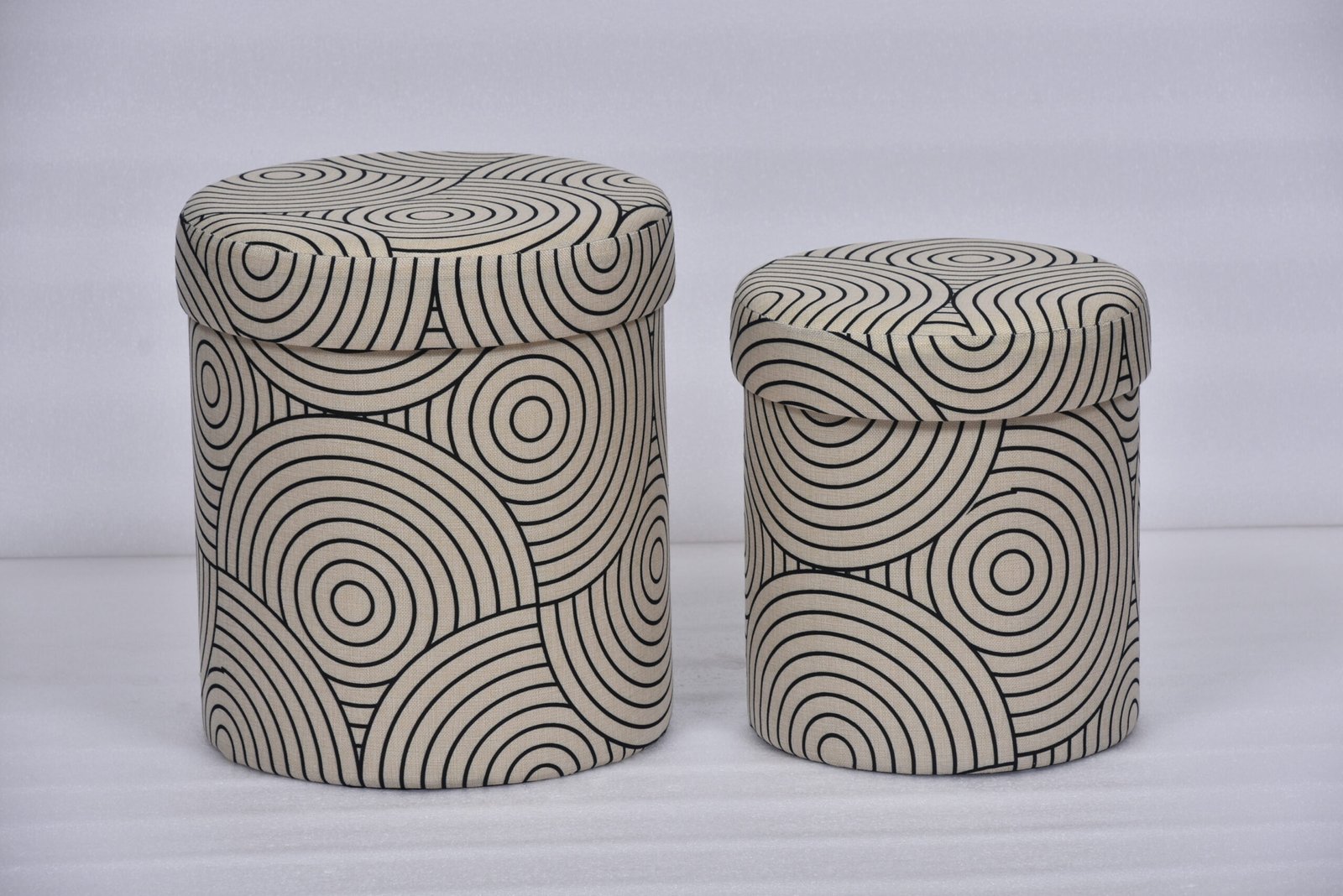
If you want, request our Chicago shoe storage ottoman spec pack template and we’ll fill it with your target dimensions, fabric direction, and packaging standard—so your next line review feels less like guessing and more like approving.



